August 11, 2026 • Cassidy Vane • 10 min reading time • Prices verified June 6, 2026
Adidas Sprintstar vs. Distancestar: Which Adizero Is Actually Right for Your Event?
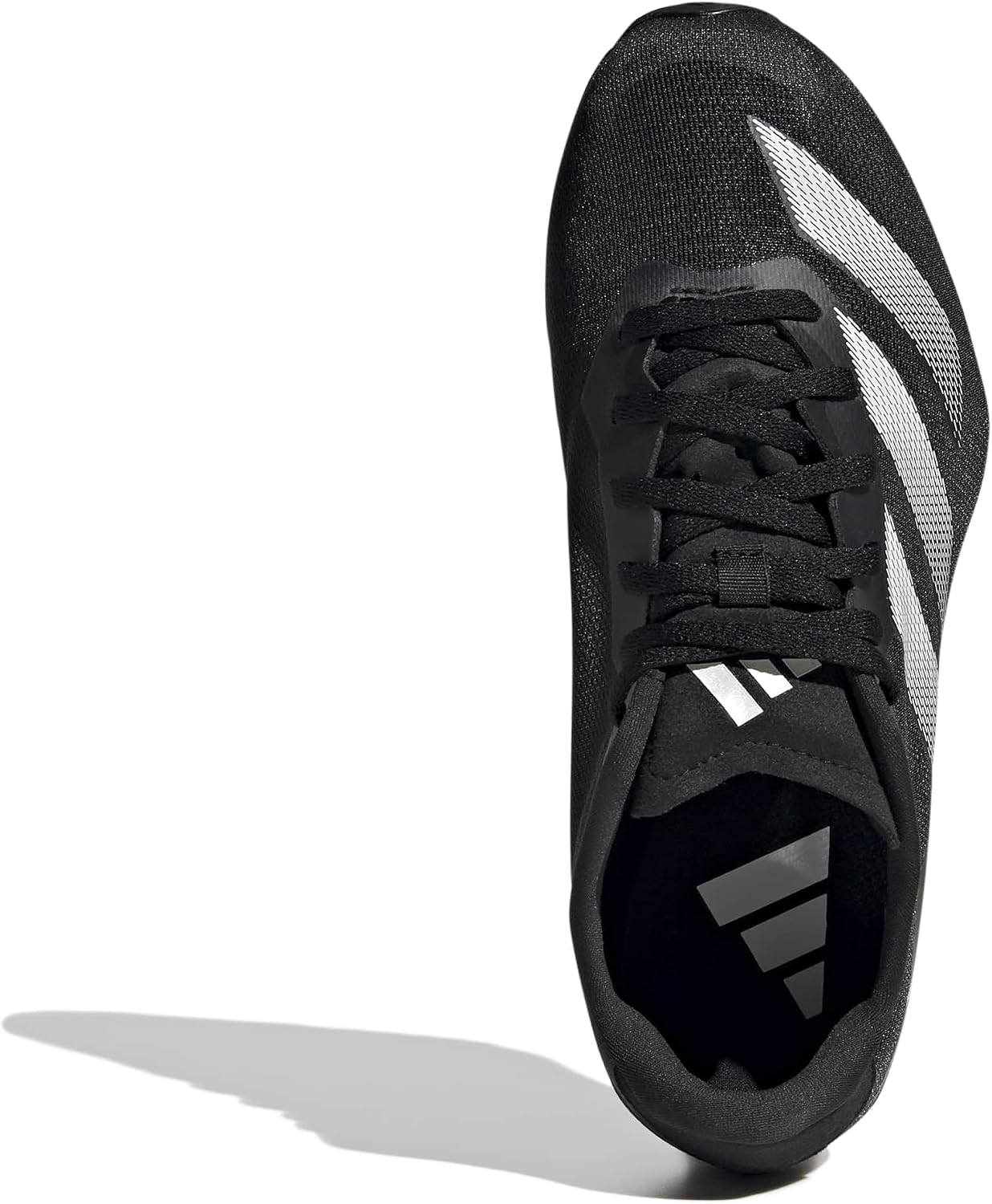
If you’ve ever stared at an Adidas product page trying to figure out why there’s a “Sprintstar” and a “Distancestar” — and wondering if the names are just marketing or if they actually mean something — you’re in the right place. Both shoes are part of Adidas’s Adizero line, which is the brand’s family of lightweight performance footwear built specifically for track and field. “Spikes” are the short metal or plastic pins that screw into the forefoot of a track shoe, giving athletes grip on a synthetic oval or grass surface. These aren’t training flats you’d wear for a neighborhood jog — they’re precision tools designed for a specific type of racing, on a specific surface, at a specific distance. This article will tell you exactly which shoe belongs in which athlete’s bag, what both models include out of the box, and where the tradeoffs live — so you can spend confidently and not end up in the wrong shoe on race day.
| EDITOR'S PICKAdidas Unisex-Adult Adizero Spr… | Mid-tierAdidas Unisex-Adult Adizero Spr… | Budget pickadidas Running Adizero Distance… | |
|---|---|---|---|
| Model | Adizero Sprintstar | Adizero Sprintstar | Adizero Distancestar |
| Event type | Sprint | Sprint | Distance |
| Gender fit | Unisex | Unisex | — |
| Colorway | Black/Zero Metallic | Black/Zero Metallic | Lucid Lemon/Black |
| Price | $70.00 | $70.00 | $58.43 |
| See on Amazon → | See on Amazon → | See on Amazon → |
What Each Shoe Is Actually Built For
The naming is more literal than you might expect. The Adidas Adizero Sprintstar is designed for short sprint events — think 60m, 100m, and 200m — where the entire race is run on the forefoot and the shoe never needs to support a heel strike. The geometry reflects that: the heel is minimal, the fit locks the foot forward, and the plate (the stiff structural layer embedded in the midsole that transfers power into the ground) is oriented for explosive, horizontal propulsion.
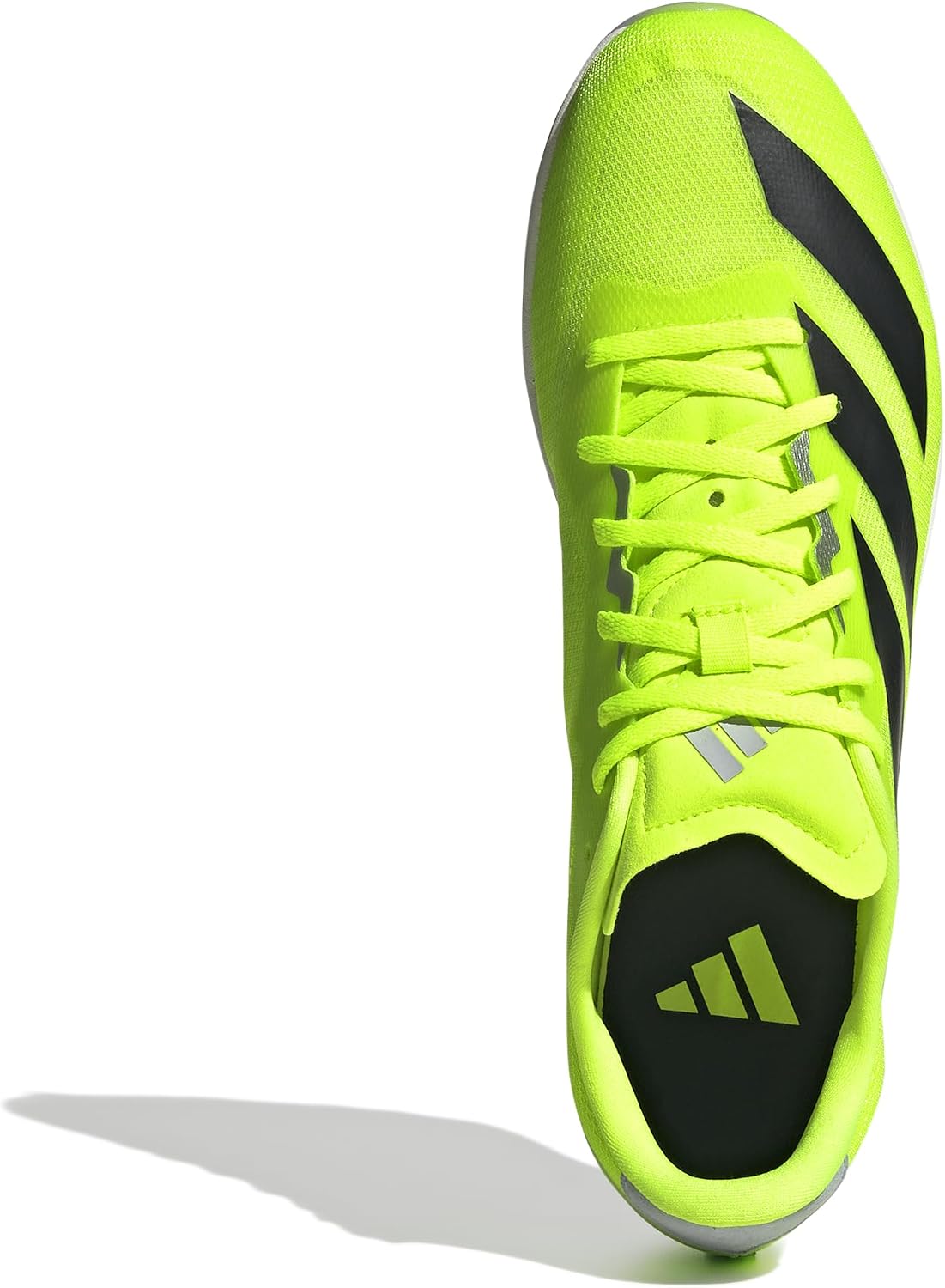
The Adidas Adizero Distancestar is built for middle- and long-distance events — 800m, 1500m, the mile, steeplechase, and even cross-country configurations depending on the spike setup. At those distances, your heel will make contact with the track on some strides, your foot needs more surface area for cushioning across longer ground contact times, and the shoe needs to stay comfortable through many more footstrikes than a 100m flat-out blast.
According to Runners World’s guide “How to Choose Track Spikes,” one of the most common — and most expensive — mistakes beginner athletes make is grabbing a sprint spike for middle-distance events because it “looks faster.” A sprint spike’s geometry actively works against you past 400m. It forces forefoot loading before your body is ready to sustain it, accelerates fatigue in the calves and Achilles, and can compromise your form in the back half of a race.
The short version: sprint spike for the sprints, distance spike for the distance. The Sprintstar and Distancestar make that decision easy by naming themselves accordingly.
Head-to-Head: Sprintstar vs. Distancestar
The three sections below break down each model by the athlete profile it serves best, followed by a direct comparison of the two. Each section ends with a tier marker so you can skim to the right level for your program.
The Sprintstar: Built for Explosive, Short-Distance Racing
The Sprintstar is an entry-to-mid-level sprint spike targeting the 60m, 100m, and 200m athlete who needs a tool that disappears underfoot. Owners consistently describe the feel as weightlessness — which, for a sprint spike, is exactly the point. At these distances, every gram is a real variable. A shoe that disappears underfoot lets a sprinter focus entirely on mechanics and drive rather than fighting footwear feedback.
One detail that surfaces repeatedly in Sprintstar reviews, and one that’s easy to overlook on a spec sheet: the reinforced heel leather. Reviewers specifically call out that it held up when a teammate accidentally stepped on the back of the shoe — a scenario that destroys lesser spikes and leaves athletes hunting for a replacement mid-season. For a shoe at this price point, that kind of durability signal is worth noting. It suggests Adidas put real construction thought into a model that could easily have been built as a throwaway entry-level option.
There are no widespread sizing complaints in available Sprintstar reviews, which is a meaningful signal. As Podium Runner’s “Track Spike Buying Guide” notes, inconsistent sizing is one of the top friction points in online spike purchases — particularly with some competing brands where athletes report needing to go up half a size to accommodate narrower lasts. No such pattern appears in the Sprintstar feedback.
adidas
$58.43
In stock on Amazon
Check price on AmazonThe Distancestar: Lightweight and Race-Ready for Middle-Distance
The Distancestar is designed for 800m, 1500m, the mile, 3000m, and longer — and it carries a 4.9-star aggregated rating from current owners. Reviewers consistently describe it as “lightweight and fast” and well-suited for both training and competition at middle-distance. However — and this matters for how you weigh the rating — the review base is still relatively small compared to more established models like the Adizero Avanti TYO or higher-priced sprint spikes. A 4.9 from a small sample is a green flag, not a guarantee.
What reviewers do emphasize: the Distancestar doesn’t feel like a compromise. It’s not a budget shoe that trains you to want something better. Athletes using it for 800m and 1500m workouts describe it as genuinely race-ready, not just a practice stand-in.
Like the Sprintstar, there are no sizing anomalies flagged by Distancestar owners. This is worth comparing against some ASICS spike models, where sizing inconsistency is a recurring theme in buyer feedback — often requiring athletes to go a half size up or experiment with width. With both Adidas models, true-to-size ordering appears reliable based on current reviewer consensus.
adidas
$58.43
In stock on Amazon
Check price on AmazonComparing the Two: Where They Overlap and Where They Don’t
Here is where the practical decision lives. Both shoes are entry-to-mid-level Adizero models, both include spikes and a wrench in the box, and both have drawn strong owner satisfaction ratings. The divergence is entirely about event geometry.
| Feature | Adizero Sprintstar | Adizero Distancestar |
|---|---|---|
| Primary events | 60m, 100m, 200m | 800m, 1500m, mile, 3000m+ |
| Spike configuration | 6-pin sprint | 6-pin distance |
| Heel geometry | Minimal / sprint-forward | Moderate / accommodates heel contact |
| Includes spikes + wrench | Yes | Yes |
| Sizing pattern | True to size | True to size |
| Durability signals | Reinforced heel leather noted | Race and training durable |
The overlap zone — and the genuinely hard call — is the 400m runner. The 400m is classified as a sprint, and most 400m specialists race in sprint spikes. Track and Field News, in its coverage of the Adizero series, has noted that Adidas positions its distance spike line to cover the upper boundary of middle-distance, which means a 400m athlete in a distance spike is slightly undertooled for pure sprint mechanics — but not dangerously mismatched. If budget is a constraint and you’re choosing one spike to cover 400m through 800m, the Distancestar is the more versatile choice. If you’re a 400m specialist who can afford two pairs, the Sprintstar belongs in your sprint races and the Distancestar becomes your 800m shoe.
For athletes who run only the 400m: go with the Sprintstar. The event is a sprint. Match the tool to the task.
Adidas
$70.00
In stock on Amazon
Check price on AmazonWhat Comes in the Box (Don’t Skip This Section)
Both the Sprintstar and the Distancestar ship with spikes and a spike wrench already included. This matters more than it sounds, especially for first-time buyers.
Spikes are consumables. They wear down, strip threads, or get lost. Knowing that your first set is already in the box means you’re ready to race without a separate hardware run. The included wrench means you can swap spike lengths — short pins for synthetic tracks, longer pins for grass or older surfaces — without borrowing a tool from your coach.
If you buy a spike set from any brand and the box doesn’t include hardware, that’s a gap you need to fill before your first meet. With both the Sprintstar and Distancestar, Adidas closes that gap at purchase. For athletes newer to spikes, Runners World’s “How to Choose Track Spikes” recommends confirming hardware inclusion before checkout regardless of brand, since entry-level models vary widely on this point.
Sizing: Do You Need to Adjust from Your Regular Running Shoe?
One of the most common questions in spike purchases — especially from athletes who already own Nike training flats or race spikes — is whether Adidas runs differently.
Based on aggregated reviewer feedback across both models, Adidas Adizero spikes fit true to size for most athletes. The consensus pattern from owners is: order your normal running shoe size. There’s no widespread signal suggesting you need to go up, as some ASICS models require.
That said, spike fits are notoriously personal. A few reviewers note that athletes with wider feet may find the Adizero last slightly snug, which is a common characteristic across most performance-oriented track spikes regardless of brand. Podium Runner’s “Track Spike Buying Guide” recommends checking your retailer’s return and exchange window before ordering if you’re between sizes or run wide — and trying on in-store if a specialty running retailer is accessible near you.
World Athletics’ Approved Shoes List (2025 edition) does not specify sizing guidance by model, but its competition eligibility criteria confirm that both the Sprintstar and Distancestar configurations comply with spike-length and plate regulations for sanctioned track events at the appropriate distances.
Frequently Asked Questions
What events is the Sprintstar designed for vs. the Distancestar? The Sprintstar is built for short sprint events: 60m, 100m, and 200m. The Distancestar is designed for middle- and long-distance events: 800m, 1500m, the mile, 3000m, and beyond. The geometry, plate angle, and cushioning of each shoe are optimized for those specific race demands.
Do these shoes come with spikes and a wrench already included? Yes. Both the Sprintstar and the Distancestar include spikes and a spike wrench in the box. You’re race-ready straight from the package without a separate hardware purchase.
How do Adidas Adizero spikes fit compared to Nike — same size or size up? Based on current reviewer consensus, Adidas Adizero spikes fit true to size for most athletes. Unlike some ASICS models where a half-size up is frequently recommended, there’s no widespread pattern suggesting you need to adjust your size when moving from Nike to Adidas. Athletes with wider feet may find the fit snug, which is standard for performance-oriented spike lasts.
Is the Distancestar suitable for both practice and competition? Yes. Reviewers consistently describe the Distancestar as genuinely race-ready, not just a practice shoe. It performs well in both training contexts — tempo runs, interval sessions — and competitive middle-distance races. The durability signals in owner reviews suggest it holds up across a full season of both uses.
Can a 400m runner use the Distancestar, or should they stick with the Sprintstar? If you’re a 400m specialist, the Sprintstar is the correct choice — the 400m is a sprint, and the shoe’s geometry matches that. If you’re a multi-event athlete who runs both 400m and 800m and can only afford one pair, the Distancestar covers the wider range more comfortably. If budget allows two pairs, run the Sprintstar in your 400m and the Distancestar in your 800m.
The Decision Rule
Here’s the framework, plain and direct:
- If your events are 60m, 100m, or 200m → Sprintstar. Full stop.
- If your events are 800m, 1500m, mile, or longer → Distancestar. The strong early rating and lightweight build make it a solid choice; acknowledge the small sample size and monitor as the model matures.
- If you run the 400m exclusively → Sprintstar, because the event is classified as a sprint and the shoe geometry matches.
- If you run 400m AND 800m on the same roster → buy both if budget allows, or choose the Distancestar as the more versatile single-pair compromise.
- If you’re unsure about sizing → order true to size, check your retailer’s return window before committing, and note that neither model has generated the sizing-inconsistency complaints that have followed some competing brands.
Both shoes include hardware. Neither punishes beginners. The names tell you what they’re for. Trust the names.