August 9, 2026 • Cassidy Vane • 9 min reading time • Prices verified June 6, 2026
Adidas Track Spikes Explained: Sprintstar vs. Distancestar and What Lightstrike Pro Actually Means
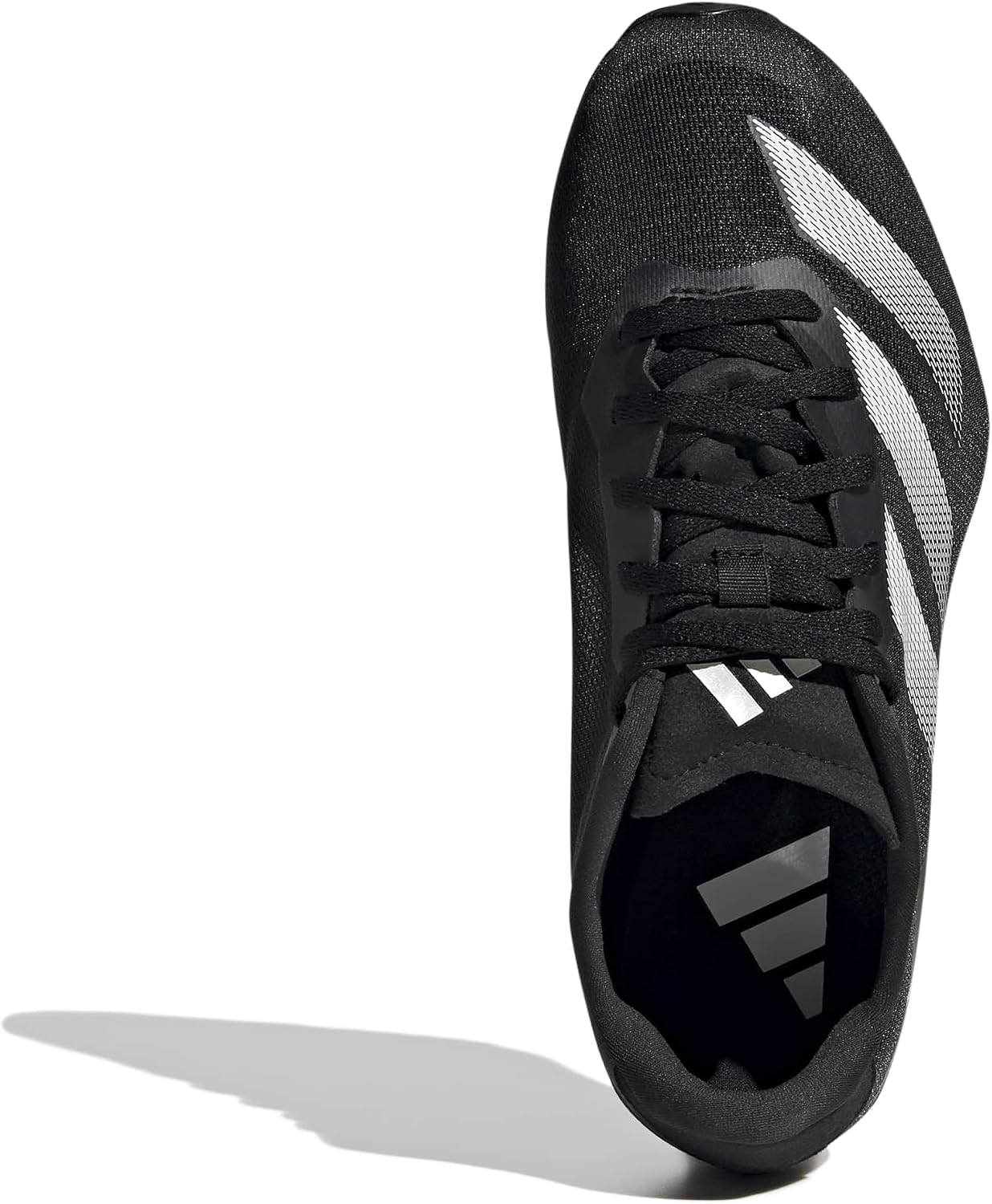
If you’ve started looking at Adidas track spikes and found yourself staring at names like “Sprintstar,” “Distancestar,” and “Lightstrike Pro” with no clear sense of what any of it means — you’re not alone. Track spikes are a specialized category of racing shoe: they’re lighter than your training shoe, fitted with a removable spike plate on the forefoot (small metal or ceramic pins that grip the track surface), and engineered for specific events rather than general use. The wrong spike for your event won’t just feel uncomfortable — it can actually hurt your times. This guide cuts through Adidas’s naming system, explains what their foam and plate technologies actually do in plain language, and ends with a direct decision rule so you know exactly which model belongs on your feet.
The Adidas Naming System: What “Star” Actually Tells You
Adidas uses a consistent naming logic across its performance spike line that, once you understand it, makes the whole catalog readable. The suffix tells you the event family:
- Sprintstar — designed for sprints (100m–400m)
- Distancestar — designed for middle and long distance (800m–10,000m)
- Jumpstar — field events involving jumping
- Throwstar — throwing events
Above those entry-to-mid-tier models, Adidas stacks its Adizero sub-brand, which signals premium construction and competition-grade materials. Think of “Adizero” as the label that means “we stripped everything non-essential.” Within Adizero, you’ll find the models that serious competitors and coaches actually argue about: the Adizero Prime SP2 for sprints, the Adizero Avanti TYO for distance, and various field-specific builds.
The practical takeaway: if a shoe doesn’t say Adizero, it’s likely a training spike or entry-level competitor. That’s not an insult — the Adidas Adizero SC (around $40–$55 street price) is a capable spike for sub-varsity athletes and practices. But if you’re racing at a varsity, collegiate, or open club level and comparing specs, your attention should be on the Adizero tier.
What Is Lightstrike Pro, and Why Does It Matter?
Lightstrike Pro is Adidas’s proprietary foam compound used in their highest-tier racing footwear. Foam, in a spike context, is the cushioning layer between the outsole (bottom of the shoe) and your foot. In traditional spikes, this layer was minimal or absent — sprinters historically wanted ground feel over cushioning. The modern generation of distance and middle-distance spikes has changed that calculus significantly.
Here’s how Adidas positions Lightstrike Pro relative to its sibling foams:
| Foam | Where You’ll Find It | What It Prioritizes |
|---|---|---|
| Lightstrike | Entry/mid spikes, training | Durability, everyday use |
| Lightstrike 2.0 | Mid-tier Adizero models | Balance of weight and cushioning |
| Lightstrike Pro | Prime SP2, Avanti TYO | Maximum energy return, minimum weight |
Outside Online’s reporting on carbon plate shoe mechanics has consistently explained that the energy-return story in modern racing footwear is a foam-plus-plate combination — neither element works optimally without the other. Lightstrike Pro is formulated to compress and rebound quickly, which means the foam isn’t just absorbing impact; it’s helping propel your foot forward into the next stride. Podium Runner’s 2025 Track Spike Buyer’s Guide describes the sensation as “snappy rather than plush” — it doesn’t feel soft underfoot the way a cushioned trainer does, but it releases energy faster than softer foams.
The honest caveat: Lightstrike Pro’s energy-return properties matter most at race paces where your foot strike is fast and powerful. At slower training paces or for athletes whose biomechanics don’t generate significant ground force, the difference versus Lightstrike 2.0 is less pronounced. If you’re a freshman running 55-second 400s in practice, the foam difference between a $120 spike and a $250 spike is real but not race-deciding. The decision rule is in the final section — stay with me.
Comparing the Three Tiers: Budget, Mid, and Premium
This is the core of the buying decision. Adidas’s spike lineup breaks cleanly into three performance tiers. Below, each is treated as its own sub-section so the tradeoffs are direct and scannable.
The Budget Pick: Adizero SC (~$40–$55)
The Adidas Adizero SC is the genuine entry point into the Adizero family. It uses the base Lightstrike foam, a flexible spike plate with minimal stiffness, and a construction that tolerates the varied demands of practice sessions, multi-event athletes, and athletes who haven’t yet committed to a single event specialty.
Who belongs here: athletes in their first or second year of track, multi-event competitors who need one spike that handles sprints, hurdles, and jumps without specializing fully, and coaches who need to outfit developing athletes without committing premium budget before event specialization is established.
Who doesn’t belong here: anyone racing at the varsity or collegiate level in a single event where split-second margins matter. The Adizero SC is a capable tool, but its flexible plate and minimal foam don’t provide the energy return that serious competitors need on race day.
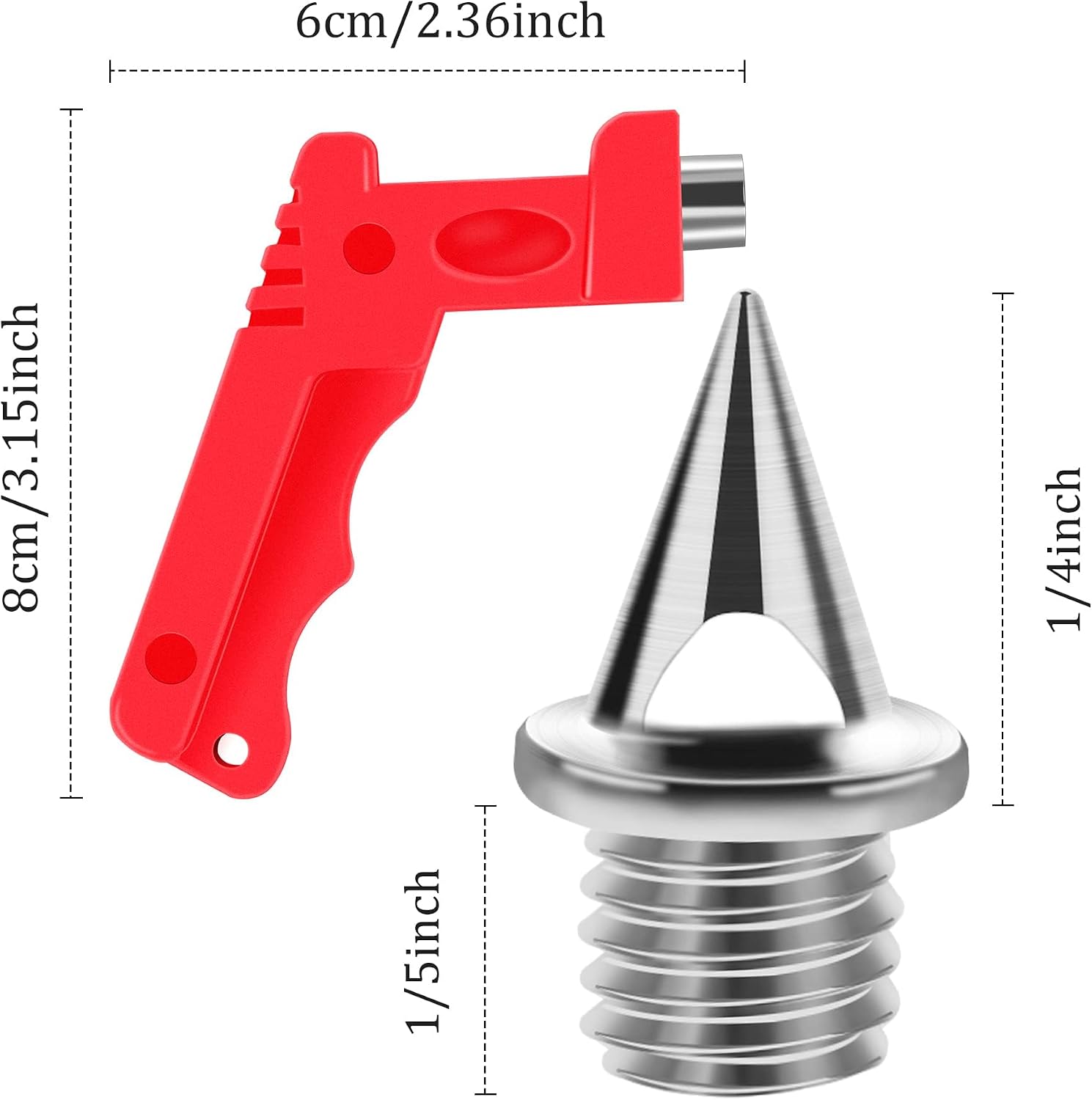
JULMELON
$9.95
In stock on Amazon
Check price on AmazonThe Mid-Tier Pick: Adizero Ambition (~$110–$130)
The Adidas Adizero Ambition uses Lightstrike 2.0 foam and a semi-rigid plate rather than a full carbon-fiber unit. Podium Runner’s 2025 Track Spike Buyer’s Guide has flagged this model as the consistent sweet spot for developing athletes — it provides 85–90% of the performance benefit of the top-tier models at roughly half the price.
Who belongs here: JV and varsity-development sprinters, high school distance runners in their second or third year of serious training, masters athletes returning to track competition after a multi-year break, and 400m runners whose mechanics sit somewhere between pure sprint and middle-distance stride. The Ambition is also a reasonable choice for collegiate club athletes who compete regularly but aren’t yet at the level where every marginal advantage in foam compounds.
Who doesn’t belong here: athletes whose primary events are 3,000m or longer, where the Ambition’s lower stack height leaves the legs under-protected in the final third of a race. Also not ideal for 100m/200m specialists at the collegiate or open level, where the stiffness ceiling of a semi-rigid plate limits power transfer at maximum velocity.
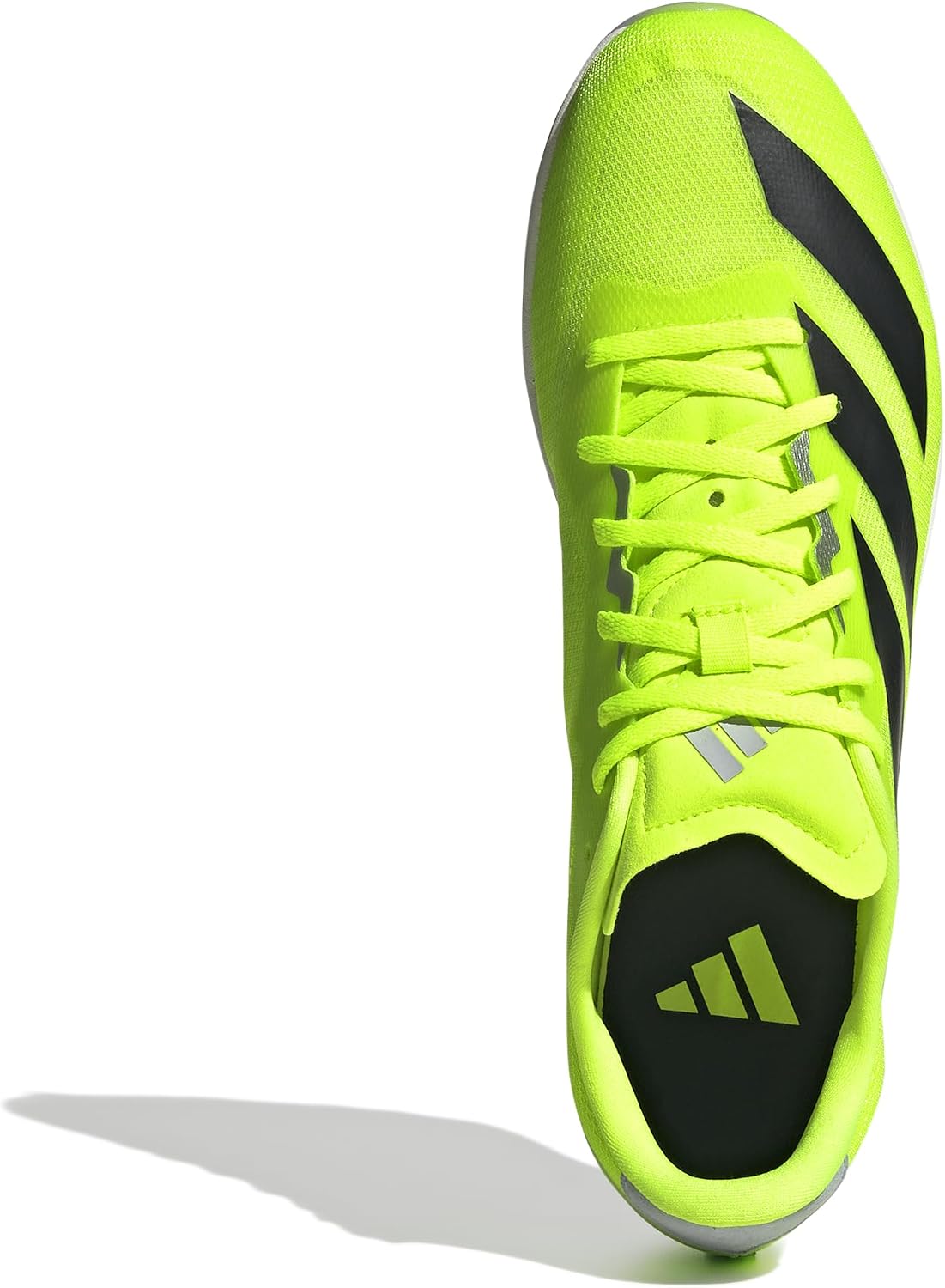
adidas
$59.84
In stock on Amazon
Check price on AmazonThe Premium Pick: Adizero Prime SP2 and Adizero Avanti TYO (~$180–$250)
At the top tier, Adidas offers two distinct tools that serve different event families. Both use Lightstrike Pro foam and full carbon-fiber plates — but the plate geometry, stack height, and heel construction differ in ways that are consequential depending on your event.
Adizero Prime SP2 (~$250) is the sprint specialist. Its architecture reflects exactly what sprint biomechanics demand:
- A full-length, stiff carbon-fiber plate running from heel to toe that prevents energy loss through flex
- Near-zero heel drop, designed for forefoot strikers who never contact the heel in a 100m or 200m
- Manufacturer weight specs of approximately 115–125g depending on size
- A 7-pin spike configuration that distributes grip force across a wider forefoot zone
Track & Field News has covered the Prime SP2 extensively in the context of World Athletics championship competition, noting its use by multiple finalists at major global meets. That coverage matters practically: World Athletics maintains an Approved Competition Shoes list, updated for the 2025–2026 season, that governs which spikes are legal at sanctioned meets. The Prime SP2 appears on that list. Before any athlete commits $250 to a competition spike intended for sanctioned competition, cross-referencing the World Athletics Approved Competition Shoes list — available through the World Athletics website under their technical documentation section — is a non-negotiable step.
Adizero Avanti TYO (~$180–$200) is the flagship distance spike, competing directly against Nike’s Dragonfly for the attention of 1500m-through-10,000m athletes. The “TYO” designation references the Tokyo Olympics development cycle, though the model has been updated since. Runner’s World’s review of the Adizero Avanti TYO described the foam stack as “genuinely race-useful beyond 1500m” — meaning it’s thick enough to provide meaningful protection on a 5K without being so soft that it feels mushy or slow at 800m pace.
Structural differences from the Prime SP2 are significant and intentional:
- A shorter, more flexible carbon-fiber plate that doesn’t extend the full shoe length, accommodating the varied footstrike of distance runners
- A meaningfully higher stack height of Lightstrike Pro foam, providing cushioning across longer distances when legs need late-race protection
- A formed heel counter that cradles the heel and supports the heel-to-midfoot contact patterns of distance athletes
- A 6-pin spike configuration with geometry tuned for distance stride mechanics rather than pure forefoot propulsion
Adidas
$70.00
In stock on Amazon
Check price on AmazonDecision Rule: If X, Then Y
Here’s the honest framework, event by event.
If you run 100m or 200m at the varsity or collegiate level, the Prime SP2 is the correct tool. The stiff carbon plate and near-zero heel drop match your mechanics exactly. Verify World Athletics Approved Competition Shoes list status before purchasing for any sanctioned meet.
If you run 400m, the choice splits on your stride mechanics. Athletes who sprint the full 400m on their forefoot frequently prefer the Prime SP2. Athletes who use a more varied stride or who race 400m as their longer event often perform better in a hybrid model like the Ambition. The Avanti TYO is typically too cushioned and tall for 400m specialists.
If you run 800m or 1500m, the Avanti TYO is the default pick, but the Ambition at roughly half the price is worth serious consideration unless you’re competing at the collegiate or open club level where every marginal advantage compounds. For athletes running slower than 2:10 (800m) or 4:20 (1500m), the foam difference is unlikely to move times more than an equivalent investment in training will.
If you run 3,000m or longer, the Avanti TYO’s stack height and plate geometry are purpose-built for you. Don’t try to race a 5K in a sprint spike — the Prime SP2’s rigid full-length plate and minimal cushioning will leave your legs depleted long before the finish.
If you’re buying for a developing or sub-varsity athlete, start with the Adizero SC or Ambition. Return to the Prime SP2 or Avanti TYO once the athlete has established consistent mechanics and a clear event specialty. Spending $250 on a carbon spike before a sophomore knows whether they’re a sprinter or a miler is genuinely premature.
If you’re a coach sourcing for a full roster, contact specialty retailers directly — Running Warehouse and JackRabbit both operate volume-pricing programs for team accounts. Published team pricing isn’t listed publicly but is available by request, and both retailers carry the full Adidas Adizero range with consistent sizing across the lineup.
The Adidas spike lineup rewards athletes who match the tool to the task. The naming system isn’t marketing camouflage once you know the key: Sprintstar and Distancestar tell you the event family, Adizero signals premium construction, and Lightstrike Pro means you’re in the top tier of foam technology. Know your event, know your level, and buy accordingly.