August 22, 2026 • Cassidy Vane • 11 min reading time • Prices verified June 6, 2026
No-Name vs. Brand: Do Budget Track Spikes Under $40 Actually Hold Up?
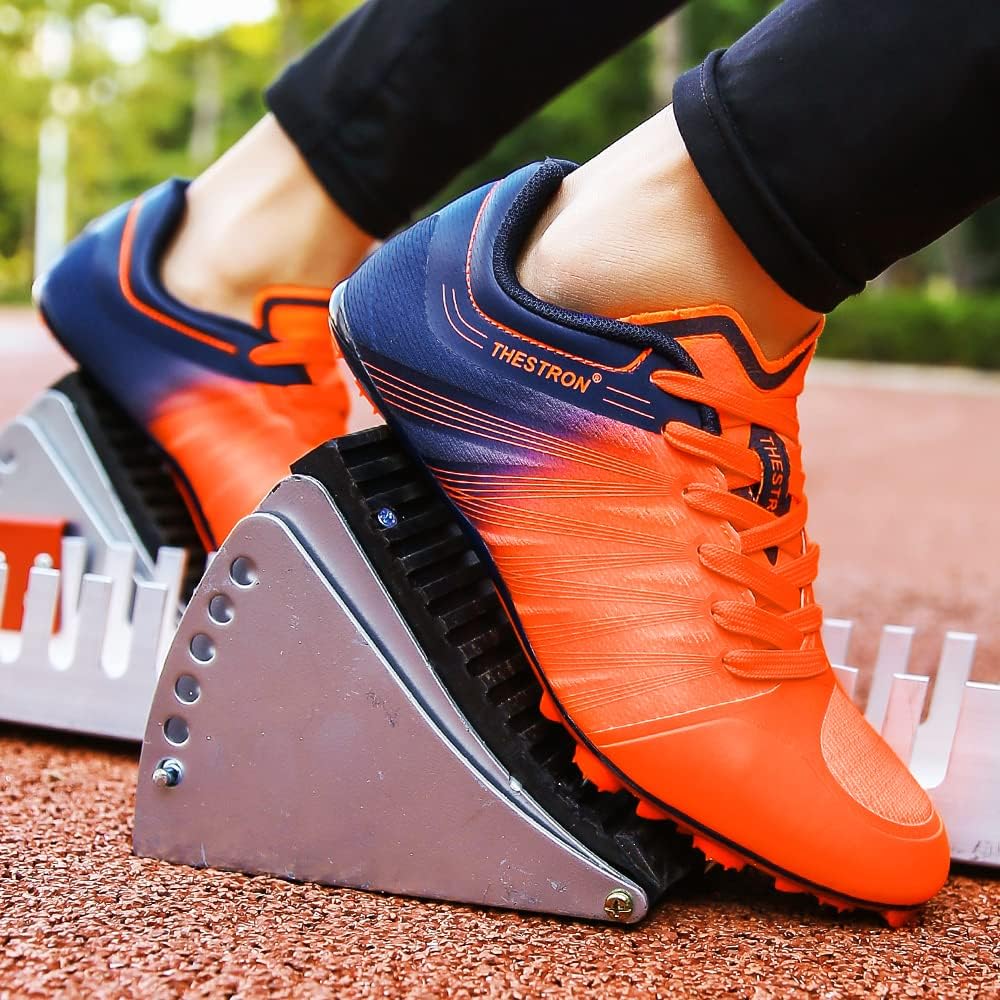
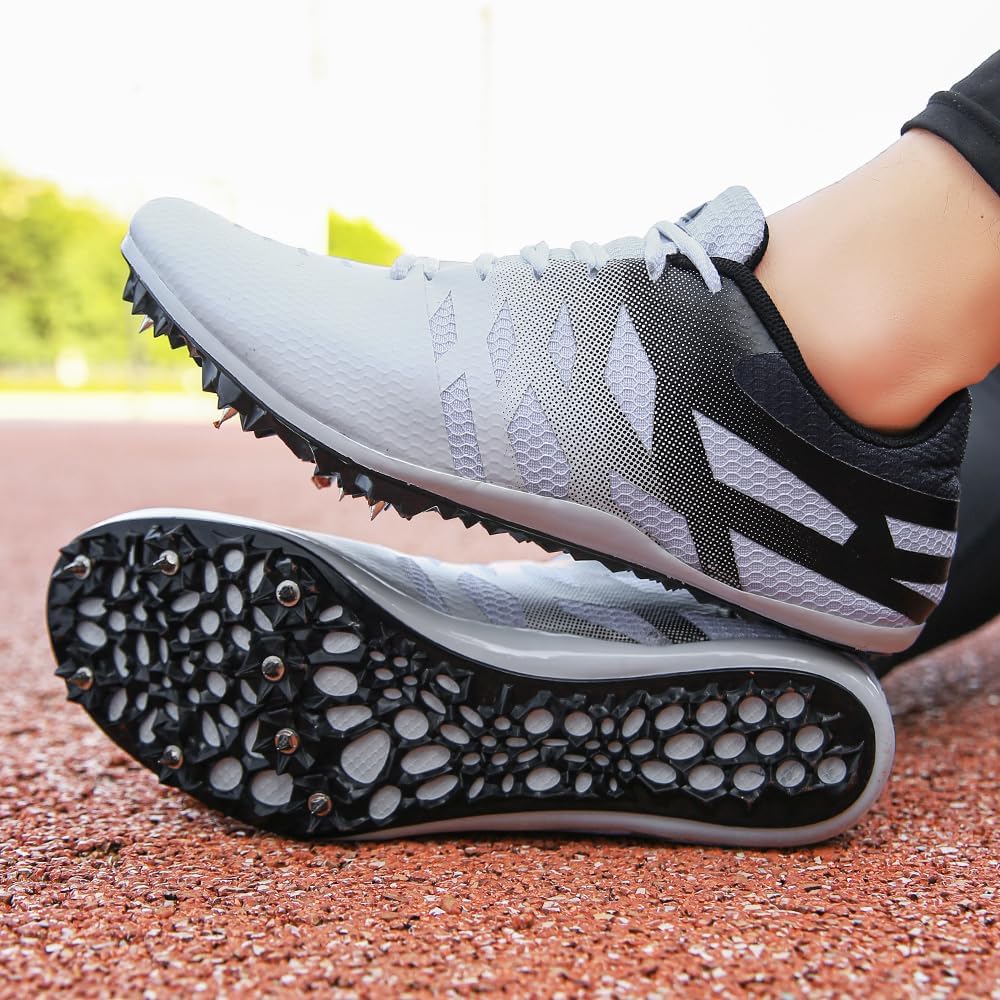
Track spikes are a specific type of racing shoe built for one job: giving you grip on a rubberized oval track surface. Unlike regular training sneakers, spikes have a stiff, lightweight upper, a thin sole, and a plate in the forefoot where small metal pins — the “spikes” themselves — screw in to bite into the track as you push off. That combination of grip and rigidity is why even a modest pair of spikes will feel noticeably faster than running in flats. The question this article answers is a practical one: if you’re a first-year high schooler, a middle-schooler heading into a debut season, or a parent trying not to spend $225 before a kid even knows if they’ll stick with the sport — can a sub-$40 no-name pair actually do the job? The honest answer is more nuanced than “yes” or “no,” and that nuance is worth understanding before your money moves.
| EDITOR'S PICKMen Women Kids Track and Field… | Mid-tierTrack and Field Shoes Men Women… | Budget pickTrack Spike Shoe for Men Profes… | |
|---|---|---|---|
| Spike count | 8 | 8 | — |
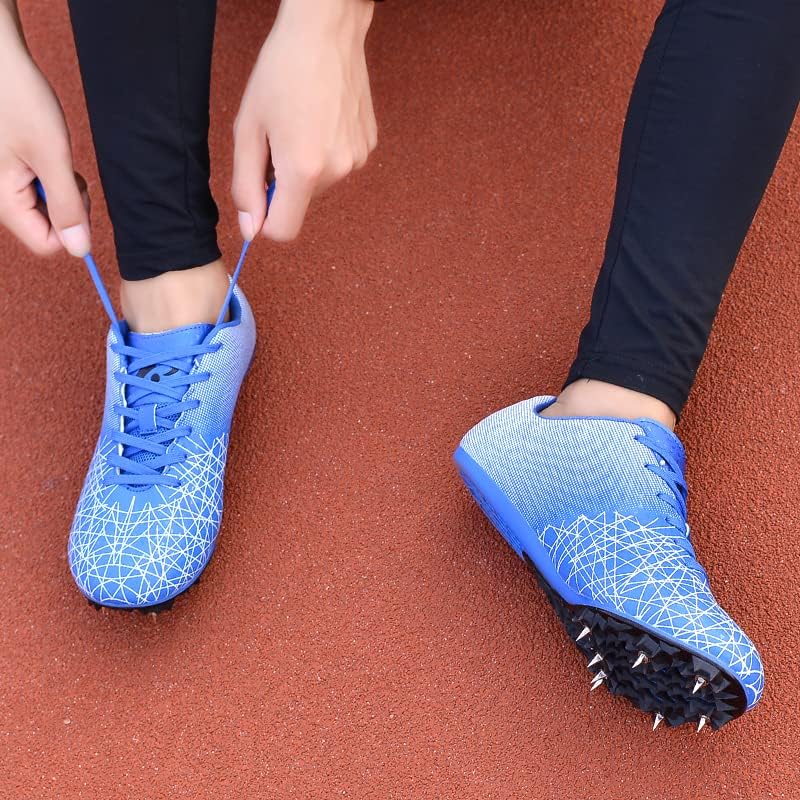
| Colorway | White Black | Orangeblue | Blue |
| Sizes include kids | ✓ | ✓ | ✗ |
| Sizes include women | ✓ | ✓ | ✗ |
| Price | $39.99 | $39.99 | $39.88 |
| See on Amazon → | See on Amazon → | See on Amazon → |
What You’re Actually Getting for $30–$40
Let’s start with what the budget tier looks like structurally, because “no-name spike” covers a wide range of actual product.
The models clustered in this price band — think unbranded options sold primarily through online marketplaces — share a common construction profile. Owners consistently report a thin synthetic mesh upper, a basic injection-molded plate (the plastic forefoot piece that holds the spike pins), and a 6-pin configuration across the forefoot. The plate is not carbon fiber — that material only appears at the $100-and-up tier and becomes dominant above $150. What you’re getting here is nylon or basic composite plastic, which provides some rigidity but deflects more underfoot than a true carbon plate.
Reviewers across multiple budget models are strikingly consistent on a few points:
- True-to-size fit is the most repeated positive note. Owners report needing no size adjustment from their normal shoe size, which matters for first-time buyers ordering without trying on.
- Grip improvement over flats is real. Multiple reviewers describe moving from training shoes to these spikes and immediately noticing the difference in acceleration out of the blocks. That’s not surprising — even a basic spike plate and standard pyramid pins will outperform a flat trainer on a rubberized track.
- Season durability is generally confirmed. The dominant owner pattern is “lasted the full season,” particularly for athletes competing one to two times per week at the middle school or sub-varsity high school level.
How the Three Tiers Actually Compare
Understanding where budget spikes sit requires looking at the full price ladder side by side. The differences are real — but they are not evenly distributed across the price range.
Budget No-Name Spikes ($25–$40)
Track
$39.88
In stock on Amazon
Check price on AmazonUnbranded budget spikes in this range use a nylon or basic composite forefoot plate, ship with a standard 6-pin pyramid configuration, and weigh approximately 5 to 6 ounces per shoe. Manufacturing consistency is variable — quality control complaints appear in owner reviews at a higher rate than with established brands. Fit tends to run narrow in the toe box. The plate provides functional rigidity for entry-level use but delivers minimal energy return compared to stiffer materials higher up the price ladder.
Best for: First-season athletes, developmental meets, families testing the sport before committing to higher investment.
Track
$39.88
In stock on Amazon
Check price on AmazonEntry-Level Branded Spikes — Nike Zoom Rival / Adidas Adizero SC (~$45–$65)
Track
$39.99
In stock on Amazon
Check price on AmazonEntry-level branded models from Nike and Adidas occupy a narrow but meaningful step above the no-name tier. The Nike Zoom Rival, covered extensively in Runner’s World’s annual spike roundups, uses a nylon composite plate similar in category to budget models but with tighter manufacturing tolerances and a more precisely fitted upper. Weight runs approximately 4.8 to 5.5 ounces. Both the Zoom Rival and the Adidas Adizero SC carry documented World Athletics approval status — a meaningful distinction for athletes competing at sanctioned meets where equipment compliance is checked. Fit is more consistent across production runs, and the toe box is slightly more accommodating than the narrow cut common to unbranded budget options.
Best for: Sub-varsity and varsity athletes who want confirmed compliance documentation, more consistent sizing, and a moderate performance step up from no-name options without committing to elite hardware pricing.
Track
$39.99
In stock on Amazon
Check price on AmazonElite Carbon-Plate Spikes — Nike Air Zoom Maxfly / Adidas Adizero Prime SP2 ($200–$260)
Men
$39.99
In stock on Amazon
Check price on AmazonElite spikes at this tier are a categorically different product. Runner’s World’s spike coverage consistently distinguishes carbon-plate racing flats from nylon-plate entry models on the basis of energy return — the degree to which the plate stores and releases force during ground contact. The Nike Air Zoom Maxfly uses a full-length carbon fiber plate and weighs approximately 3.8 ounces. The Adidas Adizero Prime SP2 uses a similar construction philosophy. Both are purpose-engineered for athletes at the varsity championship level and above, where tenths of a second are the margin that matters and equipment can meaningfully contribute to performance after technique and conditioning have been maximized.
Best for: Varsity athletes competing at state, regional, or national-level championship meets. Not appropriate as a first spike purchase or for athletes whose primary limiting factor is still technique and race experience.
Men
$39.99
In stock on Amazon
Check price on AmazonThe Tradeoffs You Need to Know Before You Buy
This is where the decision frame matters. Budget spikes clear the bar for entry-level use — but only if you understand what you’re accepting.
The narrow fit issue is the single most consistent complaint. Across aggregated owner reviews on multiple budget models, the narrow toe box is flagged repeatedly enough that it is not a fluke. If your athlete has a wider foot — or even a standard foot that tends to spread under load — these shoes are likely to cause discomfort by mid-race. Podium Runner’s guide to spike selection notes that fit in the forefoot is the single most important variable for comfort and injury prevention in a spike, because the shoe is designed to put you on your forefoot and keep you there for the entire race. A pinched toe box in that position is not a minor inconvenience; it affects stride mechanics. Try these with thick socks during any warmup period if you are between widths, or size up a half step and confirm the fit resolves before race day.
Quality control is inconsistent at this price. Owner reviews document isolated incidents of fabric tears after minimal use and, in at least one case, a pair that arrived showing signs of prior use — a clear manufacturing or fulfillment inspection failure. These are not universal outcomes, but they are documented ones. At $225 for an elite spike, you are partially paying for manufacturing consistency and quality assurance at scale. Budget models from unknown brands sourced through marketplace listings carry more variance. If a pair arrives with visible defects, photograph it before wearing, document the packaging, and submit a return or replacement claim through the platform’s buyer protection system within the stated claim window — typically 30 days from delivery.
The plate stiffness ceiling is real — but it probably does not matter for your use case yet. Runner’s World’s annual spike roundups consistently distinguish entry-level nylon-plate spikes from carbon-plate racing spikes on the basis of energy return. For a varsity athlete chasing a 10.8 100m or a sub-4:10 mile, plate stiffness is a meaningful variable. For an athlete running a 12.5 100m in their first season, the limiting factor is technique, fitness, and race experience — not plate material. The honest advice: a carbon plate cannot deliver what training has not yet built.
Who Should Buy Budget Spikes — and Who Shouldn’t
Clear “buy” case:
- First-year middle school or freshman-level athletes who do not yet know their primary event
- Athletes whose growth plates are still developing, meaning shoe size may change before next season
- Parents testing whether a child will continue with the sport before committing $100 or more
- Athletes competing in modified or developmental meets where absolute equipment parity matters less
- Coaches or athletic directors outfitting a developmental squad on a limited budget
Reviewers consistently frame budget models as starter or beginner options and explicitly contrast them with branded alternatives — which is the most accurate possible signal about where these shoes sit in the market. They are not underdog sleepers that secretly match elite hardware; they are functional entry-level tools at a fair price for what they are.
Clear “skip” case:
- Varsity athletes competing at the championship level, where legal compliance and performance margins both matter
- Athletes with wider feet, high arches, or previous forefoot injury history — the narrow fit is a documented risk
- Long jump, triple jump, or any runway-to-pit field event requiring a more structured lateral support system
- Athletes who have already maximized technique and conditioning and are now at the stage where equipment can contribute meaningfully to performance
If you fall into the second group and budget is the constraint, the smarter move is to find last-season Nike Zoom Rival or Adidas Adizero SC inventory at or below $55, rather than going no-name. Those models carry consistent quality control, known sizing, and documented World Athletics approval status.
Frequently Asked Questions
Do these spikes come with the pins already installed?
Most budget models ship with a set of replacement spike pins included separately, with the plate positions either pre-loaded with a basic pin or left open. The standard process is to use a spike wrench — usually included in the box, though budget models sometimes omit it, so check the listing — to screw pins into the threaded forefoot holes. Pyramid pins are the most common type included and are accepted at all competitive levels. If no wrench is included, a basic spike wrench is available at most running specialty retailers for approximately $3–$5.
Are the included spike pins legal for high school track meets?
Pin legality at the high school level is governed by the National Federation of State High School Associations Track and Field Rules Book — the NFHS publishes an updated edition each season, and the 2025 edition is the governing document for the current season. The NFHS permits pyramid, compression, or Christmas tree-style pins up to 9mm in length on standard rubber tracks and limits pins to 6mm on certain synthetic surfaces. The pins included with most budget models are typically standard 6mm pyramids, which clear those requirements. However, it is your responsibility — or your coach’s — to verify that the specific pins included with your pair meet your state association’s current rules before competition.
How do these compare to Nike or Adidas at twice the price?
The honest comparison: budget models and entry-level branded models (Nike Zoom Rival, Adidas Adizero SC) are closer to each other than either is to mid-tier or elite hardware. The primary differences as you move up the price ladder are plate stiffness and energy return (nylon to partial carbon to full carbon), upper construction quality and fit precision, manufacturing consistency, and verified compliance documentation. For athletes under sub-varsity competitive demands, the performance gap between a $35 no-name and a $50 Nike Zoom Rival is smaller than the gap between either of those and a $150-plus carbon-plate model.
Can these be used for field events like long jump?
Technically yes, but with caveats. Long jump and triple jump place lateral stress on the midfoot and require ankle support through the runway and takeoff that sprint spikes — especially lightweight, thin-soled budget models — are not optimized for. Purpose-built jumping spikes include a stiffened midfoot shank and slightly more lateral structure for exactly this reason. For a developmental athlete doing a first season of long jump at a JV or middle school level, a basic sprint spike will function. For anyone competing seriously in horizontal jumps at the varsity level or above, a dedicated jumping spike is the appropriate investment.
The Bottom Line
Budget spikes under $40 are a legitimate option for a specific buyer: a first-season athlete, a developmental-level competitor, or a parent running a cost-benefit test before committing to elite hardware. Owners report real performance gains over flats, reliable single-season durability, and true-to-size fit. The tradeoffs — narrow fit, inconsistent quality control, no carbon plate — are real, but they are also the expected tradeoffs at this price point.
The decision rule is simple: if this is a first season, a trial year, or a budget-constrained situation where any spike is better than no spike, buy the budget pair and race in it without apology. If you are at the stage where performance margins matter and your technique and fitness are no longer the limiting factor, the $35 you save is not worth the ceiling you are accepting. At that point, last-season branded inventory at $45–$60 is the smarter call — and we can help you find it.