September 5, 2026 • Cassidy Vane • 8 min reading time • Prices verified June 6, 2026
Under $50 Track Spikes: Honest Answers for Parents Who Don't Want to Overspend on a Freshman
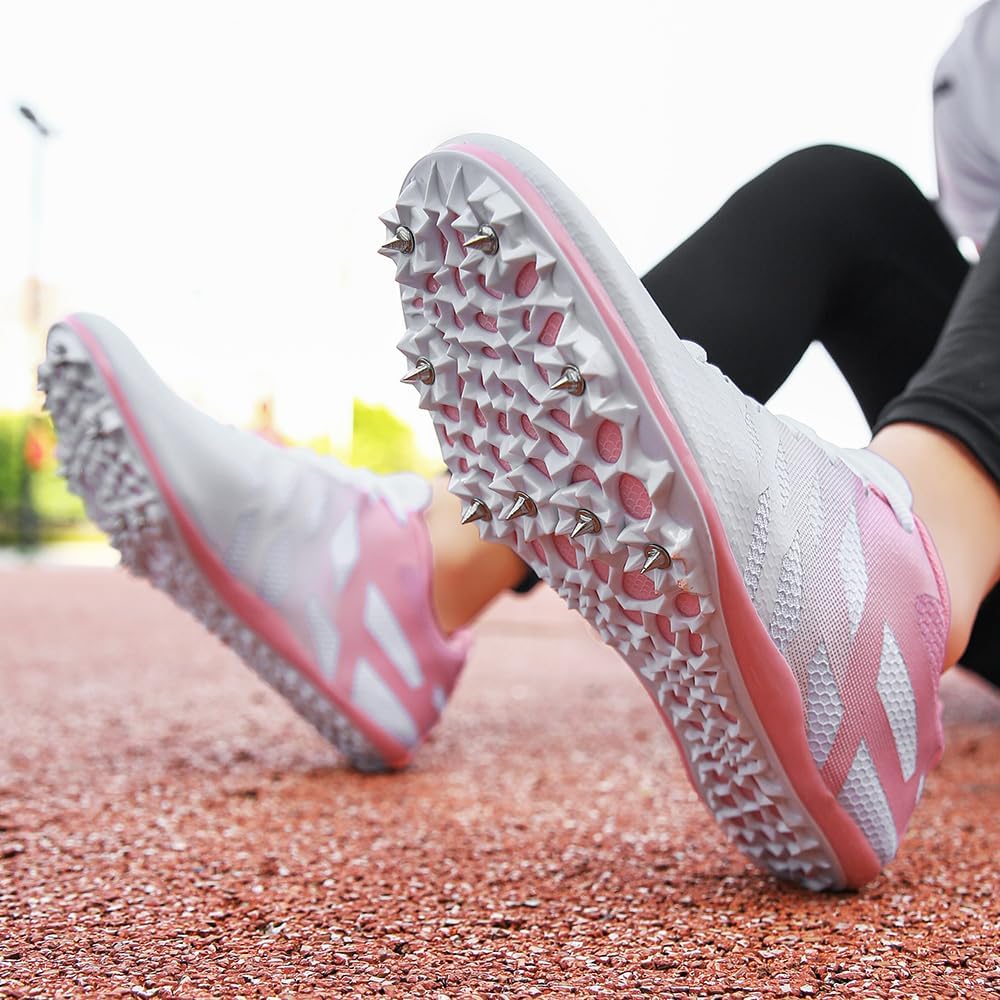
If your freshman just came home with a permission slip for track and a vague instruction to “get spikes,” you are now standing in one of the more confusing product categories in youth sports. Spikes — that’s the shorthand for track shoes with small metal or plastic pins screwed into the forefoot, which grip the rubberized oval surface and give runners extra push-off power — range from about $30 to well over $200. The cheap ones and the expensive ones look almost identical in a product photo. So the first thing worth saying out loud is this: most freshman track athletes do not need a $200 shoe. This guide is going to show you exactly what the sub-$50 options actually deliver, where they fall short, and how to make that call confidently before you hit checkout.
Why Cheap Spikes Are Actually Fine for Most New Athletes
Let’s start with an honest structural point. The performance gap between a $40 spike and a $225 spike is real — but it shows up almost entirely at the elite end of the performance spectrum. The features driving those high prices are carbon-fiber propulsion plates (rigid plates embedded in the sole that store and return energy like a spring), exotic foam compounds like Nike’s ZoomX or Adidas’s Lightstrike Pro (ultralight foams engineered for maximum energy return), and aggressive geometry that locks a runner into a specific biomechanical position.
Here’s the catch: those features only help runners whose mechanics are already refined enough to exploit them. Per Podium Runner’s piece “Do You Actually Need Carbon Spikes?”, the energy-return benefit of a carbon plate is largely dependent on running form, speed, and body weight loading patterns — factors that most developing athletes haven’t stabilized yet. A freshman who’s still figuring out their stride isn’t leaving performance on the table by wearing a $40 spike. They’re leaving money in your pocket.
Track and Field News’s 2024 high school footwear survey found that entry-level spikes from Nike and Adidas remain the dominant shoe on high school tracks across all events — not because coaches are unaware of premium options, but because varsity coaches frequently recommend starting athletes in simpler, more forgiving shoes while technique develops.
There’s also a sizing reality. Adolescent feet change. Buying a $225 pair of spikes in April and finding they don’t fit by the following season is a genuinely common outcome.
The Tradeoffs You’re Actually Making Under $50
This is where we get specific. Under $50 buys you real track spikes — not knockoffs, not training shoes dressed up to look like spikes — but with these documented tradeoffs:
Plate material. Budget spikes use nylon (plastic) spike plates rather than carbon fiber. Nylon plates are legal for all high school and USA Track & Field competition — World Athletics Technical Rule 5 governs shoe construction at the international level, and nylon-plate spikes clear every high school athletics governing body’s standards without issue. They flex more than carbon, which means slightly less energy return on each stride, but also a more forgiving feel under an athlete still learning to run on their toes.
Spike pin configuration. Most sub-$50 spikes ship with 6 spike positions, often in a standard pyramid configuration. Higher-end sprint spikes can run 7–9 pins in more aggressive layouts. For distance events (800m and up), 6 pins is completely standard even at the elite level.
Upper material. Budget spikes use synthetic mesh or engineered knit that’s lighter than leather but less durable than the premium woven uppers on flagship models. Owners of entry-level Nikes and Adidas consistently report that the uppers hold up for one to two full seasons of regular use — which is exactly the lifespan you’re planning for.
Weight. The weight difference between a $40 spike and a $200 spike is roughly 0.5 to 1.5 ounces per shoe. At the high school level, reviewers across sites including Runners World consistently note that weight differences this small are imperceptible to developing athletes.
By the Numbers
| Price Range | Plate Material | Typical Weight (men’s size 10) | Meaningful Perf. Gain vs. Entry Level |
|---|---|---|---|
| $30–$50 | Nylon | ~5.5–6.5 oz | Baseline |
| $80–$130 | Nylon/Hybrid | ~5.0–6.0 oz | Marginal for sub-varsity |
| $180–$260 | Carbon fiber | ~3.5–5.0 oz | Measurable at elite/varsity level |
Which Specific Shoes to Consider (and Which to Skip)
Here’s where the decision tree becomes concrete.
Nike Zoom Rival (Sprint or Distance, ~$40–$45) — This is the most frequently cited entry-level sprint spike across coaches’ forums and specialty retailer FAQ pages. Running Warehouse’s sizing notes flag it as true to size across a wide range, which matters when you’re buying online for the first time. The Distance variant (sometimes labeled Rival D or Rival S) is appropriate for 800m through cross country. Owners report durability across a full high school season with moderate to high weekly mileage in practice.
Adidas Adizero SC ($45–$55, frequently on sale under $50) — Adidas’s equivalent entry point. The SC runs slightly narrow in the forefoot, which is documented in multiple retailer fit guides; if your athlete has a wider foot, try before you buy or confirm the return window. Reviewers consistently rate the Adizero SC as one of the better-feeling nylon-plate options because the spike plate is stiffer than the Rival’s for its price tier, giving a more responsive push-off on the oval.
What to skip: Any spike marketed as “track and field” without naming a specific event on the box is often a general-purpose training shoe that happens to have spike holes. It won’t perform or fit the way an event-specific spike does. Similarly, no-name brands on mass-market general retail sites at $20–$25 are worth avoiding — the spike pin hardware is frequently the failure point, with stripped threads reported commonly in owner reviews.
The mid-tier question (Nike Zoom Rival 2 / Adidas Adizero Avanti, $80–$130): If your athlete already completed one full season, made the varsity squad, and has stable shoe sizing, this range makes sense for year two. Not before.
Matching Shoe to Event: The One Thing That Actually Matters
Overspending is one mistake. Buying the wrong type of spike is a more consequential one, because an event mismatch affects both performance and safety.
Sprints (60m–400m): You want a sprint spike — characterized by a very stiff, raised heel-less sole that puts the foot into a forward lean. The Nike Zoom Rival Sprint and Adidas Adizero SC Sprint are appropriate here. Do not put a distance athlete in a sprint spike for 800m and up; the aggressive geometry causes calf and Achilles strain over longer efforts.
Middle distance (800m–1500m): A middle-distance or distance spike with some heel cushion and a less aggressive plate angle. The Nike Zoom Rival D handles this well at the $40 price point.
Long distance (mile, 3200m, cross country): Runners World’s buying guide consistently recommends a distance spike or a lightweight distance flat with spike compatibility for these events. At the sub-$50 level, the Nike Zoom Rival D does double duty here acceptably.
Hurdles: Sprint spikes apply, same as 100m/200m. Standard 6-pin configuration is fine.
Field events (long jump, triple jump, high jump, javelin, shot put): These are separate categories with event-specific shoes — a sprint spike is not appropriate for the throwing circle, and a distance spike doesn’t provide the lateral support a jumper needs. If your athlete is competing in field events, that’s a separate conversation outside this price tier.
Retailer Logistics: How to Buy Without Getting Stuck
Buying spikes online at this price point is common, but the failure mode is ending up with a shoe that doesn’t fit with a difficult return window. Here’s how to avoid it:
Running Warehouse carries both the Nike Zoom Rival and Adidas Adizero SC and offers a 90-day return window as of early 2026, including worn items returned within that window — which is meaningful when you’re trying spikes for the first time. Their size guides for each model flag width tendencies, worth reading before ordering.
JackRabbit has physical locations in a number of cities where staff can do a proper fit, and their online return policy aligns with Running Warehouse’s. If you have a location nearby and your athlete hasn’t been fitted by a knowledgeable staff member before, this is worth the trip.
General sporting goods chains stock entry-level spikes but typically carry a narrower selection, and floor staff often lack event-specific fitting knowledge. If you go this route, at least know your event and use the retailer as a fitting location, then compare pricing.
Spike pins: Most entry-level spikes ship with pyramid pins installed. Your athlete’s coach will specify pin type for their surface — needle pins and Christmas tree pins are for softer surfaces and are less common at the high school level. Confirm with the coach before the first practice.
The Clear Decision Rule
Here’s the framework, stated plainly:
- First-season freshman, any event: Buy the Nike Zoom Rival or Adidas Adizero SC in the correct event variant. Stay under $50. Revisit after the season.
- Second-season athlete, demonstrated commitment, stable shoe size: The $80–$130 tier earns its cost. Models like the Nike Zoom Rival 2 or a mid-tier Adizero offer a meaningful step up without the carbon-plate price premium.
- Varsity athlete with two-plus seasons, competing at a high level: The premium tier makes sense and is worth a separate conversation — see our piece on the Nike Air Zoom Maxfly and Adidas Adizero Prime SP2 for the full breakdown.
- Any athlete whose foot is still growing: Spend less, not more, regardless of competitive level. No carbon plate is worth the cost if it doesn’t fit by September.
The right spike for a freshman is almost always the boring, affordable, correct answer. The brands have already done the engineering work at $40 to make a shoe that will genuinely help your kid compete. Your job is matching event to shoe type, confirming the size, and saving the premium spend for a season when they’ve earned it.