August 5, 2026 • Cassidy Vane • 10 min reading time • Prices verified June 6, 2026
Carbon Steel vs. Stainless Steel Spike Pins: Does the Material Actually Matter at Your Level
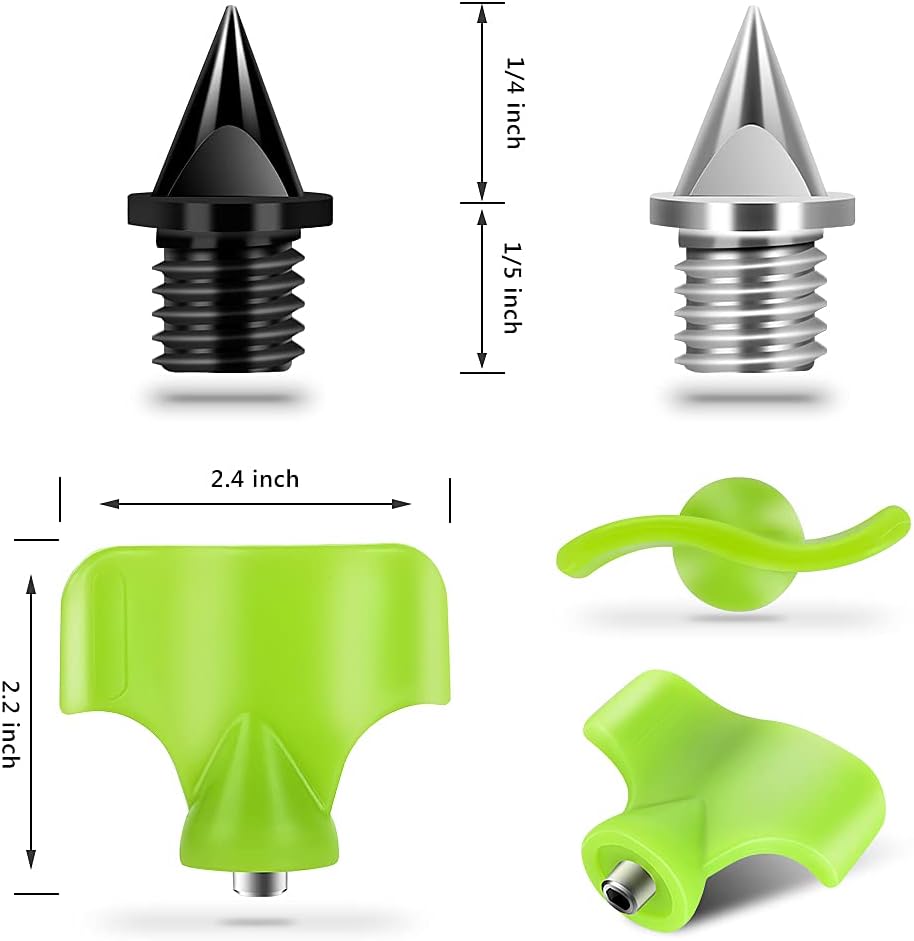
If you’ve ever looked at the bottom of a track spike — the pointy metal pins screwed into the forefoot of the shoe — and wondered whether it matters what they’re made of, you’re asking exactly the right question. Those pins are called spike pins (or just “spikes”), and they’re the only part of your shoe actually contacting the track surface during competition. The shoe’s plate, cushioning, and carbon-fiber architecture all funnel force down through those tiny metal points. When they’re sharp and correctly fitted, they bite into the track’s rubberized surface and convert that force into forward motion. When they’re dull, stripped, or the wrong material, you’re leaving performance — and potentially plate threads — on the table.
This article is about the two most common replacement spike pin materials: carbon steel and stainless steel. You’ll learn what the material difference actually means at the mechanical level, what athletes in long-run reviews report about real-world sharpness and durability, when the cost-per-use math favors one over the other, and how to avoid the thread-stripping nightmare that haunts first-time replacement buyers.
What “Carbon Steel” and “Stainless Steel” Actually Mean for a Spike Pin
Both are steel alloys — meaning both are primarily iron with other elements added to change their properties. The distinction matters in two ways: hardness and corrosion resistance.
Carbon steel gets its name from the higher carbon content in the alloy, which increases hardness. A harder material can be machined to a sharper initial point and, in theory, holds a fine edge longer under light abrasion. Spec sheets on carbon steel spike pin packs cite individual pin weights as low as 0.47 grams per pin — that’s meaningful if you’re running 60m hurdles or sprinting at the national level and counting grams. The tradeoff is corrosion resistance: carbon steel will rust if left wet or stored improperly. For a competitive athlete washing spikes after a muddy cross-country race and air-drying them, this is a real consideration.
Stainless steel trades some of that hardness for significantly better corrosion resistance. The chromium content (at least 10.5% by mass in any stainless alloy, per standard metallurgical definitions) forms a passive oxide layer that resists rust. Owners who’ve purchased stainless steel bulk packs consistently report multi-season longevity: reviewers across multiple product listings note pins “lasted several seasons, still have plenty left” — a durability pattern that doesn’t show up with the same frequency in carbon steel review sets.
The most telling real-world comparison in the review record comes from an athlete who ran the same event wearing two different spike configurations and noticed that silver stainless pins stayed measurably sharper than colored pins made from what they described as a softer, presumed-non-steel material. That direct head-to-head observation — same conditions, same race, different pin materials — is the strongest single data point available outside a lab setting, and it argues clearly that material choice produces perceptible performance differences even at the amateur level.
The Number That Changes the Decision
Before choosing on material alone, look at the wear mechanism that’s actually dulling your pins:
By the numbers
- Pavement is approximately 7x harder than the synthetic rubber track surface used in most high school and collegiate facilities (per standard Rockwell hardness comparisons of concrete vs. EPDM rubber track surfaces)
- Most track athletes walk 50–200 meters of pavement during warmup routes from locker room to infield, per athlete-reported warmup descriptions in coaching literature
- A single 100-meter pavement walk generates more abrasive wear on a spike tip than multiple full laps on a tartan track surface
- World Athletics Technical Rules (Rule 5) cap spike length at 9mm for track events on synthetic surfaces — a constraint that limits how much material is available before a pin becomes functionally dull
The practical conclusion: the track itself is not what dulls your spikes. Reviewers across pin categories name pavement walking as the primary wear mechanism. If you’re walking to warmup in your spikes, the material choice matters more than it would for an athlete who puts spikes on at the track apron. Carbon steel’s hardness advantage is real — but it’s advantage over a softer material, not an advantage that makes pavement irrelevant. Both materials dull faster on concrete than on rubber.
Track and Field News’ equipment notes for high school athletes make the same recommendation that serious club coaches give verbally: carry your spikes to the track and put them on at the apron. It’s the single highest-leverage spike maintenance habit available, regardless of what material your pins are made from.
Who Should Buy What: The Decision Framework
Here’s where the practitioner framing earns its keep. Let’s name the tradeoffs explicitly rather than hedging.
Sprint events (60m–400m)
If you’re competing at the varsity or collegiate level in a sprint event and you’re running in a shoe like the Nike Air Zoom Maxfly or Adidas Adizero Prime SP2 — shoes with aggressive carbon plates and shallow spike wells — carbon steel pins are worth the consideration. The 0.47g per pin figure isn’t marketing noise at that level. Six pins on a sprint spike adds up to roughly 2.8 grams compared to a heavier stainless set. That’s not nothing when the shoe’s entire platform is optimized for mass reduction.
The caveat: if you’re sub-varsity, in your first competitive season, or running times that put you outside the top three heats at your meet, the performance delta from pin material will be buried under variables like start mechanics, lane draw, and race-day conditions. Podium Runner’s spike maintenance guide frames it correctly: pin sharpness matters at all levels, but pin material starts to matter only once other variables are optimized.
Distance events (800m–10,000m, steeplechase)
For distance, the calculus flips toward stainless. You’re wearing the pins through longer warmups, potentially longer walk-outs, and multiple rounds in a championship setting. The multi-season durability that stainless steel owners consistently report is directly valuable here. Distance spikes also typically use shorter, lighter pins — the per-pin weight savings from carbon steel compress toward irrelevance. Stainless steel pins represent better cost-per-use math for distance athletes running 30+ weeks of competition and practice.
Field events (jumps, throws) and multi-events
Jumping athletes — particularly long jump and triple jump — subject their spike pins to lateral shear forces that sprinters don’t. Reviews of hard steel pin packs (a category that overlaps with high-carbon variants) note “none fell off” even under varied running mechanics, which suggests that pin retention under torque is worth prioritizing. For throws, the throwing shoe category uses its own shoe-specific configurations, and spike pin replacement is less frequent than in running events. Stainless makes sense for durability; consult your event-specific shoe documentation before assuming thread compatibility.
The thread-fit issue — do not skip this section
Runners World’s track spike buying guide and multiple independent reviewer accounts flag thread compatibility as the most consequential variable in aftermarket pin purchases — more consequential than material choice. Most spike pins use a 1/4”-28 thread standard, but not all manufacturers adhere to it uniformly, and tolerances vary. At least one reviewer in long-run product feedback specifically warns that pins from certain third-party bulk packs required extra torque to seat correctly, risking thread damage in the spike plate — a failure mode that can destroy a $225 shoe’s plate permanently.
The Nike-specific good news: reviewers across multiple stainless steel bulk packs explicitly confirm thread compatibility with Nike track shoes, and this confirmation appears frequently enough in the review record to treat it as a reliable pattern rather than an outlier. For Adidas and other brands, verify thread spec before purchasing a bulk pack, or buy OEM replacement pins from the manufacturer.
Frequently Asked Questions
Do carbon steel spike pins actually stay sharper longer than stainless?
Based on published hardness properties, carbon steel holds a finer edge than stainless steel under equivalent abrasion. The real-world review record supports this directionally — one athlete’s direct comparison showed silver stainless pins outperforming a softer colored material, not necessarily carbon steel specifically. The honest answer: carbon steel can stay sharper longer than stainless, but the difference is only detectable in controlled conditions. For most athletes, pavement management matters more than material hardness.
Will aftermarket spike pins fit my Nike or Adidas track shoes?
For Nike: yes, based on consistent reviewer confirmation across multiple stainless bulk packs. For Adidas: thread compatibility is less uniformly confirmed in public review data, and you should verify the thread spec (most commonly 1/4”-28) before purchasing non-OEM pins. Thread stripping a carbon-fiber spike plate is an irreversible failure. When in doubt, buy the manufacturer’s replacement pins first and test fit before committing to a bulk pack.
How many replacement pins do I actually need for one track season?
A standard track spike uses 5–7 pins depending on configuration. A full season of high school or collegiate competition runs approximately 20–30 competition days including dual meets, invitationals, and championships. Owners who replace pins once mid-season report adequate sharpness management. A 50-pin or 100-pin bulk pack covers one athlete for multiple seasons at that replacement cadence — there’s no reason to buy a 12-pin OEM pack at 3–4x the per-pin price unless you need immediate same-day replacement.
Does walking on pavement really dull spike pins that fast?
Yes — and this is the most underappreciated maintenance variable in the review record. Pavement abrasion is measurably more damaging to spike tip geometry than equivalent distance on a synthetic track. Reviewers consistently name pavement walking as the primary wear mechanism. Carry your spikes to the track. Put them on at the apron. This single habit extends pin life more than any material upgrade.
Are colored spike pins weaker than silver steel ones?
Potentially, yes. The direct comparison in the athlete review record involved colored pins from a presumed-softer material performing worse than silver stainless pins during the same event. Color itself doesn’t determine material — but colored pins are sometimes made from softer aluminum alloys or lower-grade steel to allow anodizing. If you’re buying colored pins for aesthetic reasons, verify the material specification. If the listing doesn’t clearly state steel alloy type, treat it as a lower-durability option.
How do I know if a replacement pin is threaded correctly before it strips my spike plate?
Thread it in by hand first — no tools. It should turn smoothly with finger pressure for the first several rotations before you reach the shoulder. If it binds, cross-threads, or requires force early in the seating process, stop immediately. A pin that seats incorrectly by hand will strip the plate under tool pressure. Test one pin in a less-critical spike well before committing to a full plate replacement. Per Track and Field News’ equipment guidance, a spike key should only be used to snug a hand-seated pin, not to force a resistant one into compliance.
The Bottom Line
Material matters — but not as much as the variable most athletes ignore. Stop walking on pavement in your spikes. That habit alone will do more for pin longevity than any material upgrade.
Once you’ve addressed that, here’s the decision rule: if you’re a sprint specialist competing at the varsity or collegiate level in a high-end carbon-plated shoe, carbon steel pins’ hardness and weight advantage is worth pursuing. If you’re a distance runner, a multi-event athlete, a coach stocking a team supply, or anyone who wants to buy once and not think about it again for two seasons, stainless steel’s durability and corrosion resistance wins the cost-per-use math. And regardless of which material you choose — verify thread compatibility before you buy in bulk, thread by hand before you torque, and treat your spike plate like the precision component it is.