August 16, 2026 • Cassidy Vane • 11 min reading time • Prices verified June 6, 2026
Cross Country Spikes That Actually Grip Mud: Kilkenny XC9, Havok XC3, Resurgence XC, and FuelCell XC7 Compared
Cross country running is off-road racing — grass, mud, gravel, and hills instead of a smooth oval track. The shoes built for it are called cross country spikes: lightweight racing shoes with small metal or plastic pins screwed into the forefoot of the outsole to dig into soft ground and stop you from slipping mid-race. If you’ve ever watched a muddy championship race and wondered how athletes stay upright around a slick downhill turn, the answer is almost entirely in those little pins. This article compares four well-reviewed options — the Saucony Kilkenny XC9, Saucony Havok XC3, ASICS Resurgence XC, and New Balance FuelCell XC7 V5 — across the scenarios that actually matter on race day: wet grass, chunky mud, uphill grinding, and multi-race durability. By the end, you’ll have a clear decision framework for your specific situation.
What Separates These Four Shoes (And Why It Matters on Race Day)
Before the head-to-head, a quick orientation on what cross country spikes actually vary on — because the spec differences between these four are meaningful, not marketing noise.
Spike count and configuration determines how aggressively the shoe bites. More spikes spread grip across a wider surface area; fewer, longer spikes dig deeper into saturated ground. Upper construction — the fabric that wraps your foot — affects drainage, debris entry, and fit precision. Stack height, meaning how much cushioning sits between your foot and the ground, is a genuine tradeoff: more cushioning feels forgiving on long courses with hard-pack sections, less cushioning gives you sharper ground feel and a lower center of gravity in pure mud. Plate stiffness refers to the thin structural layer inside the forefoot that transfers energy from the spike pins into your stride; a stiffer plate suits explosive short-course efforts, a more flexible one suits athletes who need to sustain rhythm over 5K or 6K.
Runners World’s Cross Country Spike Buyer’s Guide (2024 edition) and Podium Runner’s Cross Country Footwear Overview (Fall 2025) both emphasize that the biggest mistake buyers make is choosing a cross country spike based on brand loyalty from track season. The geometry and purpose are different enough that your sprint spike brand being “your brand” is nearly irrelevant here.
The Four Shoes, Head to Head
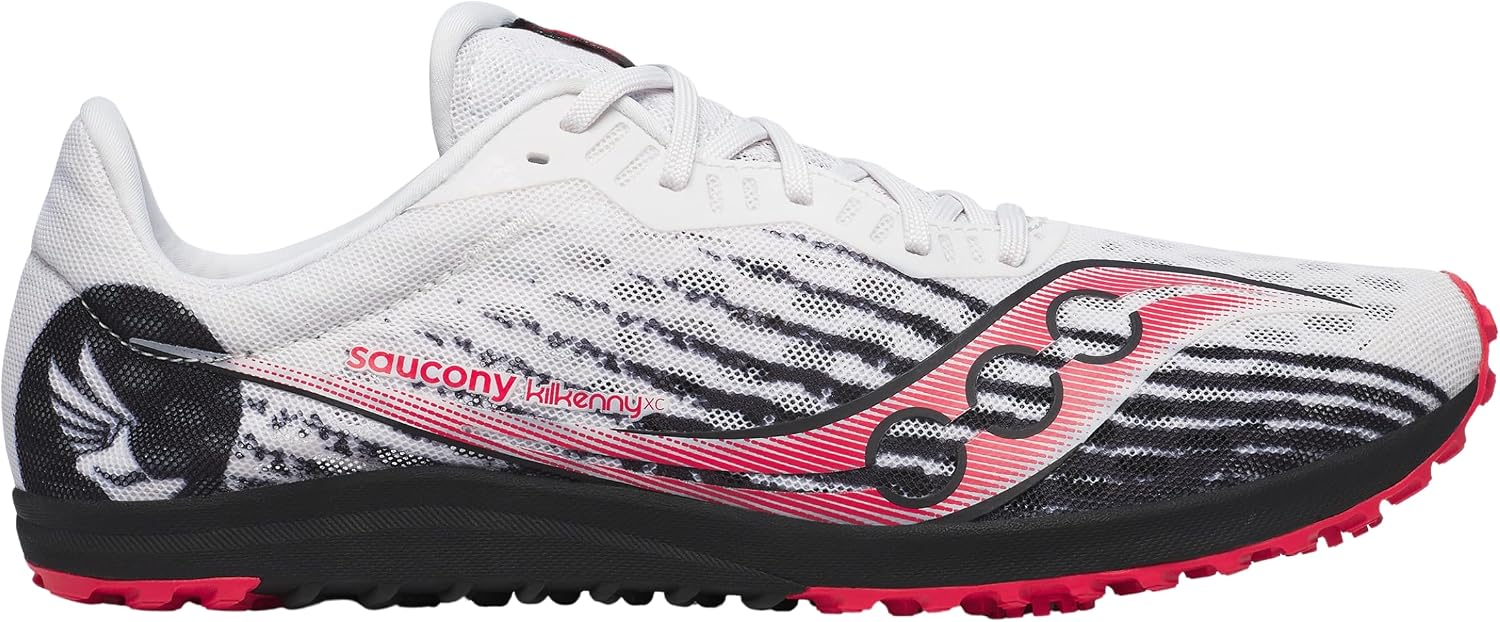
Saucony Kilkenny XC9 — The Lightweight Multi-Race Workhorse
The Kilkenny line has been Saucony’s flagship XC spike for years, and the XC9 is the most refined version yet. Owners consistently report that the shoe runs genuinely light — noticeable even compared to other racing spikes in the category — and the spike pins hold up across multiple race weekends without the loosening or snapping that plagues cheaper XC footwear. One owner specifically noted no broken spikes after running multiple races, which is a real data point in a category where spike pin integrity varies dramatically between budget and mid-tier options.
The men’s version earns consistent praise for its straightforward fit and reliable spike retention. If you’re a male athlete with a medium-width foot and you’ve run in Saucony before, the XC9 is a low-risk choice.
The women’s version introduces two documented complications you need to factor in. First, multiple reviewers flag a fit pattern: the women’s Kilkenny XC9 runs narrow and is best suited to slender feet. The recurring recommendation across reviews is to go up a half size, especially if your foot is average width or wider. Second — and this is the more operationally important issue — owners report a specific reliability problem with spike pins working loose during use. This isn’t a one-off complaint; it’s a pattern documented across enough reviews that it qualifies as a known characteristic of this version. The practical implication: if you’re buying the women’s XC9, carry a spike wrench on race day and check pin tightness in the warm-up. Applying a small amount of spike lock compound (thread-locking fluid sold alongside spike pins at most running specialty retailers) to each pin before installation is the standard workaround that experienced XC athletes use regardless of shoe brand.
Best fit: Male athletes prioritizing light weight and spike durability; female athletes with narrow feet who are willing to manage pin retention proactively.
ASICS
$59.99
In stock on Amazon
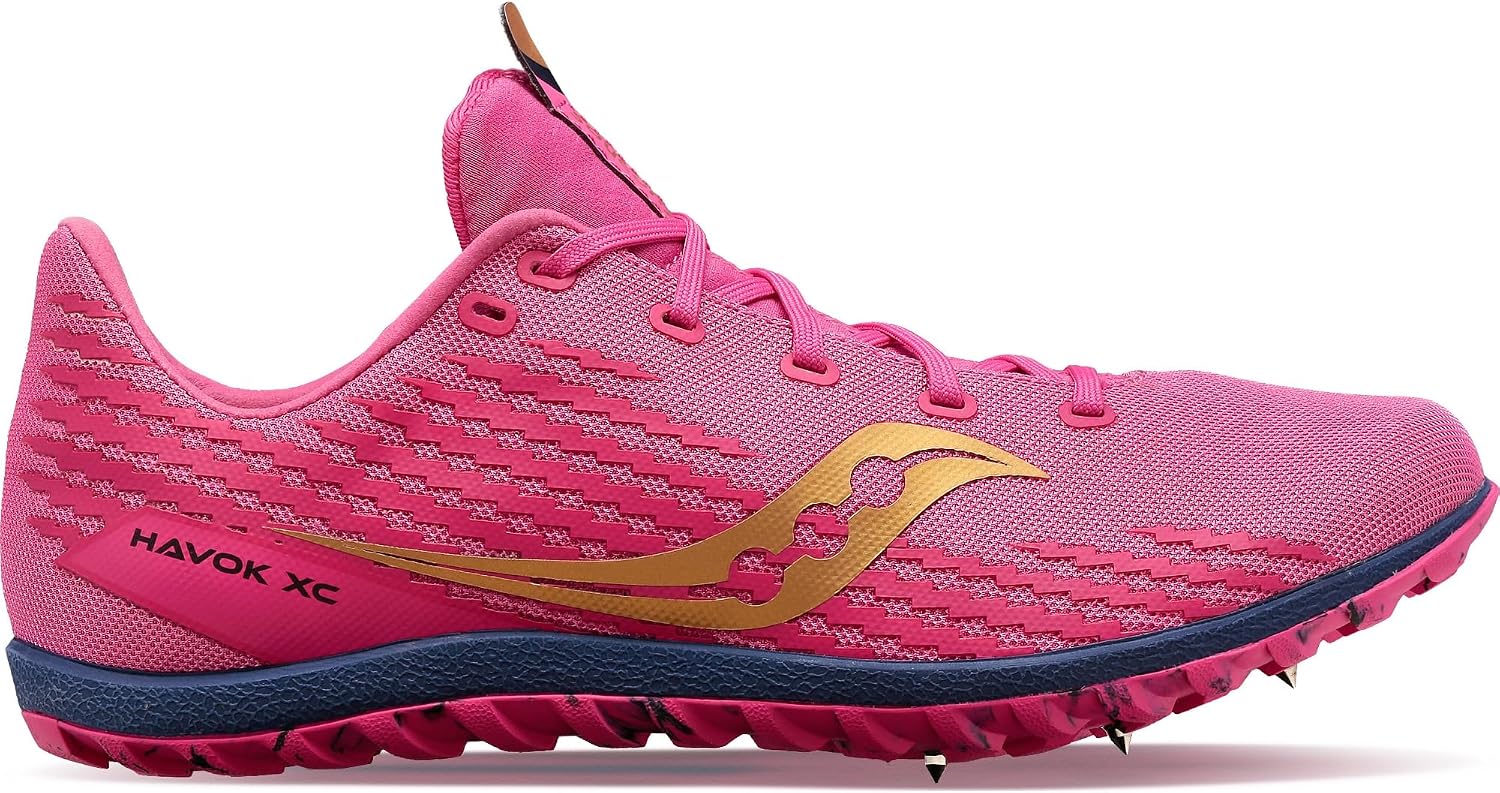
Check price on AmazonSaucony Havok XC3 — The Panic Buy That Turned Into a Race Day Win
The Havok XC3 has the most compelling origin story in this comparison, and it’s worth telling plainly because it reveals something real about the shoe. A parent, mid-season, found themselves scrambling for replacement spikes after their athlete’s existing pair failed. They bought the Havok XC3 essentially on availability and price, with no break-in time before the state championship meet. The athlete wore them race-cold — no practice sessions, no shakeout miles — and came away loving how they fit and felt.
That scenario is a meaningful stress test. A spike that feels good to a nervous athlete running the biggest race of their season, on zero break-in, is a spike with a genuinely accommodating fit and no immediate pressure points. Owners report the Havok XC3 runs with a more relaxed fit profile compared to the Kilkenny — less aggressive, more forgiving around the midfoot. For athletes who find the Kilkenny too snug or who are buying their first serious XC spike and can’t afford fit surprises, the Havok XC3 is a safer entry point.
The Havok sits slightly lower in Saucony’s XC hierarchy than the Kilkenny — it’s less laser-focused on elite race-day performance and more balanced for athletes who need versatility across course conditions and can’t afford to specialize. Let’s Run community discussion threads from the 2024–2025 XC season reference the Havok XC3 favorably in exactly this context: a reliable option for athletes who aren’t yet certain whether they need Kilkenny-level spec.
Best fit: Athletes buying mid-season without time to break in; wider or average-width feet; first-time XC spike buyers; parents and coaches making safe team-wide buys.
Saucony
$29.99
In stock on Amazon
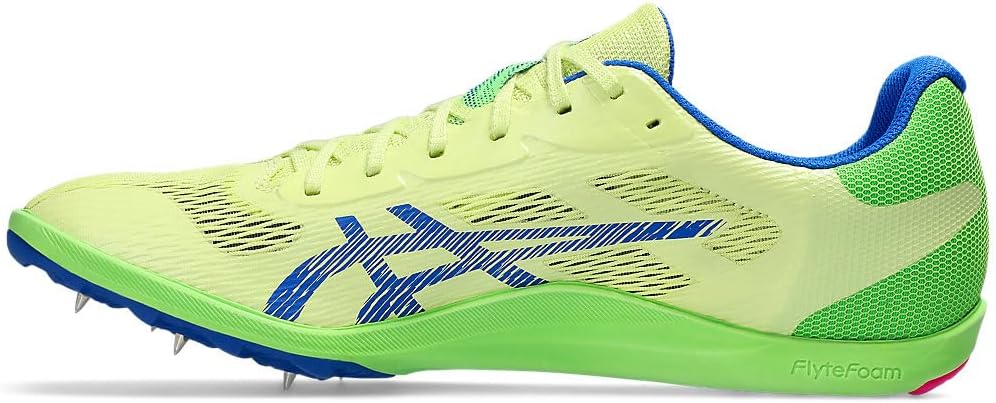
Check price on AmazonASICS Resurgence XC — The Underrated Pick for Athletes With Foot Issues
The Resurgence XC doesn’t generate as much buzz as the Saucony pair, but it earns consistent mentions from a specific subset of athletes: those managing plantar fasciitis or other forefoot sensitivity. Plantar fasciitis is inflammation along the thick band of tissue connecting your heel to your toes — it’s common in high-mileage athletes and shows up as heel or arch pain, especially in the morning or after long efforts.
Owners with plantar issues report that the Resurgence XC offers noticeably more arch support and a cushioning profile that feels less punishing on hard-pack and mixed-terrain sections of XC courses compared to the more minimalist Kilkenny. This makes it a genuine option for athletes who want to race competitively but can’t train through pain in a zero-drop, ultra-thin spike.
Podium Runner’s Cross Country Footwear Overview (Fall 2025) notes that ASICS has historically engineered more medial support into their XC line compared to Saucony, and owner reports on the Resurgence XC align with that design philosophy. If you’re managing a foot condition and your sports medicine provider has cleared you to race, this is the spike worth prioritizing in your research.
Best fit: Athletes with plantar fasciitis or arch sensitivity; runners coming off injury who need a more cushioned XC option without sacrificing competitive grip.
Saucony
$29.99
In stock on Amazon
Check price on AmazonNew Balance FuelCell XC7 V5 — The Soft-Ground Uphill Specialist
The FuelCell XC7 V5 occupies a distinct niche in this group. Owners describe it as noticeably softer underfoot than the Kilkenny or Havok, with a cushioning feel that’s closer to a lightweight road flat than a traditional racing spike. That softness translates to a specific advantage: uphill grip on wet, churned-up terrain. Multiple owners report the FuelCell XC7 V5 handles uphill sections effectively, which is often where grip failures hurt the most — you’re already working harder, and a slip on an incline costs significantly more time and energy than one on flat ground.
The tradeoff is that the softer ride and slightly higher stack make this shoe less aggressive than the Kilkenny XC9 in pure grip-and-go scenarios. For short, punchy XC courses where the premium is on explosive acceleration out of turns, the FuelCell XC7 V5 may feel a step behind. For longer courses with sustained climbing — the kind of course design common in state-level championship meets in hilly regions — it may actually be the better tool.
World Athletics’ Approved Shoe List (updated April 2026) does not restrict cross country spikes at the club or scholastic level the way it does for track racing flats, so compliance is not a buying concern for any of these four models in most competitive contexts.
Best fit: Longer XC courses with significant elevation change; athletes who prioritize comfort over pure weight savings; runners transitioning from road racing who want a less jarring XC experience.
ASICS
$59.99
In stock on Amazon
Check price on AmazonBy the Numbers
| Shoe | Grip Profile | Fit Width | Key Strength | Notable Risk | Tier |
|---|---|---|---|---|---|
| Kilkenny XC9 (men’s) | Aggressive | Medium | Light weight, spike durability | — | ASICS — $59.99 |
| Kilkenny XC9 (women’s) | Aggressive | Narrow | Light weight | Spike loosening; size up | ASICS — $59.99 |
| Havok XC3 | Moderate | Medium-wide | Forgiving fit, no break-in | Less aggressive on pure mud | Saucony — $29.99 |
| Resurgence XC | Moderate | Medium | Arch support, foot-issue friendly | Fewer published reviews | Saucony — $29.99 |
| FuelCell XC7 V5 | Moderate-high (uphill) | Medium | Soft ride, uphill grip | Less explosive on flat-fast courses | ASICS — $59.99 |
Decision Rules: If X, Then Y
You’ve read the comparisons. Here’s how to convert that into a purchase decision without second-guessing yourself at checkout.
If you’re a male athlete with a medium-width foot and spike durability is your top priority: Kilkenny XC9 men’s. Proven across multiple race weekends by owner reports; the lightest option in this group.
If you’re buying mid-season, can’t try on first, or are shopping for a team roster: Havok XC3. The forgiving fit profile and cold-race performance data make it the lowest-risk choice across a range of foot shapes.
If you or your athlete is managing plantar fasciitis or arch pain: Resurgence XC. It’s the only shoe in this group with documented owner reports of meaningful foot-issue relief in race conditions.
If your championship course has major hills and wet conditions: FuelCell XC7 V5. Uphill grip in saturated terrain is its documented strength, and the softer ride helps on longer efforts.
If you’re buying the women’s Kilkenny XC9: Go up a half size, verify your foot is on the narrow side, and lock your spike pins before race day. That’s not a dealbreaker — it’s just the operating reality of this version.
Frequently Asked Questions
Do cross country spike shoes come with spike pins included? Most cross country spikes ship with a set of pins pre-installed in the spike wells, plus a spike wrench. Always verify when ordering, since some models ship with pins in the box but not installed. Check the product description before race week.
Why do the spikes keep falling out of my Kilkenny XC9? This is a documented pattern in the women’s Kilkenny XC9, flagged across multiple owner reviews. The spike wells in some production runs appear to lose thread grip after repeated installation and removal. The practical fix: apply a small amount of spike lock thread compound to each pin before installing, and re-torque with a spike wrench before every race rather than assuming they’re still tight from last time.
Is the Saucony Havok XC3 good for muddy courses? Yes, within a bracket. Owners report it handles typical wet-grass and moderate mud conditions well. For heavily saturated, deep-mud conditions — the kind you see after several days of rain on a grass championship course — the more aggressive spike configuration of the Kilkenny XC9 may provide better purchase. The Havok XC3 is the better choice when you’re unsure of conditions or the course is mixed terrain.
Can cross country spikes double as track spikes? Generally no, and for two reasons. First, XC spike pins are typically longer (9mm–12mm) than the pins allowed on most track surfaces. World Athletics’ Technical Rules and most state athletics association rulebooks cap pins at 6mm for rubberized track surfaces — running long XC pins on a track can damage the surface and may result in disqualification. Second, XC spikes are designed for multi-directional grip on soft ground; track spikes are optimized for forward propulsion on a firm, consistent surface. The geometry is different enough that using XC spikes on the track will cost you performance in both directions.
How do I know if I need to size up in Saucony cross country shoes? For the Havok XC3: owners report the fit runs true to size or a half-size small; if you’re between sizes, go up. For the women’s Kilkenny XC9: the consensus across reviews is clear — go up a half size, especially if your foot is average width or wider. For the men’s Kilkenny XC9: true to size for most, with standard thumb-width clearance at the toe being the right test. Runners World’s Cross Country Spike Buyer’s Guide (2024 edition) recommends fitting XC spikes while wearing the race sock you’ll actually compete in, since XC racing socks vary more in thickness than track sock standards.