August 23, 2026 • Cassidy Vane • 11 min reading time • Prices verified June 6, 2026
Cross Country Spike Sizing Traps: Why ASICS, Saucony, and New Balance All Fit Differently
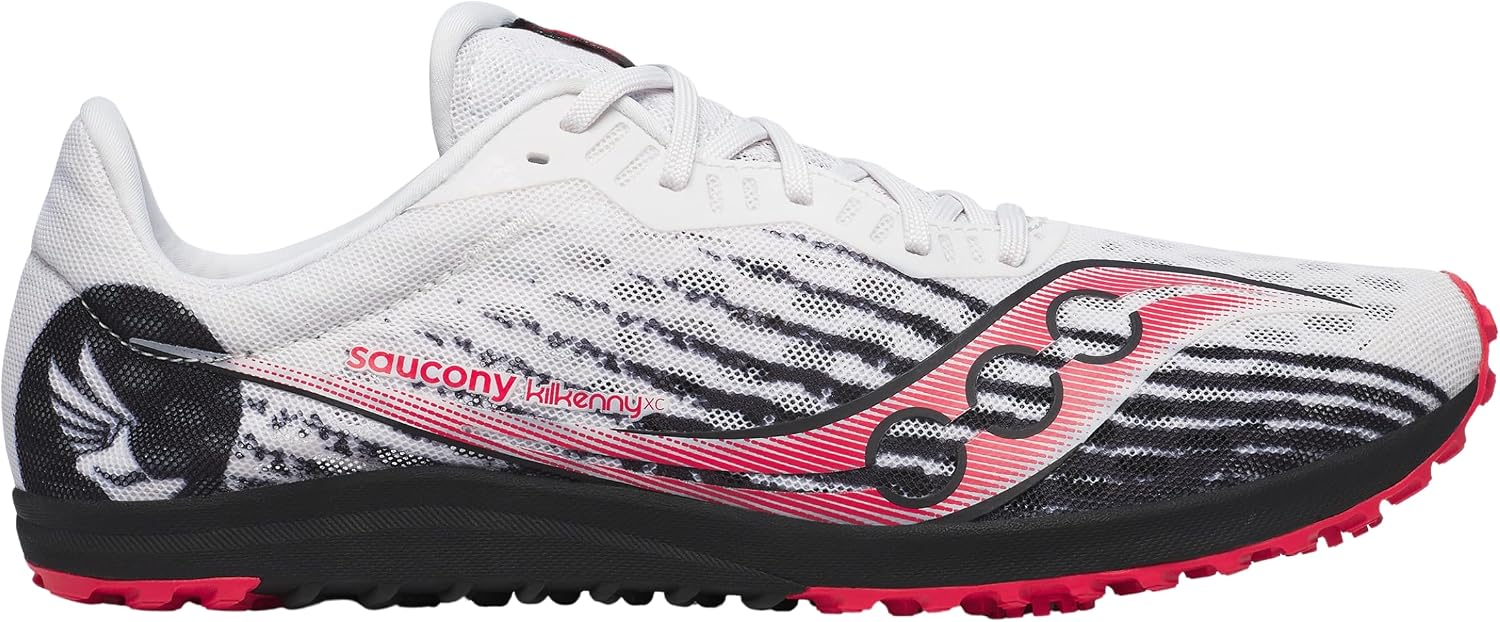
Cross country spikes are a specific category of racing shoe built for running on grass, dirt, and mud — lighter and more aggressive than a regular training shoe, with small metal or ceramic pins (the “spikes”) screwed into the forefoot to grip soft ground. Unlike everyday sneakers, where half a size off is a minor annoyance, a poor spike fit can mean blisters, toenail bruising, or a shoe that twists mid-stride on a slick hill. The stakes are higher, and so is the confusion — because unlike regular running shoes, cross country spikes don’t follow a universal sizing standard. Saucony’s XC last (the internal mold a shoe is built around — think of it as the shoe’s skeleton) runs noticeably different from ASICS’s, which runs different again from New Balance’s. This guide maps those differences brand by brand, so you can buy online with confidence instead of gambling on a return window.
| EDITOR'S PICKBrooks Draft XC Spikeless Suppo… | Mid-tierSaucony Men's Kilkenny XC9 Spik… | Budget pickSaucony Men's Havok XC 3 Spike… | |
|---|---|---|---|
| Men's size | 7 | 10 | 10 |
| Women's size | 8.5 | — | — |
| Colorway | Green Gecko/Red Orange | White/Black | Prospect Quartz |
| Spike plate | Spikeless | ✓ | ✓ |
| Brand | Brooks | Saucony | Saucony |
| Price | $59.95 | $49.99 | $29.99 |
| See on Amazon → | See on Amazon → | See on Amazon → |
Why Spike Sizing Is More Complicated Than Sneaker Sizing
When you buy a training shoe, most brands have spent decades dialing in their “everyday” lasts to match the sizing conventions runners expect. Cross country spikes are different. They’re low-volume production items, often designed around competitive racing fits — meaning brands deliberately cut them closer to the foot. The goal is a snug, performance fit with minimal dead space in the toe box. The problem is that “snug and performance-fit” means something different to every brand’s design team.
There’s also a mechanical reason spike fit matters more than flat shoe fit. When a spike plate — the stiff forefoot insert that holds the spike pins — engages the ground, it transmits force directly through the forefoot. If the shoe is too narrow, that plate can compress the metatarsals (the long bones across the ball of your foot) with every stride. If it’s too long, the plate sits behind where your foot wants to push off, costing you energy. Neither problem shows up on a short jog around a store. Both show up at the two-mile mark of a race.
Reviewers across multiple retail platforms have documented this the hard way. The patterns below are drawn from aggregated buyer reviews and coverage by Podium Runner’s annual XC spike buyers guide, Runners World’s spike selection guide, and Track and Field News seasonal footwear notes — not a single source, but a consistent pattern across all of them.
Brand-by-Brand Sizing Guide
Saucony (Kinvara XC, Kilkenny XC)
Saucony’s cross country line is the most frequently flagged for sizing issues in buyer reviews, and the direction is consistent: size up, often by a full size.
Reviewers of the Saucony Kilkenny XC — one of the most popular and longest-running XC spikes on the market — repeatedly describe the shoe as running a full size small and notably narrow. This isn’t a one-off complaint. The pattern across aggregated reviews is clear enough that experienced XC coaches treat it as standard practice: if your athlete wears a 9 in training shoes, order a 10 in Kilkennys and check the width.
One particularly cautionary review describes a buyer ordering two consecutive sizes in the Kilkenny, finding neither fit correctly — the smaller was too short, the larger too wide in the heel. That outcome is a signal that Saucony’s XC last doesn’t translate cleanly to a simple “size up” rule for everyone, especially runners with narrower heels and wider forefeet. If you have that foot shape, a half-size up with an aftermarket insole to snug the heel may be a better approach than a full size.
Saucony sizing rule of thumb: Start at half a size up from your training shoe. If reviews of the specific model you’re buying consistently say “full size small,” go the full size. Saucony’s XC last also runs narrow — if you’re a medium-to-wide foot, factor that in.
ASICS (Hyper XC, Cyber XC)
ASICS cross country and sprint spike reviewers show a similar pattern: the sizing runs small, and the narrow last is consistently noted. Podium Runner’s spike guides have flagged ASICS spike sizing as a recurring issue for online buyers, recommending at minimum a half-size up from the buyer’s road shoe size.
The more serious anecdote in the review record involves a buyer who followed ASICS’s own official sizing guide and developed a cramp mid-race — attributing it to the fit being too tight across the metatarsals. That account comes from a single reviewer’s experience and has not been independently verified by this site; it may reflect individual foot geometry as much as brand sizing. But it’s worth noting because it illustrates the real consequence of trusting a brand’s sizing chart without cross-referencing buyer feedback. Official size guides are a starting point, not a guarantee.
ASICS spikes are also built on a performance last that’s narrower through the midfoot than most of their training shoe line — so if you know you run in ASICS training shoes but have been sizing up in those, add that half-size buffer on top of your adjusted training size.
ASICS sizing rule of thumb: Size up at least half a size from your training shoe. If you have a wider forefoot, consider a full size up or look at alternative brands. Don’t rely solely on the brand’s official size guide — cross-reference it with buyer reviews for the specific model.
New Balance (FuelCell XC7, MD500 XC)
The New Balance FuelCell XC7 carries a specific and consistent complaint in its review record: very narrow. Buyers describe it as one of the more restrictive lasts in the XC spike category. The width issue is the dominant fit theme — not necessarily the length.
There’s also a notable secondary issue flagged by buyers: a color mislabeling, with at least one colorway listed as red that arrived as orange. That’s a minor cosmetic issue on its own, but it matters for buyer trust in online purchases. If product photography or listing descriptions don’t match what arrives, it signals a quality-control gap in the retail listing (not necessarily the shoe itself) that makes online buying riskier. Verify colorways through multiple retail listing images before ordering.
On sizing: New Balance XC spikes generally run closer to true-to-size in length than Saucony or ASICS, but the narrow last is a real constraint. Runners with medium to wide feet should treat NB’s XC line with caution unless they’ve confirmed a good fit in NB’s narrower road-shoe lasts (like the older RC series).
New Balance sizing rule of thumb: Length is closer to true-to-size, but the narrow last is a genuine issue. If you have a wide foot or run in wide sizing in other brands, this may not be your shoe. Half-size up is still a safe buffer for length.
Brooks (Draft XC Spikeless)
Here’s the outlier worth calling out: the Brooks Draft XC Spikeless has zero consistent sizing complaints across its review record as of the 2025-2026 season. That’s not a small thing. In a category where every other major brand generates reliable fit warnings, the absence of complaints is a meaningful signal.
The Draft XC Spikeless is also notable for its versatility — reviewers consistently praise it for crossing over from XC season into early track season, and its spikeless outsole makes it legal on tracks that prohibit metal spikes. More on legality below.
Brooks sizing rule of thumb: True-to-size with consistent fit feedback across foot types. A genuinely low-risk choice for first-time online buyers or athletes who’ve had fit problems with other brands.
The Quick Reference: Brand Sizing at a Glance
| Brand | Model(s) | Sizing Direction | Width | Risk Level for Online Buyers |
|---|---|---|---|---|
| Saucony | Kilkenny XC, Kinvara XC | Run 0.5–1 full size small | Narrow | High |
| ASICS | Hyper XC, Cyber XC | Run 0.5 size small | Narrow | High |
| New Balance | FuelCell XC7 | True-to-size (length) | Very narrow | Medium–High |
| Brooks | Draft XC Spikeless | True-to-size | Standard | Low |
What “Narrow Last” Actually Means — and How to Know If Your Foot Fits
A “last” is the foot-shaped form a shoe is constructed around. A narrow last means the shoe’s internal width — especially through the ball of the foot and the toe box — is built for a slimmer foot profile. A wider foot crammed into a narrow last will bulge against the upper, compress the toes, and in a spike, transmit pressure directly through the metatarsal bones with every planted stride.
Here’s a simple field test: Stand on a piece of paper and trace your foot. Then set the shoe (unlaced) flat on the paper and trace the outsole. If your foot trace is wider than the outsole trace at the ball of the foot, the last is narrower than your foot. This won’t tell you everything, but it’s a fast filter before ordering.
Runners World’s spike selection guide recommends this same approach and adds a useful guideline: a proper spike fit should feel snug but not compressive when you curl your toes. You want contact on all sides without pinching. Dead space in the toe box is wasted shoe; compression across the metatarsals is a race-day problem.
Frequently Asked Questions
Should I size up in Saucony cross country spikes? Yes, in almost every case. The Saucony XC last runs small and narrow. Start with a half-size up from your training shoe, and if reviews of your specific model consistently flag small sizing, go the full size. If you have a wider forefoot, prioritize the width fit over the length.
Do ASICS cross country spikes run small? They do. Across aggregated buyer reviews and coverage by Podium Runner’s spike guide, the consistent pattern is that ASICS XC spikes run at least a half-size small on length, with a narrow last that compounds the fit challenge for wider feet. Size up and don’t rely on the brand’s own size chart as your only data point.
Are cross country spikes supposed to fit tighter than regular running shoes? Yes — but “tighter” and “compressive” are different things. A spike should feel snug with minimal dead space, because loose fit creates movement inside the shoe that wastes energy and causes blisters. But you shouldn’t feel your toes compressed or pressure across the ball of your foot when you’re standing still. If it’s uncomfortable in the store or at home, it will be painful in a race.
What does “narrow last” mean and how do I know if my foot fits? A last is the internal mold a shoe is built on. A narrow last means the shoe’s width is designed for a slimmer foot. To check fit, trace your foot and compare to the outsole of the shoe. If your foot is wider than the outsole at the ball of the foot, the last is too narrow for you.
Can I use cross country spikes for track season as well? It depends on the shoe and your track’s surface rules. Most XC spikes with removable metal pins can be used on outdoor track — check your spike length against your facility’s rules (most outdoor tracks allow up to 6mm pyramid spikes). The Brooks Draft XC Spikeless is explicitly designed for dual-season use and works on track surfaces that prohibit metal spikes. Purpose-built sprint or distance track spikes will perform better in pure track events, but XC spikes can bridge early-season track use.
Is the Brooks Draft XC Spikeless legal for high school cross country meets? Per World Athletics Competition Rules (Rule 5, Shoes), spikeless outsoles are permitted as long as the shoe meets general footwear construction requirements. For high school meets governed by NFHS rules, spikeless XC shoes are broadly legal — but confirm with your meet director, as individual state associations can set additional guidelines. The Brooks Draft XC Spikeless has been used in sanctioned high school XC competition without issue, and its review record includes no reports of legal challenges. When in doubt, check with your athletic director before race day.
The Decision Rule
Here’s the clean “if X, then Y” version of everything above:
- If you have a medium-to-wide foot and are buying online: Start with Brooks. The true-to-size fit and absence of sizing complaints make it the lowest-risk choice when you can’t try before you buy.
- If you’re committed to Saucony or ASICS: Size up at least half a size, read reviews for your specific model, and use a retailer with a generous return window. Don’t trust the brand’s own size chart as your final answer.
- If you’re buying New Balance XC spikes: Length is less of an issue than width. If you know you run narrow or have confirmed a good fit in NB’s narrow road lasts, you’re probably fine. If you’re wide, look elsewhere.
- If this is your athlete’s first spike purchase and you’re buying online without a try-on: Brooks Draft XC Spikeless is the recommendation that protects both the fit and the return. Get the fit dialed in, then consider moving to a more aggressive spike once you know the athlete’s spike-specific sizing.
The difference between a spike that works and one that costs you a race isn’t always the plate stiffness or the spike configuration — sometimes it’s just half a size and a brand that builds its last differently than the one you know.