September 26, 2026 • Cassidy Vane • 9 min reading time • Prices verified June 6, 2026
Cross Country Spikes Decoded: Mud Pins, Flat Courses, and the Spikeless Option Worth Considering
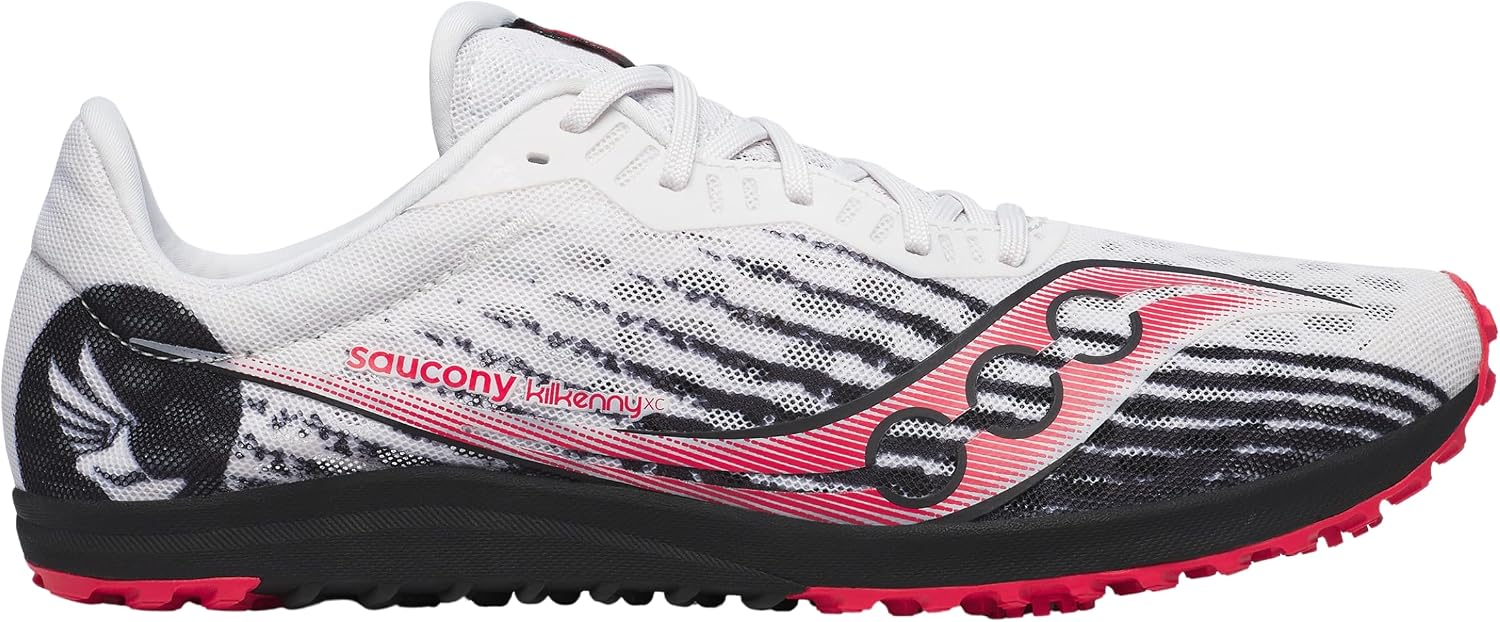
Cross country (XC) is track’s wilder sibling — same finish-line urgency, but run over grass, mud, gravel, and the occasional creek crossing instead of a clean rubber oval. The shoes designed for it are called cross country spikes: lightweight racing shoes with small removable metal or ceramic pins (the “spikes”) screwed into the forefoot to grip soft or slippery ground. Think of the spikes the way you’d think of cleats on a soccer boot — they’re there to keep you from sliding backward when the course turns into a swamp. If you’re new to the event, the first question every coach gets is “Do I actually need spikes?” The honest answer is: sometimes yes, sometimes a flat racing shoe works just as well, and occasionally it’s the smarter call. This guide walks you through how to read a course, match spike length to conditions, and decide whether to spend $60 or $200 — with real tradeoffs named at every step.
| EDITOR'S PICKBrooks Draft XC Spikeless Suppo… | Mid-tierSaucony Men's Havok XC 3 Spike… | Budget pickSaucony Women's Kilkenny Xc9 Sp… | |
|---|---|---|---|
| Spike setup | Spikeless | Spiked | Spiked |
| Gender | Women/Men | Men | Women |
| Shoe size | 8.5 W / 7 M | 10 | 10.5 |
| Colorway | Green Gecko | Prospect Quartz | Indigo |
| Price | $59.95 | $29.99 | $19.99 |
| See on Amazon → | See on Amazon → | See on Amazon → |
What the Spike Length Actually Does (and Why It Matters More Than the Brand)
Before you evaluate any specific model, you need to understand the one variable that changes your race outcome more than any logo on the tongue: spike pin length.
XC spike pins are measured in millimeters. The range you’ll encounter runs from 4mm (essentially flat-ground pins, often called “universal” or “track” pins) up through 12mm–15mm (full mud pins, sometimes called “needle spikes”). Most athletes carry two sets of pins and swap based on the forecast.
Here’s how the decision tree works:
- 4–6mm pins: Hard-packed dirt, dry grass, golf-course-style fairways, or any course that drains quickly. These give just enough grip without slowing your turnover on firm ground. The vast majority of high school championship courses in the South and West fall here for most of the season.
- 8–9mm pins: The workhorse middle ground. Wet grass, light mud, soft but not saturated turf. If you’re buying one set of pins for a full XC season in the Mid-Atlantic or Pacific Northwest, start here.
- 12–15mm pins: True mud conditions — think NAIA or NCAA regionals in November when a week of rain has turned the back half of the course into a bog. Per Flotrack’s coverage of conditions at the Nike Cross Nationals invitational (NXN) in 2023, course crews routinely advise athletes to go longer than 9mm when the Portland, Oregon site receives more than an inch of rain in the preceding 48 hours. Mud pins are the right call in those conditions; they’re the wrong call on a dry course because they dig in too far and slow your stride.
World Athletics Technical Rules (Rule 5, 2024 edition) cap spike protrusion at 9mm for standard competition. If your meet falls under World Athletics jurisdiction — most NCAA Division I championship meets do — pins above 9mm may draw disqualification. High school state meets run under NFHS rules, which historically mirror the 9mm cap but confirm with your state association before pinning 12mm for a state championship. Worth checking; worth not learning the hard way.
By the Numbers: Spike Pin Quick-Reference
| Condition | Recommended Pin Length | Who It’s For |
|---|---|---|
| Dry/hard-packed | 4–6mm | Most early-season meets; Southern/Western courses |
| Wet grass/soft turf | 8–9mm | Default mid-season recommendation |
| Heavy mud/saturated | 12–15mm | Late-season, rain-soaked invitationals (verify meet rules) |
| Paved/gravel sections | 0mm (flat plug) | Courses with significant road or track portions |
Model Tiers: Where to Actually Spend Your Money
Entry Level ($40–$75): Nike Zoom Rival XC 6, Adidas Adizero XC Sprint
The Nike Zoom Rival XC 6 (street price around $45–$55 in spring 2026) is the shoe most high school programs stock in bulk, and for good reason: it fits a wide foot, accepts all standard replacement pins, and holds up across a full season of training use. Runner’s World’s cross country spike roundups have consistently placed it in the “best for beginners” category for several consecutive model cycles. Owners across aggregated reviews describe the fit as “true to size with a roomy toebox” — important for athletes whose feet swell during longer XC efforts (5K for most high school women, 5K–6K for men).
The Adidas Adizero XC Sprint runs slightly narrower and a touch lighter. Athletes with a more tapered foot tend to prefer it; those with a wider forefoot report hot spots under the pinky toe. Podium Runner’s spike buying guide notes that the XC Sprint’s plate stiffness is notably less than Adidas’ track sprint plates, which is correct for XC — you want some forefoot flex over uneven terrain, not a rigid carbon lever.
If you’re a sub-varsity athlete, a freshman, or a parent buying for a first season: start here. The performance delta between a $50 XC spike and a $150 one is real but narrow — maybe 1–3 seconds over 5K on a typical high school course, per estimates cited in Outside Online’s 2024 feature on youth spike spending. That gap doesn’t justify $100+ in additional spend until the athlete is training consistently enough to feel it.
Mid-Tier ($80–$140): New Balance XC Seven, Saucony Endorphin XC4
The New Balance XC Seven has developed a strong reputation at the collegiate level, particularly for athletes who run on courses with significant elevation change or technical footing. Owners frequently cite the lateral stability — a wider platform than the NB track spike line — as the reason they reach for it on hilly courses. Published specs put it at a 4mm heel-to-toe drop (the difference in height between heel and forefoot), which promotes a midfoot landing pattern that tends to be safer on descents.
The Saucony Endorphin XC4 brings the brand’s Endorphin flat technology closer to an XC-specific chassis. The midsole foam is softer than what you’d find on a pure track spike, which reviewers at Runner’s World in 2024 noted makes it a reasonable double as a hard-surface alternative when a course has significant road sections — you’re not grinding metal pins into asphalt. Worth considering for athletes whose conference or district course maps show 20%+ pavement.
At this tier, you’re paying for: better last (the internal mold that shapes the shoe around your foot), more refined plate geometry, and — in some cases — superior pin thread quality that holds replacement pins more securely in wet conditions. Coaches sourcing for full rosters often find this range offers the best balance of performance and durability across multiple athletes and multiple seasons.
Elite ($150–$250+): Nike Zoom Victory XC 5, Adidas Adizero Avanti TYO XC
Here’s where the conversation changes. Both of these shoes incorporate technology originally developed for road racing and track — ZoomX foam (Nike’s lightest and most responsive midsole compound) and Lightstrike Pro (Adidas’ competition-grade cushioning material) — repackaged into a spike chassis built for off-road grip.
The Nike Zoom Victory XC 5, at approximately $150–$175 in current retail, is the shoe you’ll see on the feet of NCAA All-Americans and on the World Athletics cross country circuit. Published specs confirm a pebax (a lightweight thermoplastic) plate, a ZoomX midsole pod, and a six-pin forefoot layout. Owners who’ve raced in it note the energy return is meaningfully different from foam-only mid-tier options — closer to what a ZoomX road flat delivers on flat courses, with the pin grip of a dedicated XC shoe. The tradeoff: the upper is thinner and more vulnerable to tearing on thorny or rocky courses. This is not a training shoe. It’s a race-day-only asset.
The Adidas Adizero Avanti TYO XC is the XC adaptation of the track distance spike. Podium Runner describes the Avanti platform as optimized for sustained cadence efficiency — meaning it’s designed to help athletes maintain turnover late in a race rather than provide explosive pop off the line. For XC athletes racing 6K–10K (collegiate women’s and men’s distances), that’s arguably the more useful property than the sprint-focused geometry you’d find on a 100m spike.
Do you need this tier? Only if you’re regularly competing against athletes who are wearing them and you’ve maxed out what better training can deliver. The honest “if X, then Y” version: if you’re a JV freshman, skip it this season. If you’re a returning varsity letter winner targeting a conference title or a collegiate athlete competing for All-Conference honors, the performance argument becomes real.
The Spikeless Option: When a Racing Flat Beats a Spike
This is where a lot of athletes leave performance on the table — by defaulting to spikes when the course doesn’t call for them.
On a dry, compacted grass course — the type common at golf courses used for early-season invitationals — a lightweight racing flat (a shoe with no spike pins, just a grippy rubber outsole) can outperform a spiked shoe for two reasons: traction is comparable on firm ground, and the flat’s softer ride reduces fatigue on longer efforts. Outside Online’s 2024 feature on XC footwear decisions makes exactly this case, noting that elite athletes in domestic cross country frequently opt for road racing flats on courses that don’t warrant pins.
The practical test: press your thumb into the course surface the morning of the race. If your thumb leaves a clear imprint at least a centimeter deep, spikes help. If the ground bounces back immediately and feels firm, a flat is worth serious consideration.
Current racing flats worth evaluating for this use case include the Nike Vaporfly 3 (if you already own one from road racing) or the Adidas Adizero Adios Pro 3 — both carry enough outsole texture for light off-road use without sacrificing the energy return advantages.
Making the Call: A Clean Decision Framework
If you’ve read this far, you’re probably trying to resolve a specific purchase decision. Here it is, as clearly as possible:
- You’re a first-year or sub-varsity athlete: Buy the Nike Zoom Rival XC 6 or Adidas Adizero XC Sprint. Stock up on 8mm replacement pins. Save the difference.
- You’re a returning varsity competitor racing JV to mid-pack varsity: The New Balance XC Seven or Saucony Endorphin XC4 range rewards you with better fit and plate refinement without requiring elite-level mileage to justify the cost.
- You’re chasing conference, regional, or All-American hardware: The Zoom Victory XC 5 or Avanti TYO XC is a legitimate tool. Buy it for race day only. Keep a mid-tier shoe for workouts.
- Your course is dry and firm on race day: Strongly consider your road racing flat instead of spikes. It is not the conservative choice — it’s the technically correct one in those conditions.
- You’re a coach buying for a roster: Entry-tier models at bulk pricing from specialty retailers like Running Warehouse and JackRabbit offer the best fit-consistency-to-cost ratio across a wide size range. Call ahead and ask about team pricing; both retailers have dedicated team sales channels as of spring 2026.
The shoes in this sport are tools. Match the tool to the terrain, the athlete’s level, and the budget available — in that order — and you won’t go wrong.