August 18, 2026 • Cassidy Vane • 9 min reading time • Prices verified June 6, 2026
Distance Spikes for 800m Through 5K: Plate Flex, Pin Count, and the 'Do You Need Carbon?' Question
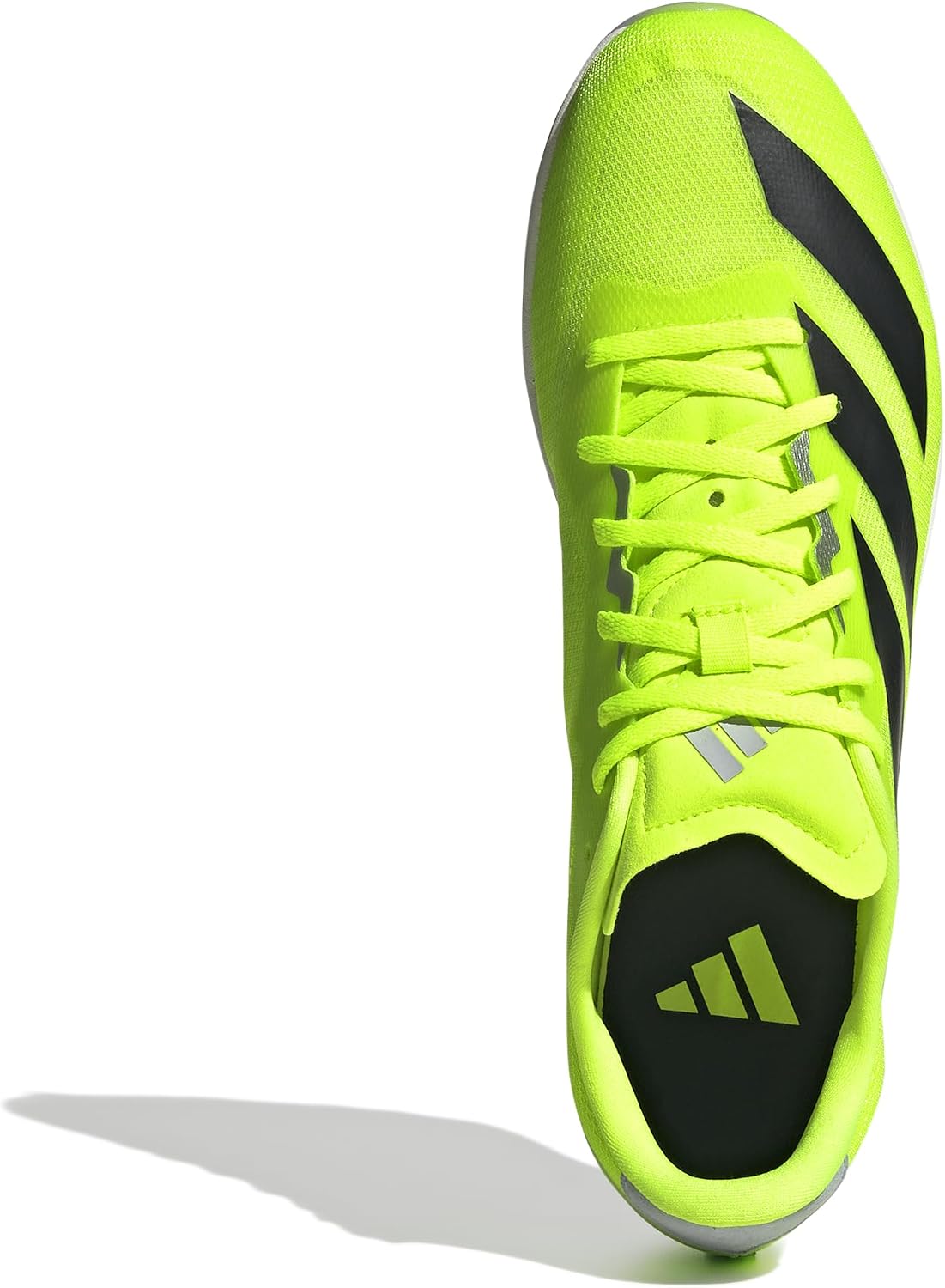
If you’ve ever stood in a track spike aisle — or scrolled through Running Warehouse at midnight — and wondered why there are forty different options for events that all involve running in a circle, you’re not alone. A distance spike is a racing shoe built specifically for track events from the 800 meters up through the 5,000 meters (and sometimes 10K). Unlike a regular running shoe, it has a rigid or semi-rigid plate (a stiff insert in the forefoot, often made of nylon, fiberglass, or carbon fiber) that transfers energy into the track surface, plus a set of removable pins (small metal posts on the outsole) that grip the track and prevent slipping mid-race. The plate and pins together are why these shoes feel nothing like your training flats — and why picking the wrong pair for your event can cost you more than money. This guide will walk you through the three decisions that actually matter: how stiff the plate should be, how many pins you need, and whether the carbon-fiber premium is worth it at your level right now.
| EDITOR'S PICKNike Victory 2 Track & Field Sp… | Mid-tierNike Air Zoom Victory Track & F… | Budget pickPUMA Mens Evospeed Distance 11… | |
|---|---|---|---|
| Event type | — | Distance | — |
| Plate | — | Zoom Air | — |
| Size shown | 13 | — | 9.5 |
| Color | Crimson/Orange | — | Orange/White |
| Gender | Unisex | — | Mens |
| Model line | Victory 2 | Air Zoom Victory | Evospeed Distance 11 |
| Price | $124.83 | $58.00 | $46.95 |
| See on Amazon → | See on Amazon → | See on Amazon → |
Plate Flex: The Variable That Changes the Most Across 800m–5K
The plate is the skeleton of a distance spike. Its stiffness — how much it bends under load — determines how the shoe distributes energy across a stride. Here’s the counterintuitive truth most marketing copy skips: stiffer is not always faster for every event or every athlete.
For the 800m and 1500m, where you’re running at near-sprint velocities for 1–4 minutes, a moderately stiff plate rewards powerful, aggressive foot strikes. These events demand explosive toe-off, and a plate that flexes too easily will absorb energy you want returned to the track. Models like the Adidas Adizero Avanti TYO use a nearly rigid plate architecture — originally designed for elite middle-distance runners — that reviewers at Runner’s World and Podium Runner consistently describe as feeling “locked-in” and responsive for shorter, faster efforts.
For the 3,000m and 5,000m, the calculus shifts. You’re on the track for 8–15 minutes, your foot strike accumulates fatigue across 40–80 laps, and a completely rigid plate starts to work against you — it reduces the natural proprioception (your foot’s ability to sense the track surface and adjust) and can cause localized forefoot fatigue over the back half of the race. A plate with moderate flex — often described on spec sheets as a “semi-rigid nylon composite” — offers a balance: enough energy return to keep your turnover quick, enough give to let the foot move naturally under fatigue.
The practical decision rule: If your primary event is 800m or 1500m, lean toward stiffer plates. If you’re training through the 5K and racing multiple events in a meet, a mid-flex nylon plate is more forgiving and more versatile.
One note on plate geometry: rocker angle (the upward curve of the forefoot, sometimes called the “toe spring”) affects how smoothly you roll through toe-off. Published specs and owner reports on models like the Nike Air Zoom Victory — designed for 1500m through 5K — highlight a pronounced rocker that reduces the muscular effort required to push off, a meaningful edge over the last 1,000 meters of a 5K.
Pin Count and Configuration: More Is Not Always More
The pins (also called spikes — which is why the shoes are called spikes in the first place) are the interface between the shoe and the track. They screw into metal or plastic receptacles on the outsole, and you can swap them out for different lengths or shapes. Here’s what the spec sheet won’t tell you plainly:
Pin count matters less than pin placement. A shoe with 6 pins in the right positions almost always outperforms a shoe with 8 pins in poor positions for distance events. The goal is grip at toe-off without creating drag during the float phase of the stride.
By the numbers:
- Sprint spikes: 6–8 pins, clustered in the forefoot, maximum grip for explosive acceleration
- Middle-distance spikes (800m–1500m): 5–6 pins, slight spread toward the midfoot to accommodate longer contact time
- Distance spikes (3K–5K): 4–6 pins, often with a more dispersed pattern, some models adding a partial midfoot pin for stability on longer efforts
- Pin length (standard): 6mm for most all-weather tracks; World Athletics Technical Rule 5 caps competition pins at 9mm
Most high school and collegiate track surfaces in the U.S. are polyurethane all-weather tracks, and the standard recommendation across LetsRun.com community threads and Runner’s World’s spike guide is to start at 6mm pins unless your facility specifies otherwise. Longer pins grab more aggressively but increase the rotational torque on your ankle — not ideal for 5K pace when you’re already accumulating miles on the track.
One underappreciated point: pin replacement is cheap and fast. A spike wrench and a set of replacement pins costs under $10. If you buy a 6-pin model and decide you want to experiment with 4 pins for a 5K, you can simply remove two. This means pin count is less of a commitment than plate stiffness — buy for the plate, tune with the pins.
The Carbon Question: Do You Actually Need It?
This is the decision that’s generating the most noise in the spike market right now, and the honest answer is more nuanced than the marketing suggests.
What carbon actually does: A carbon-fiber plate is stiffer and lighter than a nylon or fiberglass plate of comparable dimensions. In elite biomechanics research, stiffer plates have been associated with improved running economy (the energy cost of running at a given pace) at high velocities. The Adidas Adizero Prime SP2 ($250) and Nike Air Zoom Maxfly ($225) — primarily sprint-focused — pioneered the carbon plate premium at the consumer level, and the technology has now filtered into distance-oriented models.
The distance-specific carbon question: Carbon plates are most effective when paired with thick, compliant foam midsoles (like ZoomX or Lightstrike Pro) that allow the plate to “load and snap.” Most traditional distance spikes have minimal midsoles — sometimes just a thin layer of EVA foam — because extra stack height adds weight and reduces ground feel. When you put a carbon plate in a low-stack spike, you lose some of the “spring” benefit that makes carbon so effective in road racing shoes. What you’re left with is a very stiff, very light plate — which is genuinely useful for some athletes, but not transformative in the way the price tag implies.
Podium Runner’s analysis of carbon-plated distance spikes makes this point directly: the energy return benefit is most pronounced for runners above a certain threshold of strength and velocity. Below roughly sub-4:20 mile / sub-9:00 two-mile fitness, published research and coaching consensus suggest the performance delta between a quality nylon plate spike and a carbon plate spike is within the noise of race-day variability. The carbon shoe is not making slower runners fast — it’s giving elite runners a marginal, measurable edge they’ve already earned through training.
The honest budget frame: A well-constructed nylon-plate distance spike in the $60–$120 range — like the Adidas Adizero Avanti (non-TYO version), the Nike Zoom Victory, or the New Balance MD 500 v9 — will serve the vast majority of high school and collegiate distance runners at least as well as a carbon model, and often better for 5K-specific events where plate compliance matters more than raw stiffness.
If X, then Y — the decision rule:
| If you are… | Then… |
|---|---|
| Sub-varsity or first-year track athlete | Start with a nylon-plate spike under $100. Nail your fitness first. |
| Varsity runner targeting 800m–1500m PR | Consider stiff nylon or entry-level carbon; the plate stiffness matters here more than the material |
| Collegiate or club athlete chasing 5K times, 15:00+ range | Mid-flex nylon plate is your best value; skip the carbon premium |
| Sub-14:30 5K / sub-4:00 mile fitness, racing at high levels | Carbon plate is worth evaluating — your velocity and power output can access the benefit |
| Coach buying for a full roster | Nylon-plate models in the $70–$100 tier offer the best durability and fit consistency across sizes |
Sizing, Fit, and Retailer Notes
Distance spikes fit differently from training flats, and this catches first-time buyers off guard. Most distance spikes run true to size or a half-size small due to the snug, sock-like upper construction. Runner’s World’s buying guide and retailer notes from Running Warehouse both flag that athletes should try spikes on with the thin, low-profile socks they plan to race in — not their standard training socks.
Return windows matter here: Running Warehouse offers a 90-day return policy on unworn footwear, and JackRabbit typically offers 30 days. Because spikes are often bought online, the practical advice is to order your normal road shoe size and your half-size down simultaneously if the retailer’s policy allows exchanges. Wear them on an indoor surface only until you’re certain of fit — outsole contact with track surfaces will void most returns.
One fit consideration specific to distance events: heel lockdown. During a 5K, you’re making 3,000+ foot strikes, and any heel slippage multiplies into blisters and energy waste. Look for spikes with structured heel counters (the firm cup at the back of the shoe) and, ideally, an asymmetric lacing system or internal heel brace. Track and Field News shoe coverage consistently flags heel fit as the top complaint in distance spike reviews — worth weighting heavily if you’re buying blind online.
The Verdict
Distance spike selection for 800m through 5K comes down to three honest variables: plate stiffness matched to your event distance, pin configuration appropriate for your track surface, and an honest assessment of whether your fitness level can actually unlock a carbon plate’s benefits.
The market is flooded with premium options, and the marketing leans hard on elite association. But the athletes winning conference titles in the 3K and 5K at the high school level aren’t doing it because they have carbon plates — they’re doing it because they have fitness, race sense, and shoes that fit correctly and grip the track. A well-chosen nylon-plate spike at $80 beats a poorly-fitted carbon model at $250 in every race that counts.
If you’re buying for this season: match plate flex to your primary event first, get the pin length right for your track surface, and only chase the carbon premium when your training times put you in a tier where the marginal gain is real. Everything else is footwear marketing dressed up as biomechanics.