August 31, 2026 • Cassidy Vane • 11 min reading time • Prices verified June 6, 2026
When Your Kid Loses Spikes Mid-Meet: The Emergency Replacement Protocol Every Track Parent Needs
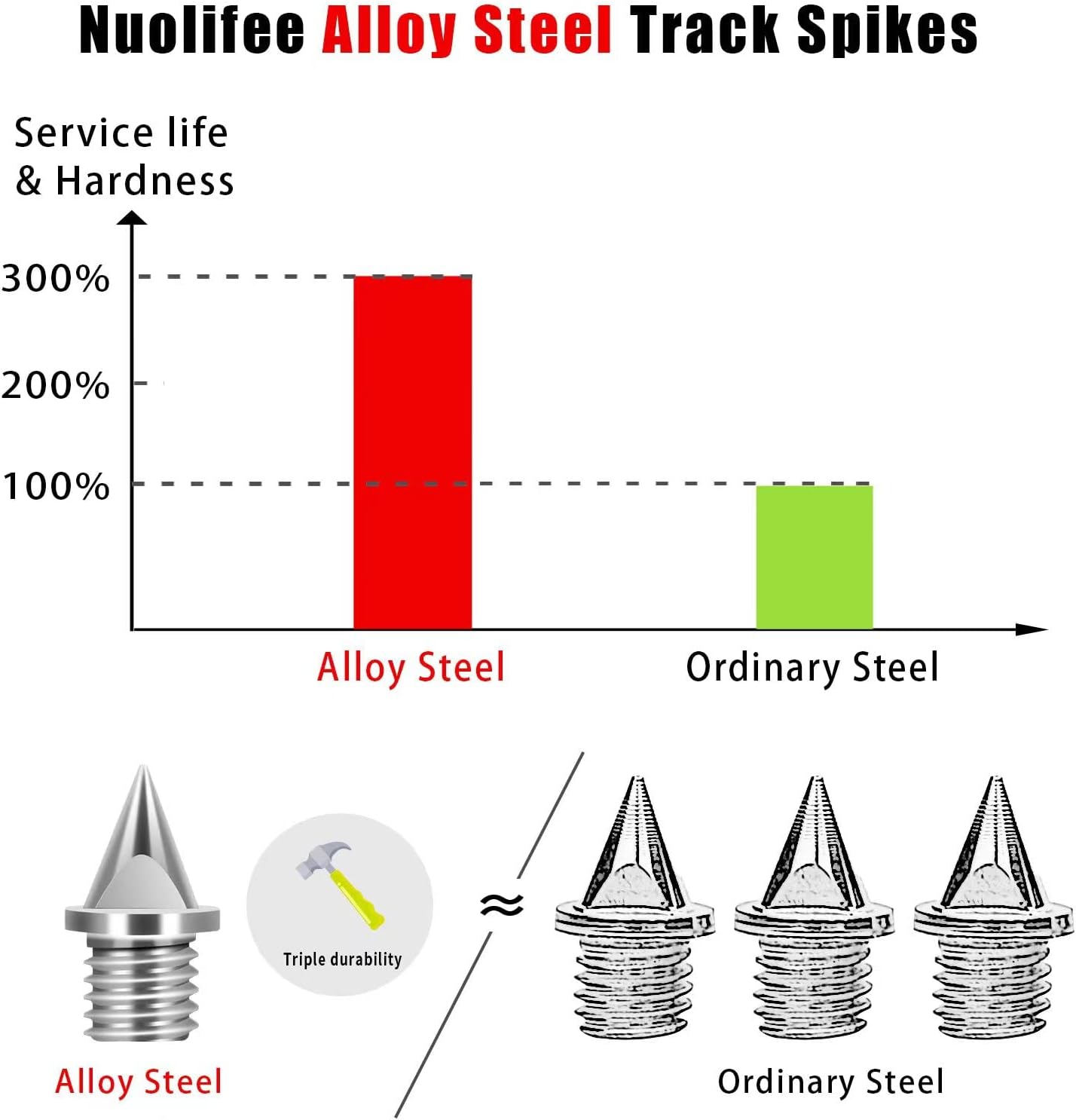
If you’ve ever watched a sprinter pull up mid-race and start limping toward the infield, there’s a decent chance it wasn’t an injury — it was a missing spike pin. Spike pins are the small, removable metal or ceramic studs that screw into the bottom of track spikes (the specialized racing shoes worn in track and field). They’re what give athletes grip on the track surface, and they are surprisingly easy to lose. They back out of the shoe during a race, strip from overtightening, or simply disappear somewhere between the warm-up area and the starting blocks. For a first-time track family, losing a pin mid-meet feels like a crisis. For a prepared one, it’s a two-minute fix. This guide walks you through exactly what to stock, what’s legal, and what to do when it happens — not before the season, but right now, in the parking lot of a district championship.
| EDITOR'S PICKCarbon Steel Track Spikes | Mid-tier1/4 Inch Carbon Steel Track Spi… | Budget pickHicarer 110 Piece 3/8 Inch Stee… | |
|---|---|---|---|
| Length | 1/4 in | 1/4 in | 3/8 in |
| Count | 50 | 32 | 110 |
| Weight each | 0.47 g | 0.47 g | — |
| Material | Carbon steel | Carbon steel | Steel |
| Wrench incl. | ✓ | — | — |
| Price | $12.99 | $9.97 | $8.99 |
| See on Amazon → | See on Amazon → | See on Amazon → |
Why Spike Pins Go Missing (And Why It’s More Common Than You Think)
Track spike shoes come from the factory with pins already installed, and most families assume those pins are permanent. They’re not. The pins are threaded into metal inserts (called “spike wells”) in the forefoot of the shoe, and they’re designed to be swapped out. That’s a feature, not a flaw — different events call for different pin lengths — but it also means the system can work against you.
Pins back out for a few predictable reasons. The threading on budget spikes or heavily used shoes can wear down, especially after a full outdoor season. Pins that weren’t fully torqued during installation gradually loosen as the athlete pushes off the blocks. And pins that were installed finger-tight without a spike wrench — a small L-shaped or T-handled tool that fits the pin head — are essentially on a timer. Reviewers who cover spike maintenance consistently note that the wrench is not optional equipment; it’s a functional tool that determines whether a pin stays in through a 400m race or walks out of the well by the second curve.
The social dimension here is real and worth naming. When one athlete in a group runs short on pins, the pins tend to migrate to whoever needs them most. Parents who’ve come prepared with bulk packs report giving extras to teammates on the spot — a small act that can save a teammate’s race and earn your kid a lot of goodwill. The meet-day spike kit is communal gear whether you plan it that way or not.
The 3/8” Legality Issue: Read This Before You Buy
This is the most important warning in this article, and it deserves its own section.
Spike pins are measured by their length. The two most common lengths in high school and collegiate track are 1/4 inch (6mm) and 3/16 inch (5mm). There is also a 3/8 inch (9-10mm) pin on the market, sold in bulk packs that look very similar to legal options at first glance.
Here’s the problem: 3/8 inch spike pins are illegal for high school track competition in virtually every U.S. state, and reviewers who’ve purchased 3/8” bulk packs have flagged this explicitly — some discovering the issue only after the purchase arrived. The National Federation of State High School Associations (NFHS) Track and Field Rules Book specifies maximum spike length for running events at 1/4 inch (6mm) on standard surfaces and 3/16 inch (5mm) on all-weather tracks. The exact limit can vary slightly by surface and state association, so the safe default is to carry 1/4 inch or shorter and verify your specific state’s current rules before a championship meet.
World Athletics, the international governing body, publishes its own spike length limits in Rule 5 of the Technical Rules — those limits apply at sanctioned open and collegiate competitions but are not always identical to NFHS rules. If your athlete competes in both high school and club meets, you may need two sets of pins.
The bottom line: When you’re shopping for a replacement bulk pack at 11pm the night before districts, filter explicitly by 1/4” (or your approved length) and read the listing carefully. A pin that’s 50% too long can get your athlete scratched from the event.
What to Stock: The Meet-Day Spike Kit
Think of this as a small kit that lives permanently in the meet bag — the way a first-aid kit lives in the car. You don’t reorganize it before every meet. You build it once and replenish it.
By the Numbers
| Item | Recommended Qty | Why |
|---|---|---|
| Replacement pins (correct length) | 20–40 per athlete | A full shoe has 5–7 wells; bulk packs start at 20 pieces |
| Spike wrench (dedicated, not the one in the shoe box) | 1–2 | Shoe-box wrenches are often flimsy; a quality standalone wrench is worth the few extra dollars |
| Extra pins in a different length (if multi-event athlete) | 10–15 | Distance events often run shorter pins than sprints |
| Small zip-lock bag or pill organizer | 1 | Loose pins in a bag pocket disappear |
The 20-piece pack is the minimum practical purchase for a single meet emergency. Parents who’ve been through the scenario consistently recommend the 100- to 120-piece bulk pack instead — not because you’ll use them all in one meet, but because you’ll give them away, lose some, and end up needing them mid-season when the original supply is gone. Across aggregated reviews of bulk spike pin sets, the pattern is clear: athletes who start with a 20-pack wish they’d bought the 100-pack; no one with a 100-pack wishes they’d bought less.
The Wrench Question
Multiple reviewers call out wrench quality specifically. The wrench included in a bulk spike pin pack is usually functional — better than nothing — but the stamped-metal wrenches that ship inside the shoe box with most spikes are frequently described as inadequate for a stripped or overtightened pin. A standalone spike wrench with a proper grip handle gives you more torque and less knuckle damage when you’re trying to muscle out a stuck pin in the infield. If your athlete competes seriously, this is a $5–$10 item worth adding to the kit separately.
Thread Fit: Why the “Right Size” Pin Might Still Feel Loose
Here’s a detail that catches a lot of buyers off guard. Track spikes use a standardized thread specification — most commonly a 1/4-20 thread (meaning 1/4 inch diameter, 20 threads per inch) — but the tolerances on spike wells vary meaningfully across brands and even across model years within the same brand.
A replacement pin in the “correct” thread size can still fit loosely in a Nike well compared to how it fits in an Adidas well, or feel snug in an older pair of the same shoe versus a new one. Reviewers who’ve used universal bulk pin packs note this variance explicitly. It doesn’t mean the pin is the wrong product — it means you should hand-thread every replacement pin fully before using the wrench, and check the tightness again after a warm-up lap. A pin that feels slightly loose when you install it should be re-torqued before competition, not assumed to be defective.
Brand-specific notes based on published fit data and aggregated reviewer feedback:
- Nike shoes (including the Zoom Rival and Air Zoom Maxfly) generally use standard 1/4-20 thread.
- Adidas shoes (including the Adizero SC and Adizero Prime SP2) also use 1/4-20 thread, though some reviewers note the well depth is slightly shallower, making pin length selection more critical.
- New Balance and most other major brands follow the same 1/4-20 standard for running events.
When in doubt, bring the shoe — not just the pin spec — to a specialty retailer before the season. Podium Runner’s spike maintenance guide recommends physically test-fitting a replacement pin in your athlete’s specific shoe before relying on it in competition.
The Emergency Protocol, Step by Step
When a pin is missing or backing out mid-meet, here’s the action sequence that keeps your athlete in the race:
-
Identify the problem early. Teach your athlete to do a quick visual check of the spike plate (the plastic or carbon forefoot of the shoe) before each event, not just before the meet. A missing pin is obvious; a backing-out pin has a slight gap visible between the pin head and the plate.
-
Pull the athlete before, not during, the event. If a pin is backing out, it can cause a blister, affect stride mechanics, or fully eject mid-race. If there’s time before the gun, swap it. Runners World’s spike selection coverage notes that spike plate integrity directly affects push-off efficiency — a loose pin is a performance and safety issue, not just a gear nuisance.
-
Carry the wrench on your person, not in the car. The kit does no good in the parking lot. The wrench and backup pins belong in a small pouch in the meet bag that travels to the infield.
-
For a stripped pin: If a pin won’t come out with a wrench — it’s spun in place, cross-threaded, or the head is damaged — don’t force it past the point of reasonable torque. A stripped well is a shoe problem, not a pin problem. In an emergency, athletic tape over the damaged well is a short-term patch that protects the athlete’s foot from the exposed metal edge. The shoe needs a specialty repair or replacement after the meet.
-
Can you race with a missing pin? In most cases, yes — one missing pin from a five- or seven-pin configuration won’t disqualify an athlete or cause injury, and many athletes race their entire season without filling every available well. The performance impact is minimal. The risk of leaving a backing-out pin in place is higher than the risk of a single empty well.
Frequently Asked Questions
Can I change a spike pin between prelims and finals at a track meet? Yes. Changing spike pins between rounds — including between prelims and finals — is legal and common. There is no rule prohibiting pin changes between events or rounds, provided the installed pins meet the length and specification requirements for that competition. Many multi-event athletes carry different pin lengths and swap based on the surface or event demands.
Are 3/8 inch spike pins illegal for high school track? Yes, in virtually all U.S. high school track competitions. The NFHS Track and Field Rules Book limits spike length for running events to 1/4 inch (approximately 6mm) on standard surfaces. Some state associations set the limit at 3/16 inch (5mm) for all-weather tracks. A 3/8 inch pin exceeds these limits and can result in a shoe disqualification. Check your specific state association’s current rules before purchasing.
What is the most common spike pin size for Nike and Adidas track shoes? The most common configuration is 1/4-20 thread in 1/4 inch length for running events. Both Nike and Adidas use this standard across most of their sprint and distance spike lines. That said, some event-specific models ship with shorter pins (3/16 inch), so check what’s installed in your athlete’s shoe before purchasing replacements.
How do I know if my replacement spike pins will fit my shoe brand? Most major brand track spikes use the 1/4-20 thread standard, so universal replacement packs fit the majority of shoes. However, thread tolerance varies across brands and even model years, meaning a pin may fit somewhat loosely in one shoe and snugly in another. Physically test-fitting a sample pin before competition is the most reliable method. Specialty running retailers can also help confirm fit before you buy in bulk.
What do I do if a spike pin is stripped and won’t come out? Don’t over-force it. A damaged well can be temporarily covered with athletic tape to protect the foot. After the meet, a specialty shoe repair shop or the original retailer may be able to extract the pin and re-thread the well, though this is sometimes not cost-effective on budget shoes. In severe cases, the shoe needs to be replaced.
How many replacement spike pins should I carry in my meet bag? At minimum, carry enough to replace all the pins in one shoe — typically five to seven, depending on the model. In practice, a 20-piece pack covers one emergency; a 100-120 piece bulk pack covers a full season, covers teammates, and survives the inevitable losses. If your athlete competes across multiple events with different surface requirements, carry two lengths.
The spike kit is a five-minute setup that pays off exactly once — at the worst possible moment, on the most important day of the season. Build it before you need it. Verify the pin length is legal for your state. Keep the wrench in the bag, not the car. And when the family next to you in the infield is panicking over a missing pin, you’ll be the one handing them extras.