September 10, 2026 • Cassidy Vane • 10 min reading time • Prices verified June 6, 2026
Generic Track Spikes for Sprint Events: How 8-Pin No-Name Shoes Actually Perform All Season
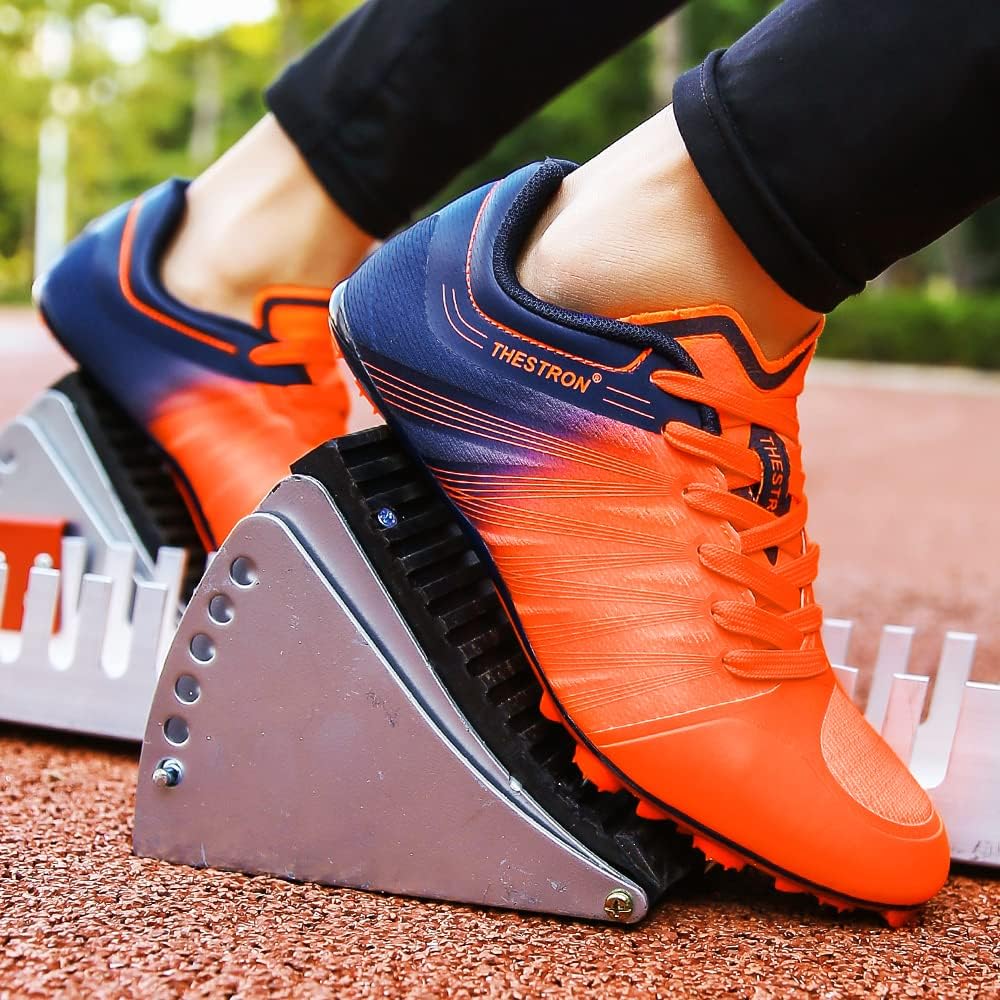
If you’ve started looking at track spikes — the lightweight, stiff-soled racing shoes that grip the track surface through metal or ceramic pins screwed into the forefoot — you’ve almost certainly noticed one thing: prices vary wildly. A Nike Air Zoom Maxfly runs $225. An Adidas Adizero Prime SP2 is $250. But scroll a little further and you’ll find unbranded or lesser-known-brand sprint spikes for $30–$60, often listed with eight spike pins (the small, removable metal posts that dig into the track surface), promising the same basic function. The question every budget-conscious parent and first-year varsity athlete asks is simple: do these things actually work, or will they fall apart by the third meet?
This article answers that honestly. We’ve aggregated buyer reports, cross-referenced them against what coaches and gear writers say about sprint spike fundamentals, and applied a clear decision framework. By the end, you’ll know exactly which situations make a generic 8-pin sprint spike a smart buy — and which situations make it a false economy.
What “8-Pin” Actually Means for Sprint Performance
Let’s start with the spec that’s doing the most work in the name.
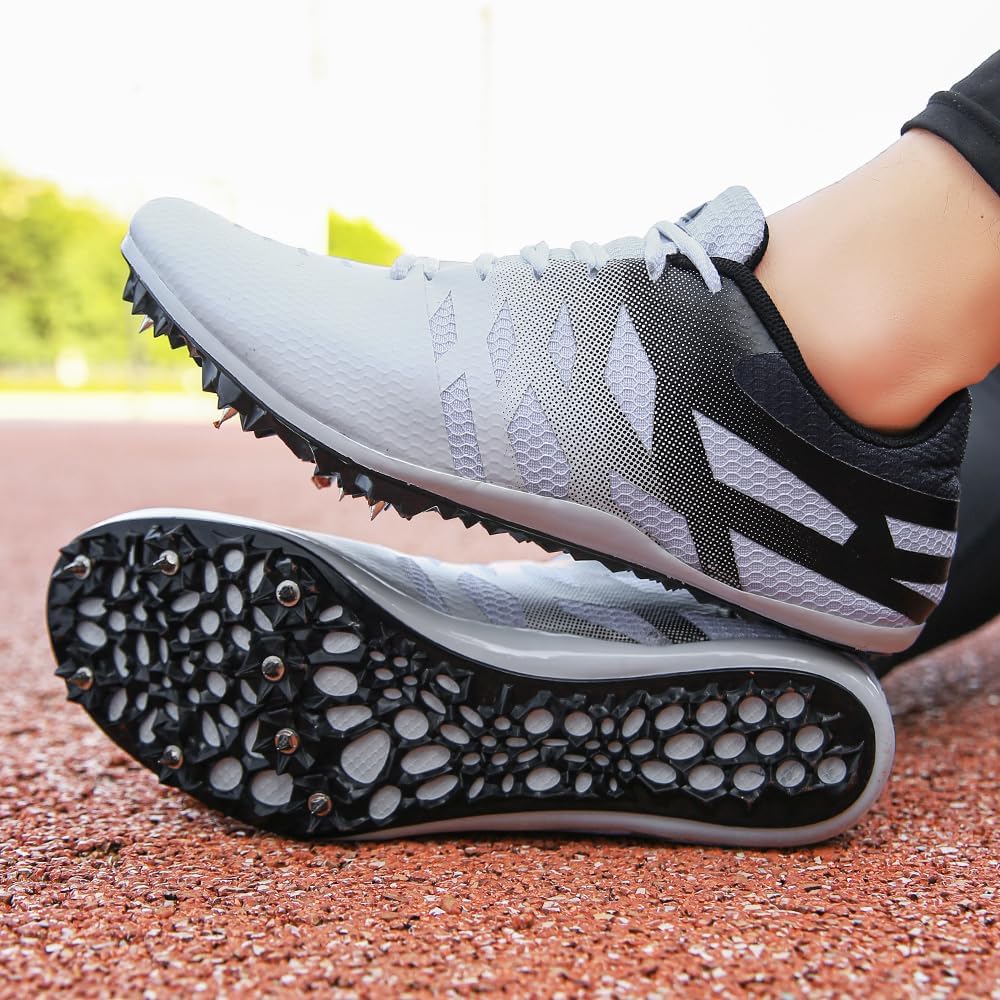
Spike pin configuration refers to how many removable metal posts are in the forefoot plate of the shoe, and where they’re positioned. Sprint spikes — designed for 60m through 400m events — concentrate all pins in the forefoot because sprinters run on the balls of their feet for the entire race. Eight pins is a robust configuration for this use case. For comparison, distance spikes often use five or six pins and place them differently to account for heel loading on longer events.
The spike plate itself — the rigid, slightly curved insert inside the forefoot — is what really separates sprint spike tiers. In elite shoes, this plate is carbon fiber or a carbon-reinforced composite, which stores and returns energy like a spring. In generic budget spikes, the plate is typically nylon or a mixed polymer. It is stiffer than a regular running shoe, but it does not have the propulsive “snap” that carbon delivers. World Athletics publishes its Competition Rules — including Rule 5, which governs shoe specifications such as plate composition and heel height at sanctioned meets — on worldathletics.org. These standards are worth reviewing if your athlete competes at the state level or above, where compliance checks can occur.
So the honest baseline: a generic 8-pin spike is a legitimate sprint spike. It is not pretending to be something it isn’t. It grips the track, locks the foot into a forefoot-strike position, and keeps weight low. What it does not do is give you carbon-plate energy return.
How Generic 8-Pin Spikes Actually Hold Up Over a Season
Here is the central credibility question, and the answer is more reassuring than skeptics expect.
Across aggregated buyer reports, the pattern is clear: most athletes who use generic 8-pin sprint spikes for a full high school track season — typically 12–16 weeks, covering dual meets, invitationals, and championship rounds — report that the shoe survives without structural failure. The upper (the fabric part covering the foot) shows wear, and the spike threads can strip if pins are not installed carefully, but reviewers consistently describe these shoes as finishing the season intact.
Performance results reported by buyers are genuinely notable. Verified buyers on widely sold generic models describe winning events and setting personal records across the season. These are self-reported outcomes, not controlled studies — but the volume and consistency of similar reports across different models in this category is meaningful signal.
The math case for a full season is compelling:
| Scenario | Cost | Per-meet cost (16 meets) |
|---|---|---|
| Generic 8-pin sprint spike | ~$40 | ~$2.50 |
| Nike Air Zoom Maxfly | $225 | ~$14.00 |
| Adidas Adizero Prime SP2 | $250 | ~$15.60 |
For a JV athlete still growing into their stride mechanics, or a freshman in their first competitive season, the cost-per-meet math strongly favors the generic option. As Podium Runner has noted in its sprint spike selection coverage, the physical demands of a high school season — while real — differ significantly from the demands of a professional sprinter competing in weekly Diamond League appearances. The durability threshold for a school-season shoe is achievable at a lower price point. Runner’s World’s sprint spike buying guidance makes a similar observation: for newer competitors, plate material is rarely the performance limiter that stride mechanics and event-specific training represent.
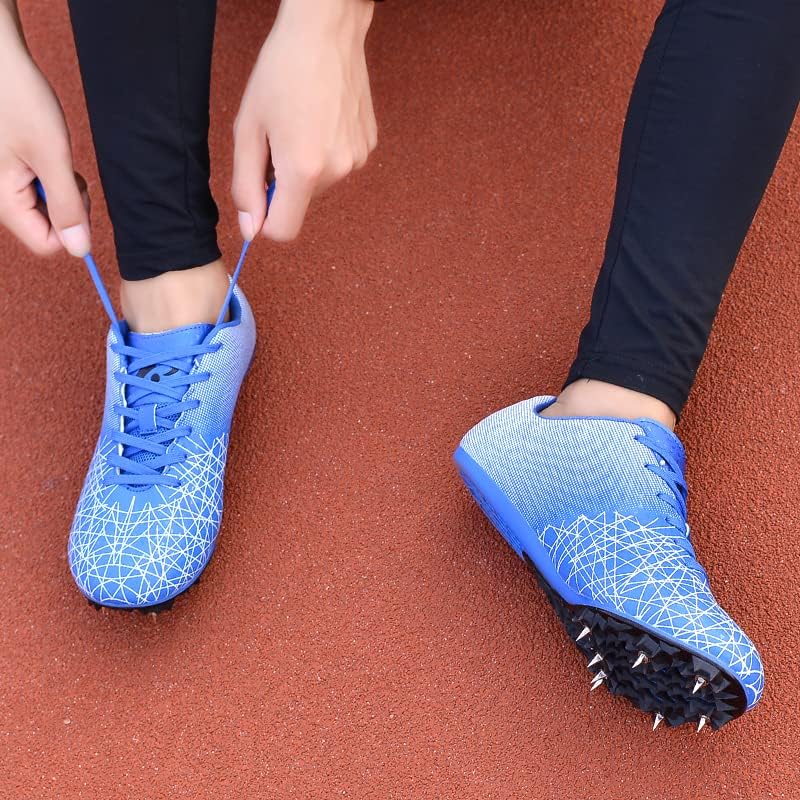
Track
$39.88
In stock on Amazon
Check price on AmazonThe Real Risks: Quality Control and Fit Variability
This is where the article has to be straight with you, because the risks are real and the category has documented inconsistency.
Quality control is the biggest legitimate concern. Buyer reviews for generic sprint spike models include reports of units arriving with packing errors — a wrong item included, or a minor fabric defect visible on inspection before the shoe is even worn. This is not catastrophic, but it is a quality-control red flag. It suggests variable warehouse and packing practices at the manufacturer or fulfillment level. If you are ordering a generic sprint spike, budget for the possibility that you will need to initiate a return, and check the retailer’s return window before purchase.
Width is the other persistent theme in buyer reports, and it cuts both ways. Certain models in the generic category are explicitly and repeatedly praised by reviewers for accommodating wider feet — a genuine differentiator in a spike category that typically runs narrow. Sprinters with wider forefeet often struggle even in mid-priced branded spikes; a generic model that fits well is genuinely valuable. But other models in the same price range are flagged as poorly suited for wide feet. The lesson: width is model-specific in this category, not category-wide. Check the width notes in the reviews for the specific model you are considering — do not assume all generic spikes fit the same way.
Sizing relative to branded spikes is also variable. Track and Field News has noted in its equipment coverage that spike sizing across manufacturers — including major brands — is inconsistent enough that athletes are advised to always consult brand-specific size charts. Generic spikes compound this challenge. Reviewers report that some generic models run true to a Nike size, while others run a half-size small. When in doubt, size up by a half-size for your first generic spike purchase, and prioritize retailers with free return shipping.
Track
$39.99
In stock on Amazon
Check price on AmazonInstalling Spike Pins: A Practical Note for First-Timers
Spike installation difficulty appears consistently in parent reviews, and it is worth addressing directly because it is a solvable problem that should not derail your first meet.
Most generic spikes ship with spike pins not pre-installed — they arrive in a small bag inside the box. You will need a spike wrench (a small T-handle or L-shaped tool, sometimes included, sometimes sold separately for under $5). The process: thread each pin by hand first to avoid cross-threading, then tighten with the wrench until snug — not overtightened, which strips the threads.
Generic spike plates sometimes have threads that are slightly looser than branded equivalents, which means cross-threading is a more common risk. The fix is simple: always start each pin by hand and feel for resistance before applying the wrench. If you feel grinding instead of smooth threading, back the pin out and try again. A small amount of track-specific anti-seize compound (available at most hardware stores) on the pin threads prevents corrosion between meets and makes pins much easier to remove mid-season.
School Colors, the Practical Reality
The color-matching motivation is worth naming honestly because it appears across dozens of buyer reviews and it is a completely legitimate reason to choose one generic model over another. Athletes and parents consistently report selecting specific colorways to match team uniforms — and for relay teams especially, visual uniformity on the track matters in ways that go beyond vanity.
Generic manufacturers have expanded their color offerings in recent seasons. If color-matching to a specific school uniform is part of your decision, check the specific shade of the product photos carefully — colors render differently on screen, and at least one reviewer in this category notes that the “red” they received read more orange in person. When possible, look for user-submitted photos in reviews rather than relying solely on the product listing image.
Frequently Asked Questions
Do generic track spikes come with the spike pins already installed? Usually not. Most generic sprint spikes ship with pins loose in a small bag inside the box. Occasionally a pair arrives with pins already in the plate, but do not count on it. Check the product listing’s “What’s in the box” section, and budget for a spike wrench if one is not included.
Are 8-pin track spikes good for the 100m and 200m? Yes — 8-pin forefoot configurations are well-matched to the 100m and 200m, where you are on the balls of your feet for the entire race. The eight-pin layout gives solid traction without excess weight. They are also functional for the 400m. Buyers in all three events report competitive results.
How do generic sprint spikes fit compared to Nike or Adidas sizing? Inconsistently. Some models run true to Nike sizing; others run a half-size small. Width is model-specific — certain models in the generic category are praised for wide-foot fit, while others are flagged as too narrow for wider feet. Read the width notes in current buyer reviews for the specific model, and when unsure, go a half-size up.
What do I do if my generic spikes arrive with quality issues? Document the problem immediately with photos before wearing the shoes. Contact the retailer and reference their return window — most major track-and-field specialty retailers and large online platforms accept returns within 30 days if the shoes are unworn. If the shoe has a fabric defect or an incorrect item inside the package, you have clear grounds for a no-questions-asked return or exchange. Do not attempt to “make it work” with a defective pair.
Can my athlete wear these spikes for relays and field events too? For relays, absolutely — they are the same sprint spikes used for individual sprint events. For field events, it depends. Long jump and triple jump are generally compatible with sprint spikes. Throwing events (shot put, discus, hammer, javelin) require event-specific shoes with different traction and rotation patterns — sprint spikes are not appropriate there and could present a safety concern. High jump requires a specific spike configuration for the plant foot. If your athlete competes in multiple event types, verify the spike configuration requirements for each event before assuming one shoe covers everything.
Men
$39.99
In stock on Amazon
Check price on AmazonThe Decision Rule
If your athlete is a first- or second-year competitor, JV-level or below, still growing, or budget-constrained: a generic 8-pin sprint spike is a genuinely reasonable choice. The season-survival track record is strong, competitive performances have been reported in them, and the cost-per-meet math is hard to argue with. Check width-fit notes for the specific model, order from a retailer with a clear return window, and have a spike wrench ready before the first meet.
If your athlete is a proven varsity competitor chasing a state qualification, a club sprinter logging serious volume, or anyone with a biomechanical need for carbon-plate propulsion: the generic category has a ceiling that a Maxfly or Prime SP2 genuinely pushes past. The gap is real. As both Runner’s World and Podium Runner have observed in their spike coverage, the energy-return advantage of a carbon plate becomes measurable at the level where tenths of a second determine qualification outcomes. Save through the off-season and invest in the better tool when the competitive stakes justify it.
The generic 8-pin sprint spike is not a compromise for everyone. For the right athlete at the right stage, it is the correct answer.