August 24, 2026 • Cassidy Vane • 10 min reading time • Prices verified June 6, 2026
Multi-Event and Jumping Spikes: What the Long Jump, High Jump, and Heptathlon Actually Need
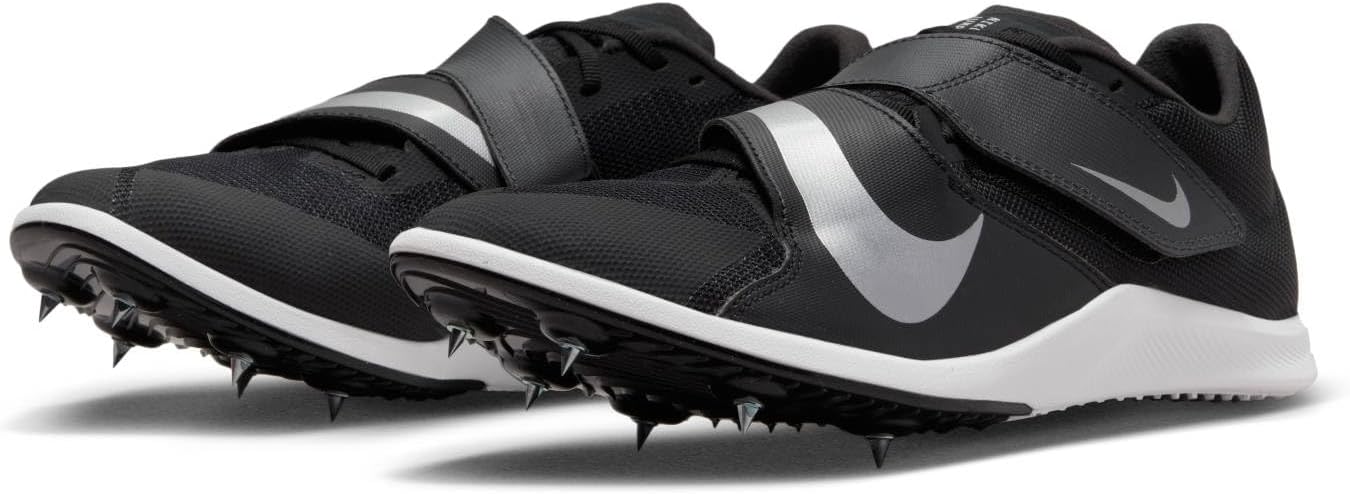
If you’ve ever watched a heptathlon or decathlon at a big invitational, you’ve probably noticed something strange: the same athlete sprinting the 200 meters, then switching shoes before the long jump, then changing again before the high jump. That’s not superstition — it’s strategy. A spike is a specialized track shoe with a rigid plastic or metal plate in the forefoot studded with removable metal pins (also called spikes) that grip the track or runway surface. Different jumping events stress your foot in completely different directions, and the wrong spike can cost you centimeters, comfort, or both. This guide breaks down exactly what each horizontal and vertical jumping discipline actually demands from a shoe, where the right gear overlaps enough to simplify your bag, and how to make smart buying decisions whether you’re shopping for one event or seven.
| EDITOR'S PICKNike Rival Multi Track & Field… | Mid-tierPUMA Evospeed Long Jump 8 SP Fi… | Budget pickTrack and Field Shoes Men Women… | |
|---|---|---|---|
| Event | Multi-event | Long jump | Track/jumping |
| Size (US) | 14.5 | 10 | 8 |
| Color | Red Stardust/Malachite | White | Orangeblue |
| Brand | Nike | PUMA | Track |
| Spike pins | — | — | ✓ |
| Gender | — | — | Men/Women/Kids |
| Price | $67.95 | $45.95 | $39.99 |
| See on Amazon → | See on Amazon → | See on Amazon → |
Why “Just Use Your Sprint Spikes” Is Usually Wrong
This is the most common mistake at the sub-varsity and early-collegiate level, and it’s understandable — sprint spikes are the flashiest, most-marketed shoe in the event portfolio. Models like the Nike Air Zoom Maxfly ($225) and the Adidas Adizero Prime SP2 ($250) get most of the attention. But those shoes are engineered for linear acceleration and top-end velocity. Their carbon-fiber sprint plates — the stiff, curved structures embedded in the forefoot — are tuned for forward propulsion in a straight line. When you redirect that energy laterally for a long jump penultimate step, or dorsiflex aggressively on a high jump bar clearance, you’re fighting the geometry of the shoe rather than working with it.
Here’s what the disciplines actually demand, in plain terms:
By the numbers:
| Event | Primary demand | Plate orientation | Spike count (typical) |
|---|---|---|---|
| Long jump | Horizontal takeoff, penultimate braking | Forward-angled, mid-stiff | 6–7 pins |
| Triple jump | Repeated impact absorption + propulsion | Forward, stiffer midsole | 6–7 pins |
| High jump | Lateral-to-vertical redirect | Curved medial edge support | 5–6 pins |
| Heptathlon / Decathlon | All of the above + 200m / 800m | Varies by phase | 6–7 pins |
Sprint spikes are optimized for none of those specific redirections. A dedicated jumping spike — or a smart double-duty selection — is almost always the better call.
Long Jump and Triple Jump: The Case for a True Horizontal Spike
The long jump runway is where physics gets blunt. You’re sprinting at close to top speed and then converting as much of that horizontal velocity as possible into upward projection at the board — a rigid takeoff board flush with the runway surface. The last two steps before the board are called the penultimate (second-to-last) and ultimate (last) steps, and they involve a sharp lowering of the center of mass followed by a violent upward snap. Your spike needs to help you transmit force without collapsing underfoot, grip without catching, and release cleanly.
What that means in shoe terms:
- Plate stiffness: You want a moderately stiff forefoot plate — stiffer than a distance spike, less parabolic than a pure sprint spike. The plate should lie relatively flat rather than curving dramatically upward at the toe.
- Heel construction: Thin, but not absent. You need some structure at landing for the penultimate step braking load.
- Spike count and pattern: Six to seven pyramid-tipped pins arranged to grip on the takeoff without rotating your foot. Most purpose-built jumping spikes run a 6-pin or 7-pin configuration with pins positioned toward the ball and inner forefoot.
The Nike Zoom LJ Elite has been the dominant long jump spike for years, and reviewers at Track & Field News consistently cite its flat-plate geometry and aggressive forefoot pin layout as the standard against which other horizontal jumping spikes are measured. The Adidas Adizero HJ (designed primarily for high jump but sometimes pressed into long jump service) offers a notably different geometry — worth understanding before you assume any “jumping spike” is interchangeable.
Triple jump adds one more layer: the hop and step phases create repeated high-impact landings before the final board contact. Athletes with higher triple jump volumes, particularly those logging full training cycles, often report that pure long jump spikes don’t provide adequate midsole durability for triple jump repetitions. The Nike Zoom TJ Elite addresses this with a slightly thicker midsole construction than its long jump counterpart — spec sheets put the difference at meaningful cushioning volume in the heel, though both remain extremely minimalist by any road-shoe standard.
High Jump: A Completely Different Geometry Problem
The high jump is the event most likely to get athletes into trouble with a “close enough” spike choice, and the reason is biomechanical. The Fosbury Flop — the universally used modern technique where jumpers arch backward over the bar — requires a sharp curved approach run, a specific penultimate step that plants wide and low, and a takeoff that redirects the athlete from lateral movement to vertical projection. That curved approach means your takeoff foot hits the ground at an angle relative to your direction of travel, loading the medial (inner) edge of the shoe in a way that no sprint spike, and very few long jump spikes, are designed to support.
What high jump spikes do differently:
- Medial edge reinforcement: A high jump spike typically has extra lateral and medial support built into the upper and midsole to resist the angular loading of the curved-approach takeoff. Some models include a subtle inward-angled plate orientation.
- Ankle mobility: High jump takeoff and bar clearance require significant ankle and knee flexion. Overly rigid shoes restrict this movement.
- Toe box: Bar clearance in the flop involves your toes passing close to the bar; a slim profile in the upper reduces snag risk.
The Nike Zoom High Jump Elite is the reference model that most serious high jump coaches and athletes point to when discussing footwear standards. Podium Runner’s multi-event footwear feature from Spring 2025 notes that the shoe’s plate design has remained largely stable through recent updates precisely because the biomechanical demands of the flop haven’t changed. The Adidas Adizero HJ competes in the same tier, with a slightly different plate curvature that some athletes prefer for the approach mechanics; published specs indicate a marginally lower-profile upper that some reviewers associate with better proprioception (the feeling of the ground beneath you, which matters enormously on the curved approach).
One thing to know before you buy: High jump spikes are not bilateral. Most models are sold as matched pairs, but the left and right shoes are often functionally asymmetric in how the plate loads. Pay attention to which foot is your takeoff foot when reading athlete feedback — a shoe that “feels locked in” for a right-foot takeoff jumper may feel subtly off for a left-foot takeoff jumper, and some specialist retailers flag this in their sizing notes.
Heptathlon and Decathlon: The Decision Framework
This is where the “one pair for everything” fantasy runs hardest into reality. A heptathlon athlete competes in seven events across two days: 100 meters hurdles, high jump, shot put, 200 meters, long jump, javelin, and 800 meters. A decathlete runs ten. The shoe decisions compound fast.
Here’s the honest framework, event by event:
Sprint events (100mH, 100m, 200m, 400m): A dedicated sprint spike is defensible for multi-eventers competing at the collegiate or elite club level. The Adidas Adizero Avanti TYO handles the longer sprint and middle-distance events well; many multi-eventers use a single sprint spike for all running events shorter than 800m. FloTrack athlete interviews from the 2025 season repeatedly surface this exact pairing decision — athletes describe consolidating sprint footwear to one or two pairs rather than carrying event-specific shoes for each distance.
High jump: This is the event where a dedicated shoe makes the most difference per dollar. The angular takeoff load is unique enough that improvising here carries real injury risk at high training volumes, not just performance cost.
Long jump: A long jump spike is worth owning if you’re competing seriously in heptathlons or decathlons. If budget is a hard constraint, some athletes successfully use a sprint spike with a flatter plate here — but reviewers and coaches consistently note it’s a compromise, not a solution.
Shot put and throwing field events: Throwing shoes are an entirely separate category. For multi-eventers at the high school level, most coaches permit a flat-soled training shoe for shot put in competition — confirm with your meet director, as rules vary by sanctioning body. Dedicated throwing shoes become relevant at the collegiate level.
800m / 1500m: A middle-distance spike or a distance flat with good turnover characteristics handles these far better than a sprint spike. The Adidas Adizero Avanti TYO, mentioned in Track & Field News’ 2024-2025 coverage as a crossover performer, is a common choice here.
The minimum viable multi-event kit for a high school heptathlete:
- One sprint spike (doubles for 100mH, 200m, and long jump in a pinch)
- One high jump spike (non-negotiable if you’re doing real volume)
- One middle-distance spike or distance flat (800m)
That’s three pairs. Budget-conscious athletes can get functional coverage from $150–$280 total at that tier, particularly buying prior-season models.
The Compliance Check You Can’t Skip
World Athletics Technical Rule 5 governs shoe construction for competition — spike length, sole thickness, and plate legality. As of the 2024 edition, the maximum spike length for track events is 9mm on synthetic tracks, and sole thickness rules have been tightened for field events following the broader conversation about propulsive advantage. Per the World Athletics Technical Rules document, field event shoes (including jumping spikes) are subject to the same 20mm maximum sole thickness rule that governs running events.
This matters in practice because some older or gray-market jumping spikes don’t meet current sole thickness standards. If you’re competing at a sanctioned high school or collegiate meet, your shoe needs to be compliant. The World Athletics approved shoe list is updated periodically and is the definitive reference — check worldathletics.org directly rather than relying on retailer descriptions, which sometimes lag a season behind.
If X, Then Y — The Decision Rules
You’ve read the spec breakdown. Here’s how to translate it to your actual situation:
- If you jump one event and run sprints: Buy the best dedicated spike for your jump event, and use your existing sprint spike for running. Don’t double up with a sprint spike on the runway.
- If you’re a heptathlete or decathlete with a $200 total footwear budget: Prioritize the high jump spike as your one specialty purchase. Use a sprint spike for horizontal jumping as a known compromise. Add a distance flat for 800m / 1500m from the prior-season discount rack.
- If you’re a high jump specialist at the varsity or club level: The Nike Zoom High Jump Elite or Adidas Adizero HJ at current retail ($100–$150 range) is your entry point. Don’t buy down to save $30 here — the medial support difference is structural, not cosmetic.
- If you’re buying for a multi-event athlete as a gift: A high jump spike in the athlete’s confirmed size is the most useful thing you can buy. Sprint spikes are easier for athletes to source themselves through team channels; the high jump shoe is often the gap.
- If you’re coaching a full roster: Prioritize fit consistency and return-window clarity when sourcing jumping spikes through specialty retailers like Running Warehouse or JackRabbit. Jumping spikes fit narrower than training flats in most models — size the athlete, not the number.
The through-line across all of these: jumping spikes are the category where “close enough” costs you the most. Sprint speed is visible and easy to optimize around. The rotational forces and angular loads in jumping events are subtler — but they show up in performance data and, at high volumes, in injury rates. Match the shoe to the movement, and let the athlete do the rest.