September 21, 2026 • Cassidy Vane • 11 min reading time • Prices verified June 6, 2026
Nike JA Fly 4 and Rival Sprint: Real Buyer Experiences Beyond the Marketing
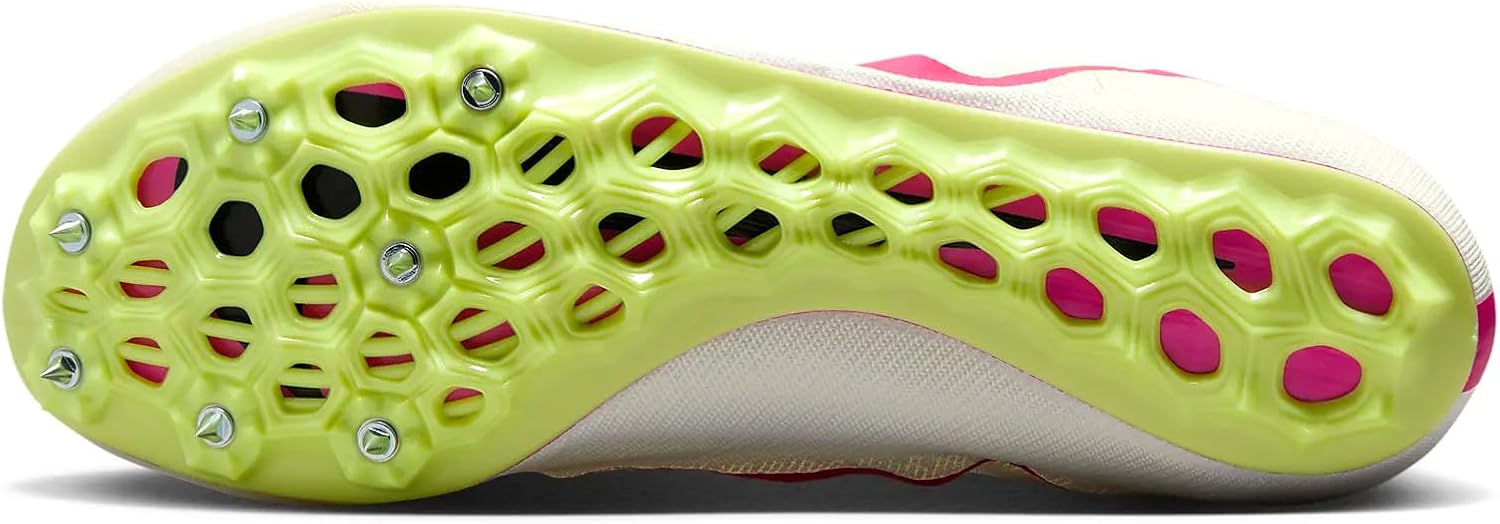
Sprint spikes are a specific category of racing shoe built for the track. Unlike a regular running sneaker, a sprint spike has a stiff, angled plate under the forefoot — sometimes made of carbon fiber — and screw-in metal or ceramic pins (called “spikes”) that grip the track surface. They’re designed to be worn only during races or high-speed workouts, not for jogging or daily training. If you’re shopping for a first pair, or picking up a second pair for a different event, the number of options on Nike’s current roster alone is enough to make your head spin: the JA Fly 4, the Rival Sprint, the Superfly Elite 2, the Victory 2. They look similar in photos. They are not the same shoe. This article cuts through the spec-sheet summaries and grounds each model in what actual buyers report — including one serious red flag about a counterfeit listing that every online shopper needs to read before clicking “Add to Cart.”
The Rival Sprint Is the Baseline — and That’s Not an Insult
Let’s start with the recommendation that holds up cleanest across the review record, because it sets the reference point for everything else: the Nike Rival Sprint.
Nike
$70.00
In stock on Amazon
Check price on AmazonOwners consistently describe it as lightweight, grippy, and uncomplicated. One parent reviewing the shoe specifically called out that the pre-installed spike length was “exact” for track regulations — meaning the spike pins that come in the shoe out of the box are competition-legal without swapping anything. That’s worth pausing on, because it’s not a given across the category. World Athletics Competition Rules 2024–2025, Rule 5 (Athletes’ Clothing and Shoes) specify maximum spike lengths that vary by surface type, and many high school state associations mirror or tighten those standards. A shoe that ships already compliant saves a new buyer from a pre-meet scramble.
The Rival Sprint is Nike’s workhorse sprint spike — the one coaches typically point to when a freshman asks what to buy before they’ve established event specificity. Podium Runner’s “How to Choose Track Spikes” guide categorizes this tier of shoe as appropriate for athletes still building their sprint mechanics, where plate stiffness is moderate and the fit is forgiving enough to tolerate the slight form inconsistencies every developing sprinter has.
By the numbers — Nike sprint spike tier comparison:
| Model | Approximate Tier | Primary Event Range | Plate Material |
|---|---|---|---|
| Rival Sprint | Entry-intermediate | 100m–400m | Plastic/nylon |
| JA Fly 4 | Intermediate-elite | 100m–200m | Carbon-infused |
| Superfly Elite 2 | Elite | 100m–200m | Full carbon |
| Victory 2 | Entry-intermediate | 100m–400m | Plastic/nylon |
If you’re a high school athlete in your first or second season of competitive sprinting, or a parent buying for one, the Rival Sprint is the answer. Everything else in this article is about when and whether to move up.
The JA Fly 4: Real Performance, Real Counterfeiting Risk
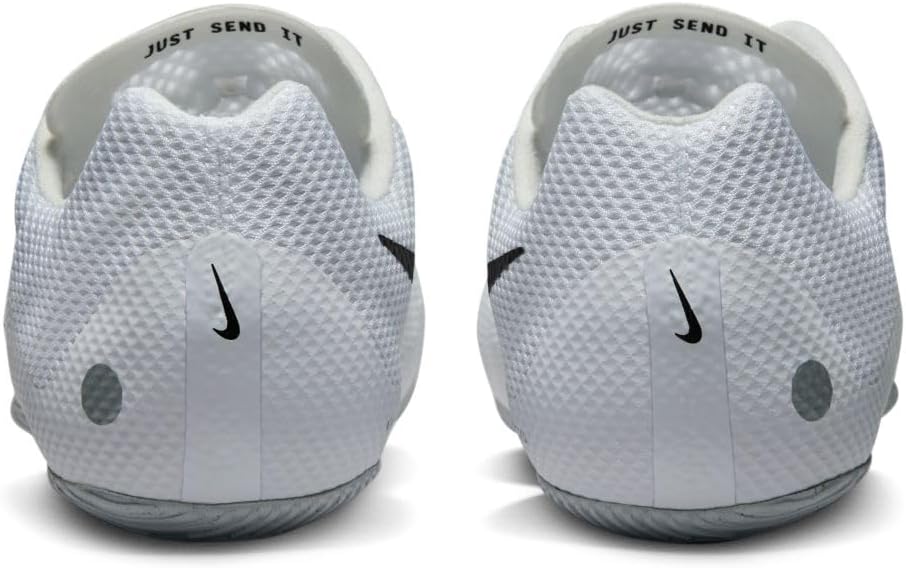
The Nike JA Fly 4 is where the review record gets complicated — not because the shoe itself is problematic, but because of what’s happening in certain third-party online marketplace listings.
Nike
$74.99
In stock on Amazon
Check price on AmazonThe most important piece of editorial intelligence in this entire article: a verified 1-star review on a major online retail listing for the JA Fly 4 describes the shoe arriving in a plain plastic bag rather than a Nike box, with no spikes included and no spike wrench tool. No spikes. In a sprint spike. This is textbook counterfeit or gray-market behavior. A genuine Nike sprint spike ships in a Nike-branded box with spike pins already installed in the plate and, typically, a wrench for removal. A plastic bag with missing hardware is a signal that the product came through an unauthorized channel, whether that’s a counterfeit unit, a stripped return, or a seller misrepresenting warehouse stock.
The actionable advice here is straightforward: only purchase the JA Fly 4 — or any Nike sprint spike — from platform-fulfilled listings (where the retail platform itself warehouses and ships the product) or directly through Nike’s own channels. Third-party sellers on any marketplace vary enormously in reliability. When the platform itself fulfills the order, you have a clear return path and the worst-case gray-market scenario is largely removed. When in doubt, buy Nike-direct.
Set that aside and look at the shoe’s actual performance profile. The JA Fly 4 is built for the short sprints — 100m and 200m are its primary events. Runner’s World’s sprint spike buying guide notes that carbon-infused plates in this tier are designed to maximize energy return off the forefoot, which means the shoe is aggressive in its geometry. The heel is minimal. The fit is snug and forward. That’s intentional for the 100m, where the race is over before fatigue compounds, but it becomes a liability over 400m, where athletes need some ability to shift foot strike position in the final straight. The JA Fly 4 is not the wrong shoe for a 400m athlete, but it’s not optimized for it either — see the FAQ section for the detailed breakdown.
The Superfly Elite 2: Split Record, High Ceiling, Fit Trap
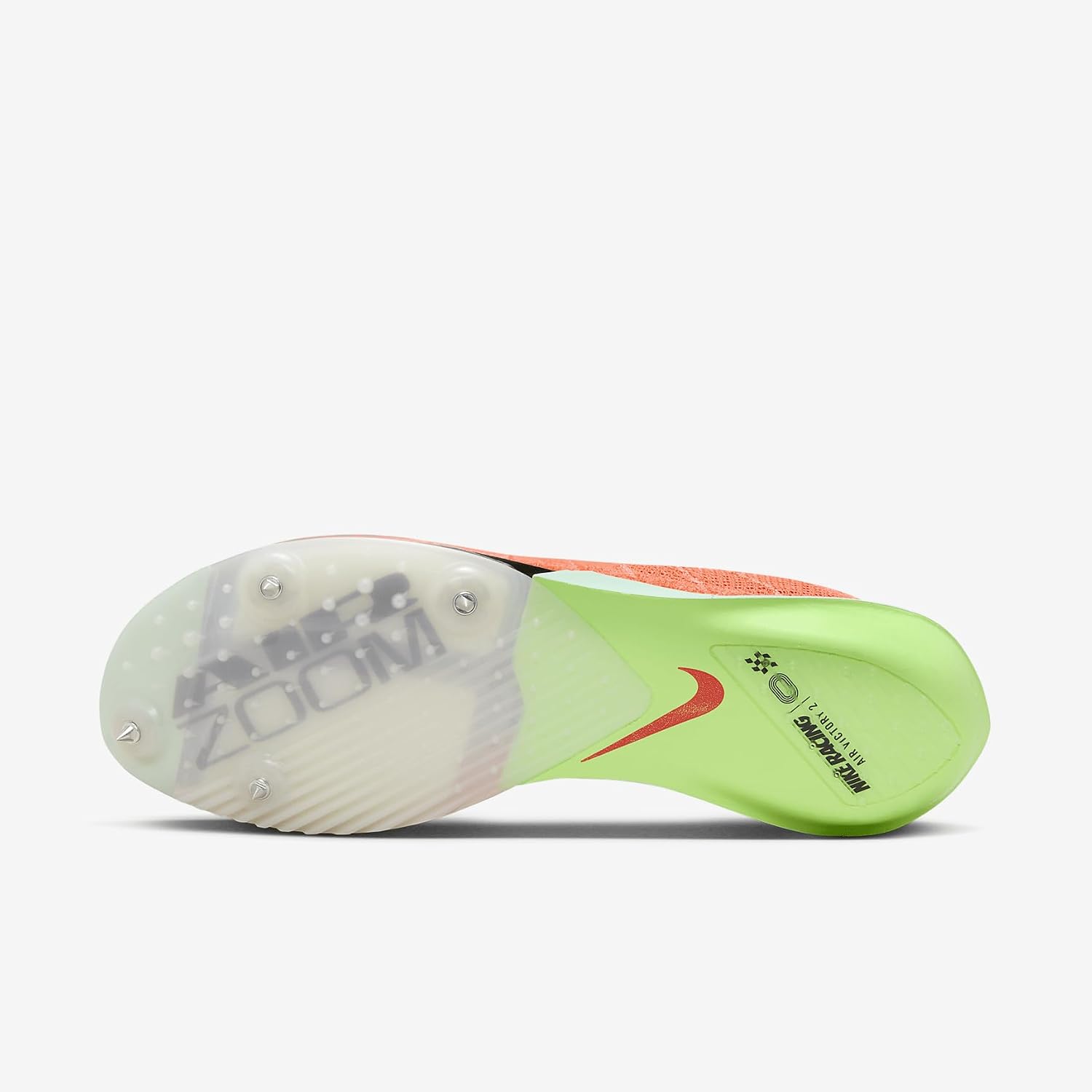
The Nike Superfly Elite 2 has the most divided review record in this lineup, and the splits are instructive about who this shoe is for and who it isn’t.
Nike
$124.83
In stock on Amazon
Check price on AmazonOn the positive side: one owner reports that the shoe “forces you to run correctly” and credits it with reducing shin splints while improving speed. That’s a remarkable double claim. The mechanism is real, even if the phrasing sounds like marketing. A full carbon plate in a sprint spike creates a very specific biomechanical demand — the shoe wants you to strike far forward on your forefoot and drive through the toe. If your sprint mechanics are already built around that pattern, the plate amplifies your output. If they’re not, the shoe essentially gives you feedback in the form of discomfort: your heel can’t drop, your stride has to stay compact, your drive has to come from the right position. For a technically proficient sprinter, that “forcing” effect is a feature. Track and Field News coverage of elite sprint footwear consistently describes full-carbon geometry in this category as rewarding for athletes with established mechanics and punishing for those still developing them.
On the negative side: one reviewer calls the construction “flimsy” — a subjective word, but one that maps to a pattern across full-carbon sprint spikes where the shell material is as light as legally possible, which can feel fragile to athletes coming from more robust training flats. And a third reviewer reports a serious sizing issue: they needed to go up one to two full sizes, and even then the fit wasn’t correct. That is not a rounding-error sizing note. One to two full sizes is a structural fit mismatch.
The guidance here: if you’re ordering the Superfly Elite 2 without trying it on first, go up at least a half size from your normal Nike training shoe size, strongly consider going up a full size, and verify your retailer’s return policy before purchasing. This is a shoe worth trying on at a specialty running retailer if one is within reach.
The Victory 2: The Quiet Value Play
One data point on the Nike Victory 2 that deserves attention: reviewers across multiple listings carry strong ratings, and at least one review specifically notes finding the shoe on sale — validating it as a legitimate value-tier pickup when the price drops. The Victory 2 occupies a similar event range to the Rival Sprint (100m through 400m), with comparable plate stiffness. If you encounter it at a meaningful discount relative to the Rival Sprint, it’s not a downgrade — it’s a lateral move at a better price.
Nike
$70.00
In stock on Amazon
Check price on AmazonFrequently Asked Questions
How do I know if a Nike spike listing on a third-party marketplace is selling a genuine product?
Look for language indicating the platform itself — not a third-party seller — is shipping your order. That typically means the retail platform is warehousing the product directly. Third-party sellers can be legitimate, but you have no visibility into their sourcing. The 1-star JA Fly 4 review describing a plastic-bag delivery with no spikes and no tool is the worst-case outcome of buying from an unverified seller. When in doubt, buy directly from Nike or from a named specialty retailer you can call if there’s a problem.
Should I size up or down in the Nike Superfly Elite 2?
Size up — at minimum a half size, likely a full size from your normal Nike training shoe. At least one buyer in the review record needed to go up a full size and still found the fit imperfect. Sprint spikes are designed with a snug forefoot, but the Superfly Elite 2 appears to run notably smaller than standard Nike sizing. Do not assume your Nike training shoe size translates directly.
What spike length comes pre-installed in Nike sprint spikes, and is it legal for high school?
The Rival Sprint ships with spike pins that verified buyers describe as regulation-compliant for standard track surfaces. World Athletics Competition Rules 2024–2025, Rule 5 caps spike length at 9mm for synthetic (rubber) track surfaces, and most U.S. state high school athletic associations mirror or reference that standard — Track and Field News covers state-level compliance variations in its high school track shoe regulations overview. The specific pre-installed length in the Rival Sprint aligned with track regulations per owner reports. Always confirm with your meet director if you’re unsure — spike compliance is checked at some invitationals and championship meets.
Is the JA Fly 4 appropriate for the 400m or is it strictly a 100/200 shoe?
It’s primarily a 100m/200m shoe. The geometry — stiff forefoot plate, minimal heel, aggressive forward lean — is optimized for explosive, short-duration efforts where you’re on your forefoot the entire race. Over 400m, athletes typically need some flexibility to modulate foot strike as they fatigue in the final 100m. The JA Fly 4 doesn’t prohibit 400m racing, but if the 400m is your primary event, the Rival Sprint or Victory 2 will serve you better across a full season. If you race both 200m and 400m, carry two pairs if the budget allows.
What does “forces you to run correctly” mean about the Superfly Elite 2, and is that good or bad for my athlete?
It means the full carbon plate demands a forefoot-dominant, technically precise sprint stride. If your athlete has coached sprint mechanics — meaning they’ve worked with a coach specifically on start position, drive phase, and forefoot contact — the Superfly Elite 2 may reinforce those patterns and produce the speed gains and reduced injury stress one reviewer reports. If your athlete is a developing sprinter who still heel-strikes, overstrides, or has inconsistent posture through their drive phase, the Superfly Elite 2 will be uncomfortable and potentially increase injury risk rather than reduce it. Podium Runner’s “How to Choose Track Spikes” framework puts full-carbon sprint spikes squarely in the “technically ready” category. When in doubt, start with the Rival Sprint and move up to the Superfly Elite 2 after a season of coached development.
The Decision Rule
Here’s the if/then framework based on what the review record actually supports:
- If you’re a high school sprinter in your first or second season, or a parent buying a first pair: the Rival Sprint is your answer. It’s compliant, it’s forgiving, and buyers consistently report that it works. Nike — $70.00
- If you’re an intermediate sprinter with a season or two of coaching, racing the 100m or 200m, and you want to move into a stiffer plate: the JA Fly 4 is the step up — but buy it Nike-direct or platform-fulfilled only, not from an unverified third-party seller. Nike — $74.99
- If you’re an experienced sprinter with established forefoot mechanics, coached technique, and you want a full-carbon race-day shoe: the Superfly Elite 2 has a real ceiling — but size up at least a full size and buy from somewhere with a clear return policy. Nike — $124.83
- If you see the Victory 2 at a meaningful discount: take it. It earns its ratings and it’s the budget-savvy lateral to the Rival Sprint. Nike — $70.00
The counterfeit risk on the JA Fly 4 is real and documented in buyer reviews. Everything else in this lineup is a question of matching the shoe’s mechanical demands to where your athlete actually is — not where you hope they are by championship season.