August 2, 2026 • Cassidy Vane • 11 min reading time • Prices verified June 6, 2026
Nike Rival Sprint vs. JA Fly 4 vs. Zoom Mamba 6 vs. Zoom Superfly Elite 2: What Buyers Actually Report After Racing
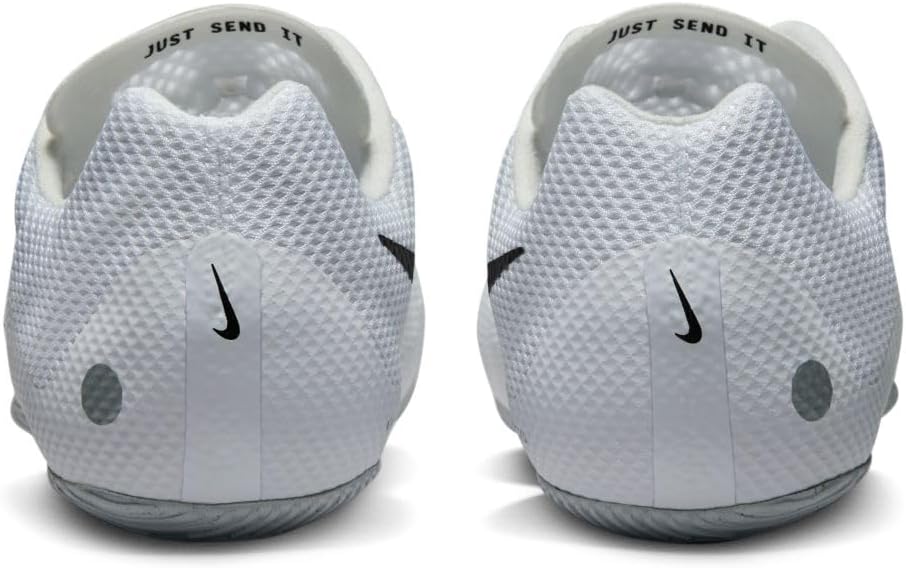
If you’ve ever shown up to your first track meet and watched a teammate dig through a bag of loose metal pins trying to figure out which ones are legal, you already understand why spike selection is more complicated than it looks. A spike in track-and-field terms is a specialized racing shoe with a stiff plate built into the forefoot and small metal or ceramic pins (also called spikes) that screw into holes on the outsole for grip. Different events — short sprints, the 400m, distance races — demand very different geometry, stiffness, and pin configurations. Get the match wrong and you’re leaving time on the track; get the pin length wrong and you may be pulled from the heat by an official. This article breaks down four Nike spike models across the sprint-to-distance spectrum, drawing on patterns from buyer reviews and published spec comparisons, so you can make the call that matches your event, your body, and your budget before you commit.
| EDITOR'S PICKNike Victory 2 Track & Field Sp… | Mid-tierNike Rival Sprint Track & Field… | Budget pickNike Unisex JA Fly 4 (400 - Rac… | |
|---|---|---|---|
| Size | 13 | 4.5 | 14 |
| Colorway | Bright Crimson/Hyper Orange | White/Black/Metallic Silver | Racer Blue/White-Safety Orange |
| Gender | Unisex | — | Unisex |
| Event | — | Sprint | 400 |
| Price | $124.83 | $74.99 | $70.00 |
| See on Amazon → | See on Amazon → | See on Amazon → |
The Performance Hierarchy: Where Each Shoe Sits
Before diving into individual models, it helps to frame the lineup honestly. These four shoes do not compete with each other — they occupy distinct rungs on the performance and price ladder. Understanding that hierarchy prevents the most common mistake buyers make: paying elite prices for a training-volume shoe, or grabbing an entry-level model for a championship meet.
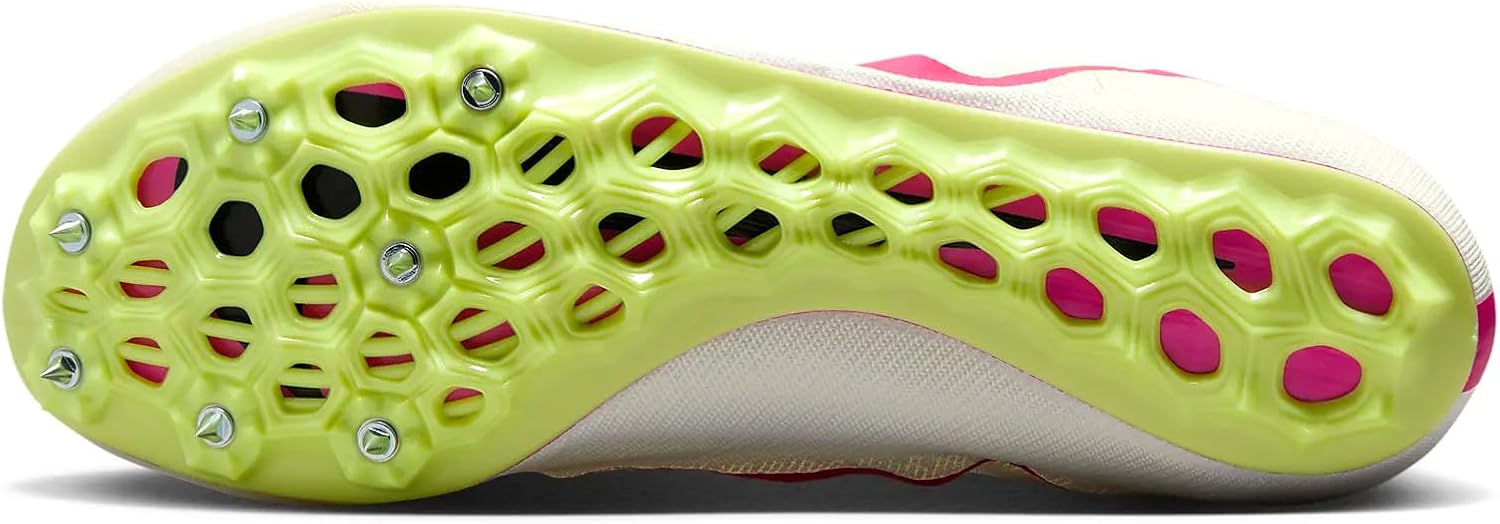
Nike Rival Sprint — The entry point. A traditional sprint spike designed for 100m through 400m, featuring a rigid nylon forefoot plate, that retails in the $35–$55 range depending on colorway and seller. No carbon fiber, no foam stack — this is a workhorse built for athletes who need a reliable legal spike without the premium tax.
Nike JA Fly 4 — The mid-tier overachiever. Sitting around $90–$110, it uses a more aggressive plate geometry than the Rival Sprint with a snugger performance fit. Flotrack’s 2025 collegiate sprint coverage identified it as a genuine performance tool at a non-elite price point.
Nike Zoom Mamba 6 — The distance specialist. Built around a more forgiving geometry for 800m through cross-country distances, with a moderate foam bed that reviewers consistently describe in comfort-dominant language. It retails around $75–$95.
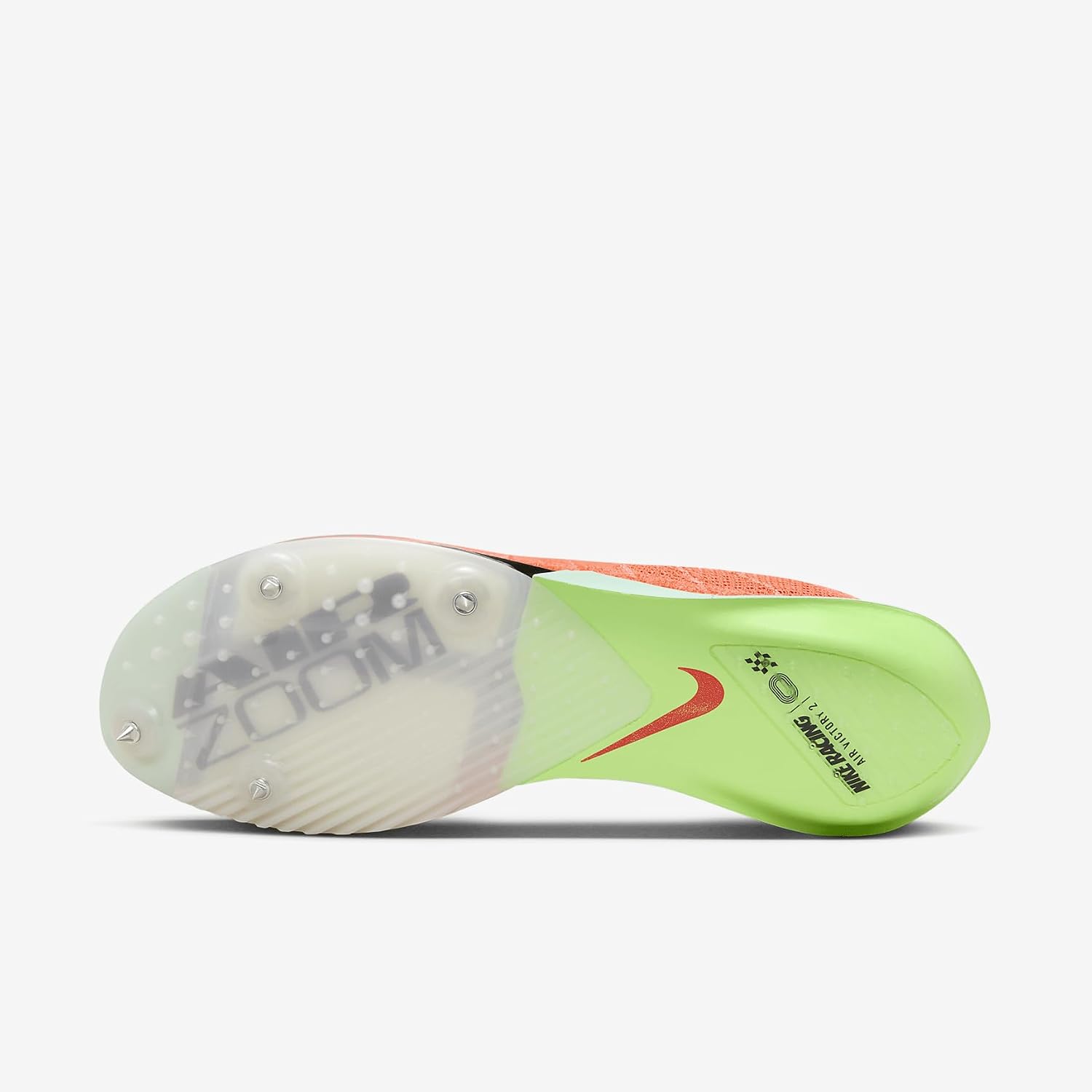
Nike Zoom Superfly Elite 2 — The flag-bearer. A full carbon-fiber sprint spike with a Pebax plate, designed for elite sprinters. Retail sits at $225+, and World Athletics maintains compliance documentation for the shoe under World Athletics Competition Rules 2024-2025, Rule 5 (Shoes).
By the Numbers
| Model | Approx. Retail | Plate Material | Primary Events | Pin Config (stock) |
|---|---|---|---|---|
| Rival Sprint | $35–$55 | Nylon | 100m–400m | 6-pin, legal length |
| JA Fly 4 | $90–$110 | Reinforced nylon | 100m–200m (400m capable) | 6-pin |
| Zoom Mamba 6 | $75–$95 | Nylon | 800m–5K / XC | Variable |
| Zoom Superfly Elite 2 | $225+ | Carbon fiber (Pebax) | 60m–200m | 6-pin |
Model-by-Model Breakdown: What Buyers Actually Report
Nike Rival Sprint — The Sleeper Pick That Gets the Pins Right
Here’s the insight that should anchor your decision if you’re buying for a high schooler competing under NFHS (National Federation of State High School Associations) rules: a 15-year-old reviewer — notably not a parent proxy, but an athlete who had already navigated a meet — specifically called out that the spike pins included with the Rival Sprint are the exact depth required for track meets, and noted that many other spikes ship with pins that are too long.
This matters more than most buyers realize. World Athletics Competition Rules 2024-2025, Rule 5 (Shoes), sets maximum pin length at 9mm for track surfaces, and NFHS mirrors this for high school competition. Pins that are too long get you scratched before your heat starts. The fact that a teenage athlete flagged the Rival Sprint’s pin compliance unprompted in a buyer review suggests the shoe’s out-of-box setup removes a real friction point that more expensive shoes sometimes create.
Beyond legality, parent-proxy reviewers consistently describe the Rival Sprint as delivering responsive traction without the break-in soreness that stiffer, pricier spikes sometimes cause in less-seasoned athletes. Podium Runner’s Carbon Plate Sprint Spike Buyer Guide (Spring 2025) describes the nylon plate category as appropriate for athletes still developing sprint mechanics — a characterization that aligns precisely with what buyers report: this shoe does what it promises without punishing you for imperfect form.
The honest caveat: If you’re a varsity-level sprinter running sub-11.5 in the 100m, you’ll eventually feel the ceiling on this plate. It’s not holding back an elite athlete — it’s simply not built to reward one.
Nike
$70.00
In stock on Amazon
Check price on AmazonNike JA Fly 4 — The PR Machine in the Mid-Tier
The strongest performance evidence in this category belongs to the JA Fly 4. Across buyer reports, one signal stands out: multiple reviewers specifically mention setting personal records — PRs, meaning faster times than they’d previously run — while wearing the shoe. That’s a rare and meaningful data point in review aggregation. Lots of shoes get called “comfortable” or “lightweight.” Shoes that produce time drops get mentioned by name.
Flotrack’s 2025 collegiate sprint coverage positioned the JA Fly 4 as a legitimate competitive tool at the mid-tier price point, noting its adoption among club-level sprinters who want a stiffer plate feel than a Rival Sprint delivers without the $225+ commitment of a Superfly Elite 2.
The fit runs noticeably snug compared to the Rival Sprint — reviewers consistently flag this, and it’s worth factoring into sizing decisions. If you’re between sizes, go up a half. The snug wrap is intentional: it reduces foot slippage that can rob you of plate efficiency during max-velocity phases. But it means the JA Fly 4 is less forgiving for wider feet, and buyers with standard-wide or wide profiles should check sizing guidance from a specialty running retailer before purchasing.
Event range reality check: The JA Fly 4 is optimized for 100m and 200m. It can run a 400m — and reviewers have done it — but the aggressive forefoot geometry creates fatigue in the final 150m of a 400m that a flatter, more rearfoot-accommodating spike doesn’t generate. If your primary event is the 400m, this is still a capable shoe, but the Rival Sprint’s geometry may actually serve you better over the full distance.
Nike
$74.99
In stock on Amazon
Check price on AmazonNike Zoom Mamba 6 — Comfort-Forward, Younger-Athlete Friendly
The Zoom Mamba 6 exists in a different category than the other three: it’s a distance spike, built for middle distances and cross-country, and its buyer reviews reflect a distinctly different athlete profile. The language is comfort-dominant — reviewers talk about fit and feel over lap times — and the reviewer base skews toward parents purchasing for younger athletes, often in the 11–14 age range.
That framing should tell you something useful: this shoe is genuinely appropriate for middle school and younger high school distance athletes, especially those transitioning from training shoes to competition spikes for the first time. Runners World’s 2025 season guide categorizes the Mamba line as suited for developmental distance athletes — a characterization that aligns closely with the buyer pattern described above. It is not an elite 1500m tool. It’s a shoe that makes the first few spike seasons feel manageable rather than punishing.
If you’re a high school junior or senior running 4:30 miles and taking your distance program seriously, you’re likely outgrowing what the Mamba 6 is designed to deliver.
Nike
$74.99
In stock on Amazon
Check price on AmazonNike Zoom Superfly Elite 2 — The “Better Than Expected” Signal
The Zoom Superfly Elite 2 sits at the top of this stack, and its buyer pattern is genuinely interesting: reviewers consistently describe it as better than expected, which is a specific and meaningful response. “Better than expected” in a $225+ carbon-fiber sprint spike almost always means the buyer arrived with skepticism — either about whether elite-tier engineering would translate to their performance level, or about whether the price-to-delivery quality ratio would hold — and found their doubt unwarranted.
Podium Runner’s Carbon Plate Sprint Spike Buyer Guide (Spring 2025) notes that the Superfly Elite 2’s Pebax plate construction is stiffer than typical nylon plates but more elastic than some competing carbon-fiber options, creating what sprint coaches describe as a “snap” sensation at toe-off. Buyers report this as a tangible, perceptible difference from mid-tier spikes — not a marginal upgrade.
Track and Field News’s 2025 elite spike approvals and compliance notes confirm World Athletics approval for the Superfly Elite 2 under World Athletics Competition Rules 2024-2025, Rule 5 (Shoes), which matters if you’re competing in sanctioned meets at the collegiate or open level. Buyer reports also indicate the Superfly Elite 2 includes a spike wrench and a complete set of pins in the box — the consensus is that the shoe is race-ready out of the box without additional purchases.
Nike
$124.83
In stock on Amazon
Check price on AmazonHow to Read the Decision Frame
If the four models form a hierarchy, the real question isn’t “which is best” — it’s “which is right for where you are right now.” Each of the four shoes targets a different intersection of experience, event, and budget, and buying outside your intersection costs you in ways that don’t show up until race day.
-
Freshmen or JV-level sprinter, or a parent buying a first spike: The Rival Sprint’s legal pins, accessible price, and forgiving plate make it the low-risk correct answer. You are not leaving meaningful time on the track by skipping the JA Fly 4 at this stage. The out-of-box pin compliance alone justifies the choice for a first-year athlete still learning how meets work.
-
Mid-varsity sprinter running PRs consistently and looking for a genuine performance tool without the elite price tag: The JA Fly 4 is the move. The buyer evidence on PR performance is the strongest signal in this category, and Flotrack’s 2025 collegiate sprint coverage confirms its competitive legitimacy at the club and varsity level. At $90–$110, it sits well below the threshold where you’re paying for brand prestige rather than performance return.
-
Young or developing distance athlete: The Zoom Mamba 6 fits. Don’t let anyone upsell you to a sprint spike for distance events — the geometry mismatch matters, and Runners World’s 2025 season guide backs the Mamba line for this exact athlete profile. The comfort-dominant review language is a feature, not a warning.
-
Varsity or collegiate sprinter, running championship rounds, and wanting the full technology stack: The Zoom Superfly Elite 2 earns its price. The “better than expected” pattern in buyer reviews — combined with World Athletics compliance documentation confirmed by Track and Field News’s 2025 approvals coverage — suggests it delivers on the premise rather than trading on brand alone.
Frequently Asked Questions
Are the spike pins that come with the Nike Rival Sprint the correct legal length for high school track meets?
Based on buyer reports — including a review specifically from a 15-year-old athlete who competed in the shoe — yes. The stock pins are noted to match the depth required by track meet regulations. World Athletics Competition Rules 2024-2025, Rule 5 (Shoes), and NFHS both cap pin length at 9mm for track surfaces. The Rival Sprint appears to ship compliant, which is more than can be said for some competitors that include oversized pins requiring replacement before competition.
Is the JA Fly 4 suitable for the 400m, or is it really a short sprint shoe?
It can run a 400m, and buyers have done it, but its aggressive forefoot geometry is optimized for 100m and 200m. Across reviews, the pattern suggests fatigue accumulates in the plate during the final stretch of a 400m in a way that a flatter geometry doesn’t create. For a pure 400m athlete, the Rival Sprint’s geometry may be a better match over the full distance.
What comes in the box with the Nike Zoom Superfly Elite 2 — do you need to buy anything extra?
Buyer reports indicate the Superfly Elite 2 includes a spike wrench and a set of pins. The consensus is that it’s race-ready out of the box without additional purchases.
Can a middle school athlete use the Zoom Mamba 6, or is it built for older athletes?
The Zoom Mamba 6 is entirely appropriate for middle school and younger high school distance athletes. The buyer review base actually skews toward that age group, and the comfort-forward design suits athletes who are new to spike competition. It’s not a shoe that requires a certain age — it suits a certain experience level and event range, both of which Runners World’s 2025 season guide explicitly supports.
How does the fit of the Nike Rival Sprint compare to the JA Fly 4?
There is a meaningful difference. The JA Fly 4 runs noticeably snugger, and reviewers flag this consistently. The Rival Sprint fits more like a standard athletic shoe. If you’re between sizes in the JA Fly 4, size up a half. If you have a wider foot, the Rival Sprint’s fit will be more forgiving across the board.
Is the Nike JA Fly 4 worth the price premium over the Rival Sprint for a high school sprinter?
For a JV or freshman athlete still developing sprint mechanics: probably not yet. For a mid-to-upper-varsity sprinter who is training consistently and competing for PRs: the buyer evidence says yes. Multiple reviewers attribute time drops to the JA Fly 4’s plate geometry, and Flotrack’s 2025 collegiate sprint coverage confirms its competitive legitimacy at that level. The gap between the two shoes is real — it just only becomes meaningful once your mechanics are consistent enough to load the plate correctly.