September 17, 2026 • Cassidy Vane • 8 min reading time • Prices verified June 6, 2026
Replacement Track Spike Pins: Getting the Right Length for Your Surface Before Meet Day
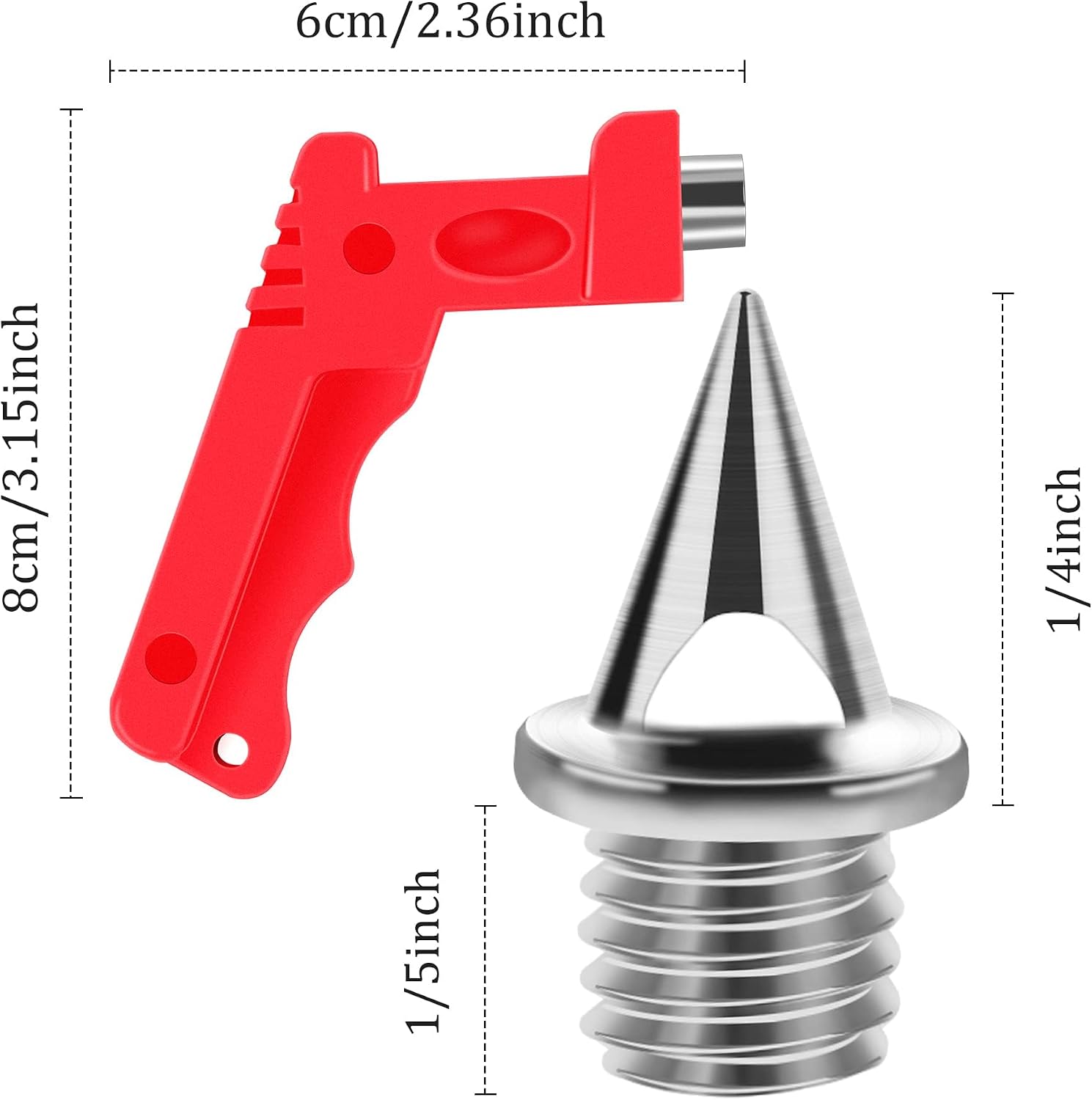
If you’ve ever grabbed your spike bag the morning of a meet and realized you’re not sure whether the pins — the small metal or ceramic screws threaded into the bottom of your track shoe — are the right length for the track you’re racing on, you’re in good company. Spike pins (sometimes just called “spikes”) are the removable fasteners that screw into the spike plate on the outsole of a track spike shoe. They’re the actual contact point between your foot and the surface. Get the length right and you feel locked in on every push. Get it wrong and you’re either skating on a synthetic track that your pins can’t grip, or you’re catching so hard on a softer surface that you’re fighting the ground instead of using it. This guide walks you through exactly how to pick the right replacement pin length for the surface you’re racing on — and how to make that call confidently before the gun goes off.
| EDITOR'S PICKAUGSUN 120pcs Stainless Steel T… | Mid-tier1/4 Inch Carbon Steel Track Spi… | Budget pickAUGSUN Hard Steel Track & Cross… | |
|---|---|---|---|
| Length | 3/8 in | 1/4 in | 1/4 in |
| Pieces | 120 | 32 | 20 |
| Material | Stainless steel | Carbon steel | Hard steel |
| Wrench included | ✓ | — | ✓ |
| Weight per pin | — | 0.47 g | — |
| Price | $11.99 | $9.97 | $5.99 |
| See on Amazon → | See on Amazon → | See on Amazon → |
Why Pin Length Matters More Than Most Athletes Realize
Here’s the core trade-off: longer pins bite deeper into the surface, giving you more mechanical grip at toe-off (the moment your foot pushes off the ground). But a pin that’s too long for the surface will over-penetrate — meaning it sinks in so far that it has to be extracted from the track on every stride instead of releasing cleanly. That drag adds up. On a hard, modern synthetic surface, oversized pins can also cause micro-damage to the track, which some facilities actively police.
Shorter pins sit closer to the surface, reducing penetration but allowing faster release. On a firm, rubberized all-weather track — the standard 400-meter surface you’ll find at most high school and collegiate facilities — a 6mm pyramid pin is often the sweet spot. On a softer cross-country-style or older cinder-type surface, you’d want to go longer.
Per World Athletics Technical Rules (Rule 5, covering athletes’ clothing and equipment), the maximum allowable spike length for track events on standard synthetic surfaces is 9mm. For cross-country and road events, pins up to 12mm are permitted. This isn’t a suggestion — officials at sanctioned meets can and do check spike length, and a non-compliant pin can result in a disqualification or required shoe change before competing. Runner’s World’s spike guide confirms this ceiling and recommends erring toward the shorter end of the range on modern all-weather surfaces.
Surface Types and the Pin Lengths That Match Them
Think of track surfaces as existing on a firmness spectrum, and pin length as your way of calibrating grip to that spectrum. Here’s how practitioners typically map the two:
Modern synthetic (polyurethane or latex-bound rubber, most high school and collegiate tracks) This is the firm, slightly springy surface you encounter at the majority of sanctioned meets. It’s engineered to be fast, and it responds well to shorter pins. The standard recommendation across coaching resources — including guidance compiled by Track and Field News — is 5mm to 6mm for sprint events and 4mm to 6mm for distance events on this surface. The shorter end reduces drag during the longer ground contact times in middle-distance and distance racing. The slightly longer end gives sprinters that extra purchase during the explosive push phase.
Older or softer all-weather surfaces (some older high school tracks, some outdoor club venues) These surfaces have more give. A 6mm pin may not penetrate enough to grip reliably, especially in wet conditions. Most practitioners step up to 7mm or 8mm here. Podium Runner’s spike selection guide suggests that if you’re on an unfamiliar track and notice your first few strides feel slippery even after warmup, you’re likely under-pinned for the surface — swap up one size before your race.
Grass or cross-country terrain Separate from standard track spikes, cross-country spikes typically use longer pins by design. 9mm to 12mm is the working range, with 12mm reserved for soft, muddy conditions. If you’re using a multi-event shoe or a spike with replaceable pins on a cross-country course, this is the window to work in — but confirm your event’s ruleset, since some cross-country invitationals specify a maximum pin length.
Indoor track (wooden board or synthetic over board) Indoor tracks are typically harder surfaces, and the rules change. Many indoor facilities — and World Athletics indoor rules — require needle spikes (thin, round-profile pins) rather than pyramid spikes, with a maximum length of 6mm. Some facilities ban metal spikes entirely and require flat-soled or tartan-grip shoes. Always confirm with the meet host before an indoor competition. Getting this wrong isn’t just a performance issue; it can get your shoe flagged at check-in.
By the Numbers: Quick-Reference Pin Length by Surface
| Surface | Recommended Pin Length | Max Allowed (World Athletics) | Common Pin Style |
|---|---|---|---|
| Modern synthetic (outdoor) | 5–6mm | 9mm | Pyramid |
| Older/softer synthetic | 7–8mm | 9mm | Pyramid |
| Grass / cross-country | 9–12mm | 12mm | Pyramid or Christmas tree |
| Indoor board/synthetic | 4–6mm | 6mm | Needle |
The Decision Frame: When to Change, When to Stay Put
You’ve got a meet in 48 hours. Here’s the if/then logic that experienced competitors use:
If you know the track and you’ve raced on it before: Default to whatever worked. If you ran a PR there in 6mm pyramids, you’re probably already matched to the surface. Don’t change variables close to a race unless you have a specific reason.
If you’ve never been to the venue: Call the facility or check the meet information packet. Most meet hosts publish the track surface type (and sometimes the recommended spike length) in the athlete information. Failing that, ask a coach who’s coached there before or check letsrun.com’s forums — athletes who’ve competed at major venues regularly note surface conditions in race recaps and meet threads.
If the surface feels wrong during warmup: Trust your warmup. If your first few accelerations feel like you’re slipping at toe-off, you need more pin. If your foot feels like it’s catching or dragging, try less pin. You almost always have time between warmup and your race to swap pins — a spike wrench (the small T-shaped key that came with most spike shoes, or sold separately for around $5–$8) makes it a two-minute job per shoe. Carry a wrench and a backup set of pins in your bag every single meet. This is non-negotiable at the practitioner level.
If conditions change (rain, wet surface): Wet synthetic tracks behave more like softer surfaces — water reduces the friction coefficient, so a pin that gripped fine in dry conditions may feel loose when the surface is wet. Stepping up one size (e.g., from 6mm to 7mm or 8mm) in wet outdoor conditions is a standard adjustment. Track and Field News coverage of major outdoor championship meets routinely notes that athletes and coaches made mid-warmup pin changes in response to rain.
Replacement Pin Shopping: What to Buy and Where
Replacement pins are widely standardized. The threading on virtually all modern spike shoes follows the same specification (7mm diameter, fine-thread pattern), which means a pack of Nike replacement pins will fit an Adidas shoe and vice versa — the brand on the package is mostly irrelevant. What matters is profile shape and length.
Pyramid pins are the workhorse for outdoor synthetic tracks. They’re blunt-tipped, wide at the base, and designed for controlled penetration on firm surfaces. Most replacement packs are sold in sets of 6 (one full shoe) for $5–$12.
Needle pins are slender and round-profiled, designed for indoor tracks. They’re less common in replacement packs but available from specialty retailers like Running Warehouse and JackRabbit.
Christmas tree pins (sometimes called “Christmas tree spikes”) have a ribbed, tapered profile designed to grip in soft or grassy terrain. These are most common in cross-country and field event applications.
One practical note that Podium Runner and runners at the collegiate level consistently emphasize: replace your pins before they’re visibly worn down to nubs. A worn pyramid pin loses its grip geometry and can wobble in the socket, which affects both traction and the security of the pin itself. If your pins look rounded at the tip or are difficult to remove (sign of corrosion beginning), swap the full set. At $5–$12 per set, there’s no good reason to race on compromised hardware.
Most spikes come with a set of pins already installed — typically 4mm or 6mm — and include a small spike wrench. When you buy replacement pins, match the profile to your surface (above) and confirm the length against the venue information before race day.
One More Check Before the Start Line
Here’s the thing about spike pins that separates athletes who’ve thought this through from those who haven’t: it’s not a race-day decision, it’s a meet-prep decision. The time to sort out your pins is the day before, or at worst during warmup — not standing in the clerk-of-course tent six minutes before your event.
Build a simple two-item checklist into your meet-prep routine: (1) What surface am I racing on? (2) Are my pins matched to it? If yes to both, you’re done. If not, you’ve got time to fix it — as long as you have a wrench and a backup set of pins in your bag.
The cost of a backup pin assortment (a few pyramid lengths, maybe a needle set if you do indoor) is under $25 total. The cost of racing in the wrong configuration — in grip, in confidence, potentially in a DQ on a length violation — is much higher. Per World Athletics technical guidance, officials at major meets are authorized to inspect spike length, and non-compliance requires an equipment change or may result in disqualification from the event. That’s an outcome no amount of training earns back.
Match your pins to your surface, carry your wrench, and make this a non-issue before it becomes one.