August 25, 2026 • Cassidy Vane • 10 min reading time • Prices verified June 6, 2026
Saucony Spitfire 5 vs. Endorphin Track Spike: Matching the Right Saucony to Your Race Distance
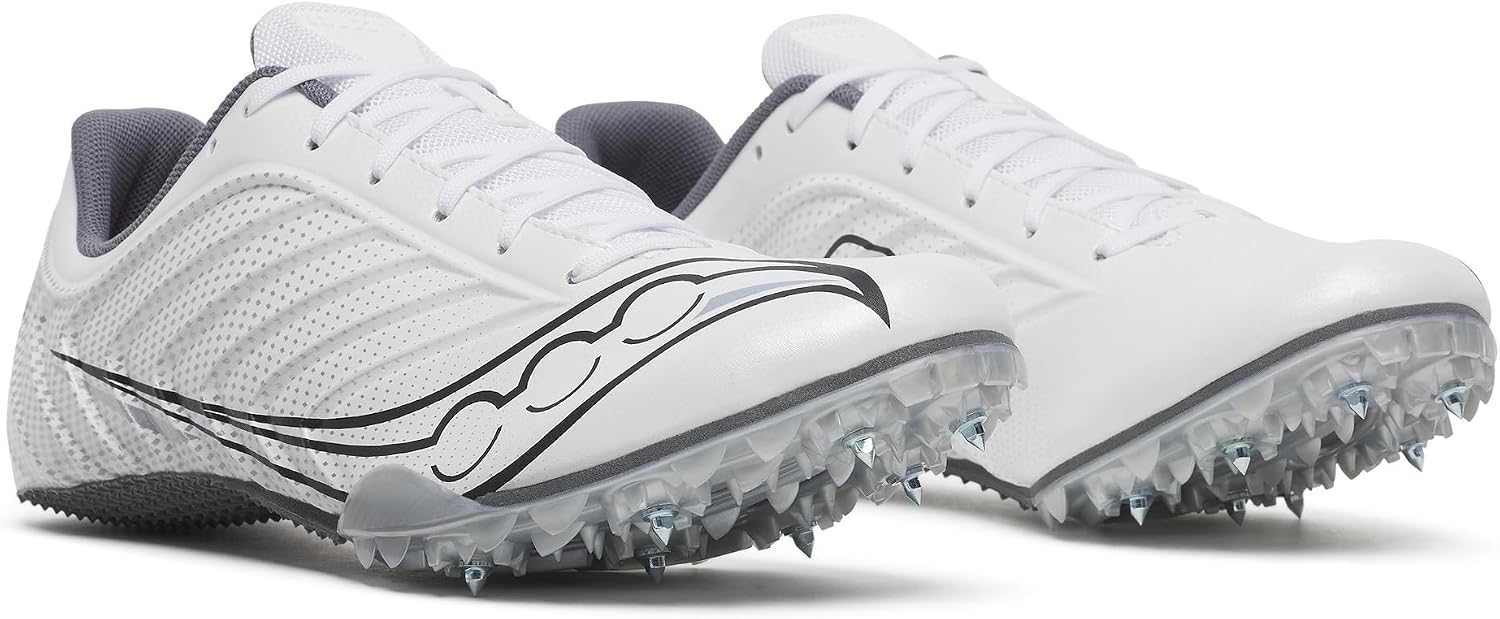
Track spikes are racing shoes built for one surface: a rubber or polyurethane oval. Unlike everyday trainers, they have a stiff plate under the forefoot — usually made of plastic, nylon, or carbon fiber — that holds small metal or ceramic pins screwed into the track to prevent slipping. That plate also acts like a lever, transferring push-off energy more efficiently than a cushioned training shoe ever could. The tradeoff is that spikes sacrifice underfoot protection for speed, which is why choosing the right spike for your specific race distance matters more than most gear decisions you’ll make this season. This article compares two Saucony models that look similar on the shelf but are built for very different jobs: the budget-friendly Spitfire 5, aimed at sprinters and developing athletes, and the more sophisticated Endorphin Track Spike, engineered for middle-distance racing. If you’ve got events from the 100m through the 1600m on your schedule and you’re trying to decide which one to buy — or whether to buy either — this is your decision guide.
How These Two Shoes Are Actually Different
On paper, both are Saucony track spikes. In practice, they’re built around almost opposite philosophies.
The Spitfire 5: Sprint-First, Budget-Accessible
The Saucony Spitfire 5 is a sprint-focused spike that owners consistently describe as lightweight and nimble. It runs on a 7-pin plate configuration — seven spike receptacles in the forefoot where you can insert pyramid or needle-style pins to grip the track. Aggregated verified purchase reviews describe the fit as accurate to size, with a snug but not painful lockdown, and multiple parent reviewers note it works well as a first serious spike for athletes moving up from recreational track shoes. Cushioning underfoot is minimal by design, which is exactly what sprint biomechanics call for: you want ground feel and a fast toe-off, not a bouncy midsole absorbing your power.
Saucony
$49.99
In stock on Amazon
Check price on AmazonThe Endorphin Track Spike: Middle-Distance Engineering
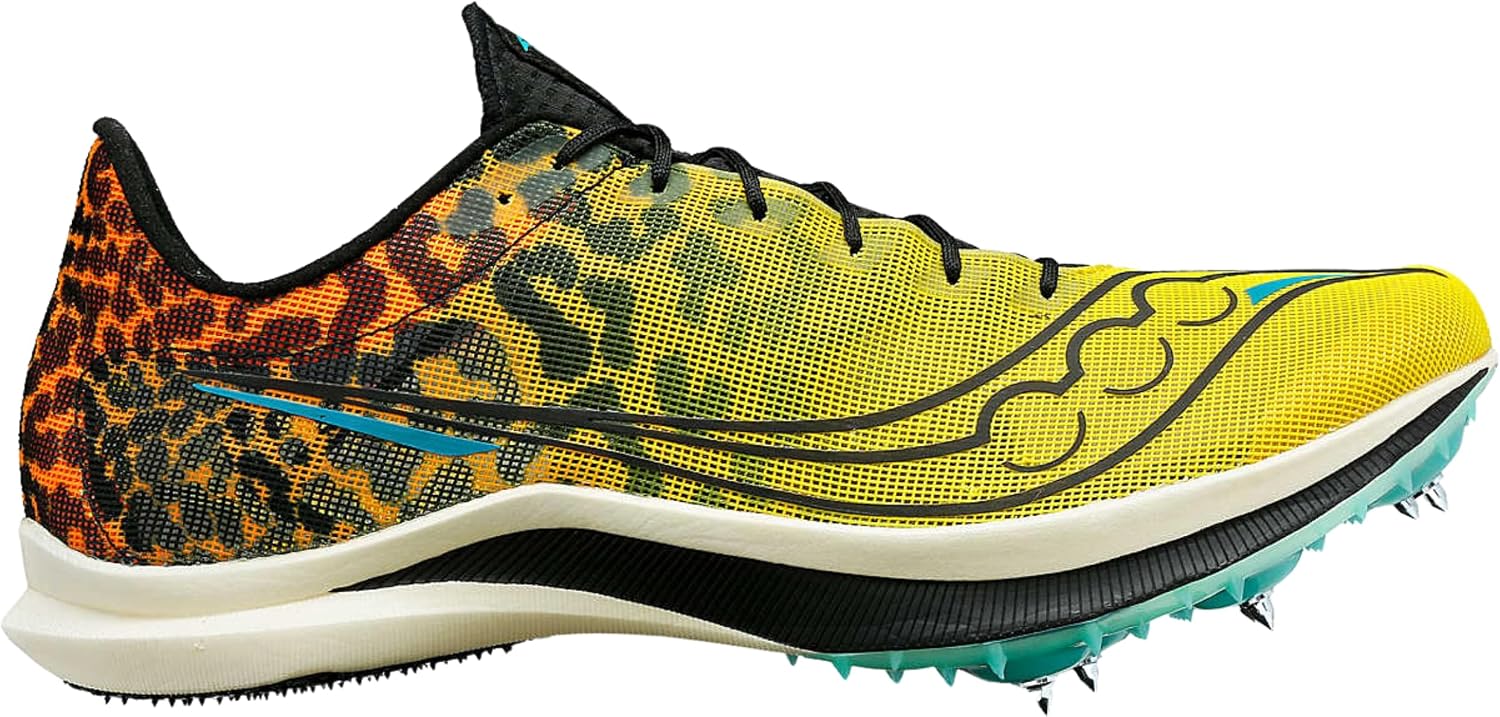
The Saucony Endorphin Track Spike is a different animal. It’s built around what Saucony’s published spec sheets describe as speed roll technology — a rocker-style curvature in the midsole and plate geometry that encourages forward momentum through the stride cycle rather than requiring a discrete muscular push-off from a flat base. Owners who’ve used it specifically for 800m and 1600m report that it feels poppy and light in a way that’s distinct from traditional sprint spikes. The Endorphin Track also features a more aggressive plate geometry suited to the longer, less explosive stride pattern of middle-distance running, per Saucony’s published product documentation.
Saucony
$54.95
In stock on Amazon
Check price on AmazonWhere the Premium Sprint Spike Fits — and Why Neither Shoe Is It
For context: neither the Spitfire 5 nor the Endorphin Track competes directly with elite carbon-plate sprint spikes like the Nike Air Zoom Maxfly or Adidas Adizero Prime SP2, which run $225–$250 and are designed around the specific mechanics of powerful athletes with mature sprint form. As Podium Runner’s Middle-Distance Spike Buyers Guide notes, sub-varsity athletes who haven’t yet developed the force generation to load a full carbon plate often run slower in those shoes — they’re fighting the plate rather than using it. The Spitfire 5 and Endorphin Track both occupy the honest middle ground: real competition tools for developing and intermediate athletes, priced and built accordingly.
Saucony
$54.95
In stock on Amazon
Check price on AmazonBy the Numbers
| Feature | Saucony Spitfire 5 | Saucony Endorphin Track |
|---|---|---|
| Target events | 60m – 400m | 800m – 1600m |
| Spike plate pins | 7 | 8 included (16-hole plate — see FAQ) |
| Cushioning level | Minimal | Moderate — speed roll geometry |
| Fit accuracy | True to size (owner consensus) | Runs standard; verify with retailer |
| Price tier | Entry-to-mid Saucony — $49.99 | Mid-to-premium Saucony — $54.95 |
Prices vary by retailer and fluctuate seasonally. Pricing on the Endorphin Track has been reported inconsistently across different online listings — anywhere from dramatically discounted to full retail — which is a marketplace red flag worth taking seriously before you purchase. Verifying current pricing directly at a specialty retailer such as Running Warehouse before buying is the safest approach.
The Spitfire 5 in Practice: Where It Works and Where It Doesn’t
For athletes in the 100m through 400m range, the Spitfire 5 hits a sweet spot that’s genuinely difficult to argue with at its price point.
Repeat-Purchase Loyalty as a Reliability Signal
Owners consistently flag the Spitfire 5 as a reliable family purchase — meaning parents who bought it for one child came back to buy it for another. That kind of repeat-purchase pattern is one of the most useful real-world reliability signals in gear research. It typically means the fit is predictable across size runs, the shoe holds up for a full competitive season, and there aren’t nasty surprises in sizing. Aggregated verified purchase reviews confirm that fit accuracy is one of the shoe’s most consistently praised characteristics.
The 400m Training Caveat
A meaningful subset of reviewers flagged that the Spitfire 5’s cushioning could be better — specifically in the context of high-volume 400m repeat training. This is a real and important caveat. Racing in spikes is fine; you’re on the track for four to six minutes in a competition. But if your coach is running you through 400m repeats multiple days per week in your racing spikes, the minimal cushioning will accumulate in your legs across a full season in a way that a training flat or cushioned distance spike won’t. Podium Runner’s Middle-Distance Spike Buyers Guide explicitly recommends reserving racing spikes for race day and time trials, with repeat work done in a training flat. If that’s already your protocol, the Spitfire 5’s cushioning level is a non-issue. If you’re planning to train heavily in it, factor in the additional wear.
The Endorphin Track Spike: Middle-Distance Tool, Honest Caveats Included
The Endorphin Track is the more interesting engineering story, and also the one that requires more buyer diligence before purchasing.
What Speed Roll Technology Actually Does
Middle-distance running — the 800m and 1500m/1600m — demands something sprint spikes aren’t built for: sustained turnover across a longer effort, with a forefoot strike that’s aggressive but not purely explosive. Per Saucony’s published product specifications, the Endorphin Track’s speed roll technology addresses this by building a rocker curvature into the midsole and plate geometry. Your foot rolls through the stride rather than driving off a flat base, which is intended to reduce the energy cost per step across a longer race. Owners who’ve used it specifically for 800m through 1600m describe the sensation as noticeably propulsive — “poppy and light” is the phrase that appears most consistently in verified purchase reviews, which is consistent with how the technology is designed to function.
The Pin Count Issue
At least one buyer documented receiving only 8 pins with what appears to be a 16-hole plate on the Endorphin Track. If accurate, that means half the spike receptacles are unfilled out of the box — which can affect both traction and how the plate flexes underfoot. The fix is inexpensive: pyramid spikes are cheap and widely available at any track and field retailer. But it’s worth confirming with your retailer exactly what’s included before the shoe ships, and worth budgeting for a supplementary pin set so you can fill the plate fully on race day.
World Athletics Compliance
If you’re competing at a sanctioned meet, your shoes must comply with World Athletics Technical Rules, Rule 5 (Shoes), which governs spike length, sole thickness, and plate construction depending on event. The full current technical rules document is published by World Athletics at worldathletics.org and is the authoritative reference for compliance questions. The Endorphin Track is positioned as a competition-legal spike, but if you’re heading to a state championship or qualifying meet, verifying against the current edition of Rule 5 before race day is the responsible step — rules updates do occur between seasons.
A Serious Warning About Marketplace Purchasing
This section is not optional reading.
At least one verified buyer documented a three-month non-shipment on the Endorphin Track Spike through a third-party online marketplace seller, with no refund resolution at the time of review. This is not a Saucony product quality issue — it’s a marketplace fulfillment risk, and it’s a real one when a listing is handled by a third-party seller rather than a known specialty retailer.
The practical guidance: purchase the Endorphin Track from a specialty running retailer with a clearly stated return and shipment policy. Running Warehouse and JackRabbit both have documented return windows and consistent fulfillment records. If you’re buying through any online marketplace, verify that the listing is fulfilled directly by that platform rather than a third-party merchant. Be skeptical of any listing price that seems dramatically below the shoe’s established retail range — a large price discrepancy may signal a stale listing, a counterfeit risk, or marketplace arbitrage. None of those scenarios end well for an athlete who needs shoes before the conference meet.
Frequently Asked Questions
What is speed roll technology and does it actually help middle-distance runners? Speed roll refers to the rocker-style curvature built into the Endorphin Track’s midsole and plate geometry, as described in Saucony’s published product specifications. Instead of a flat sole profile, the shoe curves from heel to toe in a way that encourages forward momentum — your foot rolls through the stride rather than requiring a muscular push-off from a flat base. For middle-distance runners maintaining a continuous stride cycle across 800m to 1600m, this geometry is designed to reduce energy cost per step. Owners who’ve used it for those events report it feels noticeably propulsive, which is consistent with the technology’s design intent.
How many spike pins does the Endorphin Track Spike come with? Based on buyer reports, the shoe ships with approximately 8 pins despite appearing to have a 16-hole plate. Confirm with your retailer before purchase, and budget for a supplementary set of pyramid spikes so you can fill the plate fully for competition.
Is the Spitfire 5 cushioned enough for 400m training use? For race day and time trials, yes — it’s designed for that use. For high-volume 400m repeat training, the minimal cushioning will accumulate in your legs across a full season. Podium Runner’s Middle-Distance Spike Buyers Guide recommends keeping racing spikes for competition and doing repeat work in a training flat. Follow that protocol and the Spitfire 5’s cushioning level is appropriate for its role.
Can the Endorphin Track be used for the 400m? Technically yes — it’s a legal track spike. Practically, its speed roll geometry and plate profile are tuned for the middle-distance stride pattern, not the explosive push-off mechanics of a sprinter. If the 400m is your primary event, the Spitfire 5 is the better-matched tool.
How do I verify World Athletics compliance before a sanctioned meet? The authoritative reference is the World Athletics Technical Rules, Rule 5 (Shoes), published by World Athletics at worldathletics.org. The current 2025-26 edition is the governing document. Verify your specific spike model against the current rules before any championship meet, as technical specifications can be updated between seasons.
The Decision Rule
If your events are 100m–400m and you’re in your first or second year of competition, the Spitfire 5 is the honest call. It’s accurate in fit, appropriately lightweight, and won’t put you in a position where you’re fighting a shoe designed for an athlete further along in their development.
Saucony
$49.99
In stock on Amazon
Check price on AmazonIf your events are 800m–1600m and you want a purpose-built middle-distance spike, the Endorphin Track is worth the premium — but purchase it from a retailer with a reliable return window, confirm the spike pin count before your first competition, and verify World Athletics Rule 5 compliance if you’re headed to a sanctioned championship.
Saucony
$54.95
In stock on Amazon
Check price on AmazonIf you’re a 400m athlete doing heavy repeat training, neither shoe is the right tool for that specific job. Use a training flat for practice volume and save your spikes for race day. That protocol will extend the life of the shoe and protect your legs across a full competitive season.
That’s the honest version of this comparison. Neither shoe is a bad product — they’re built for different athletes at different points in the same sport. Match the shoe to the event, and the event to your season.