August 8, 2026 • Cassidy Vane • 10 min reading time • Prices verified June 6, 2026
Saucony Spitfire 5 vs. Kilkenny XC9 vs. Havok XC3: Which Saucony Spike Actually Fits Your Season
If you’ve never bought a track or cross country spike before, here’s the short version: a spike is a racing shoe with small metal or ceramic pins (called spikes) screwed into the forefoot to grip turf, dirt, or track surface. Unlike a regular training shoe, spikes are built around one job — going fast in a specific setting — which is why the wrong model for your event is genuinely a problem, not just a preference. Saucony makes three spikes that come up constantly in high school and collegiate circles right now: the Spitfire 5 (a sprint-focused track spike), the Kilkenny XC9 (a cross country classic), and the Havok XC3 (the newer, cushioned XC alternative). Each one has a distinct personality. This article maps out exactly who each shoe is for, names the tradeoffs your coach’s manual won’t mention, and tells you when the right answer is actually “none of these.”
| EDITOR'S PICKSaucony Men's Spitfire 5 Track… | Mid-tierSaucony Men's Havok XC 3 Spike… | Budget pickSaucony Women's Kilkenny Xc9 Sp… | |
|---|---|---|---|
| Gender | Men's | Men's | Women's |
| Size | 8.5 | 10 | 10.5 |
| Color | White/Carbon | Prospect Quartz | Indigo |
| Discipline | Track | XC | XC |
| Spike System | — | ✓ | ✓ |
| Price | $54.95 | $29.99 | $19.99 |
| See on Amazon → | See on Amazon → | See on Amazon → |
What Each Spike Is Actually Doing
Before diving into detail, it helps to understand that Saucony built these three shoes for genuinely different racecourses. Treating them as interchangeable is the same mistake as running a 100m in a steeplechase flat — technically possible, immediately suboptimal.
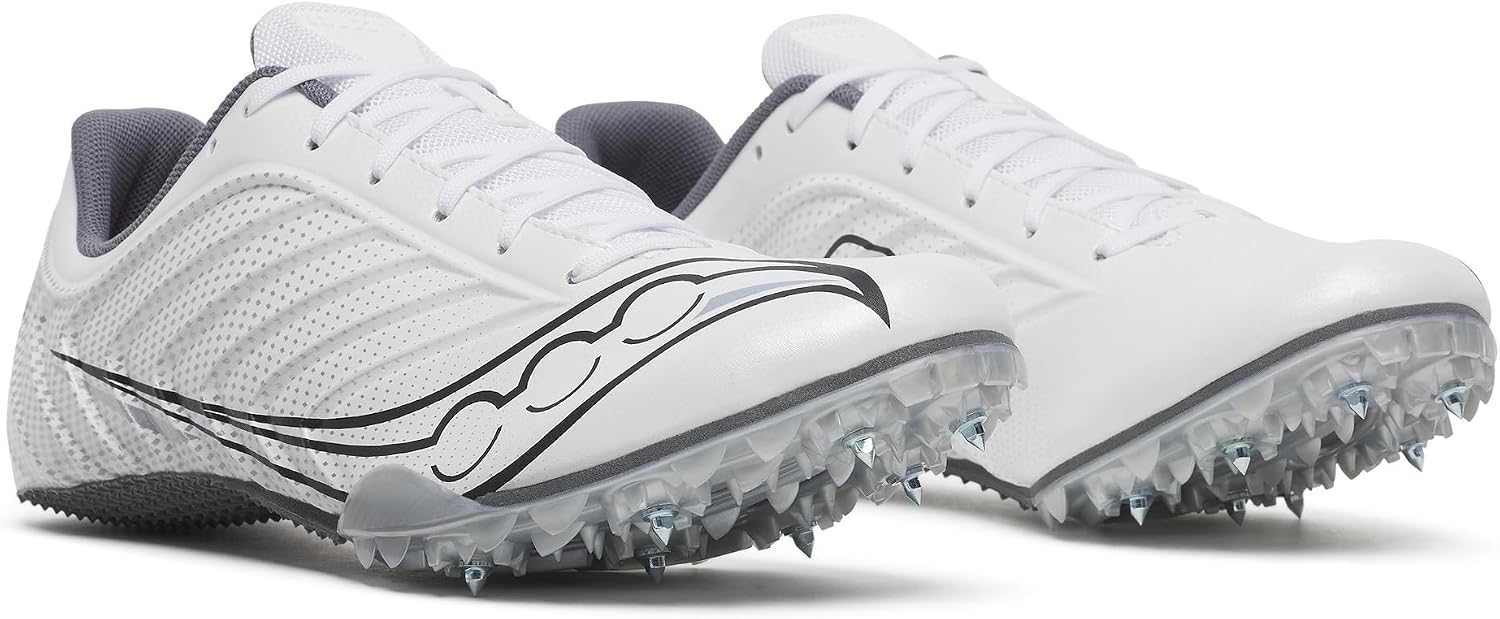
Spitfire 5 is Saucony’s sprint track spike. It uses a firm, low-to-the-ground plate (the rigid insert that sits between your foot and the ground, transferring power into the track surface) and a minimal upper. It’s designed for events on the oval where weight saved is time saved.
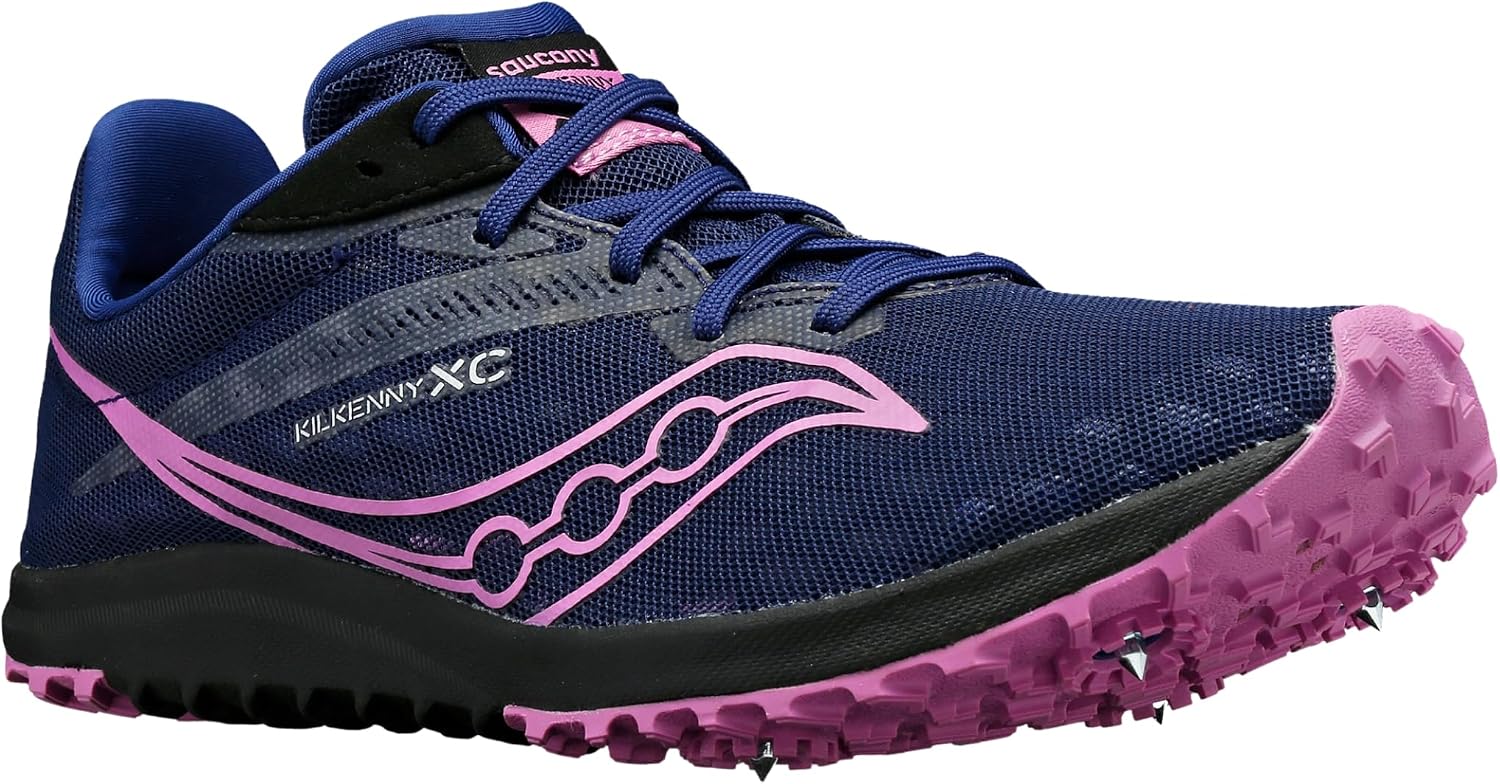
Kilkenny XC9 is a cross country purist’s shoe. It’s been a consistent name in the XC category for years, built lean and fast with a traditional six-spike plate configuration tuned for soft ground — grass, mud, packed dirt. Podium Runner, in their article “Best Cross Country Spikes of 2025,” lists it as a go-to option for athletes who want race-day lightness without paying flagship carbon-plate prices.
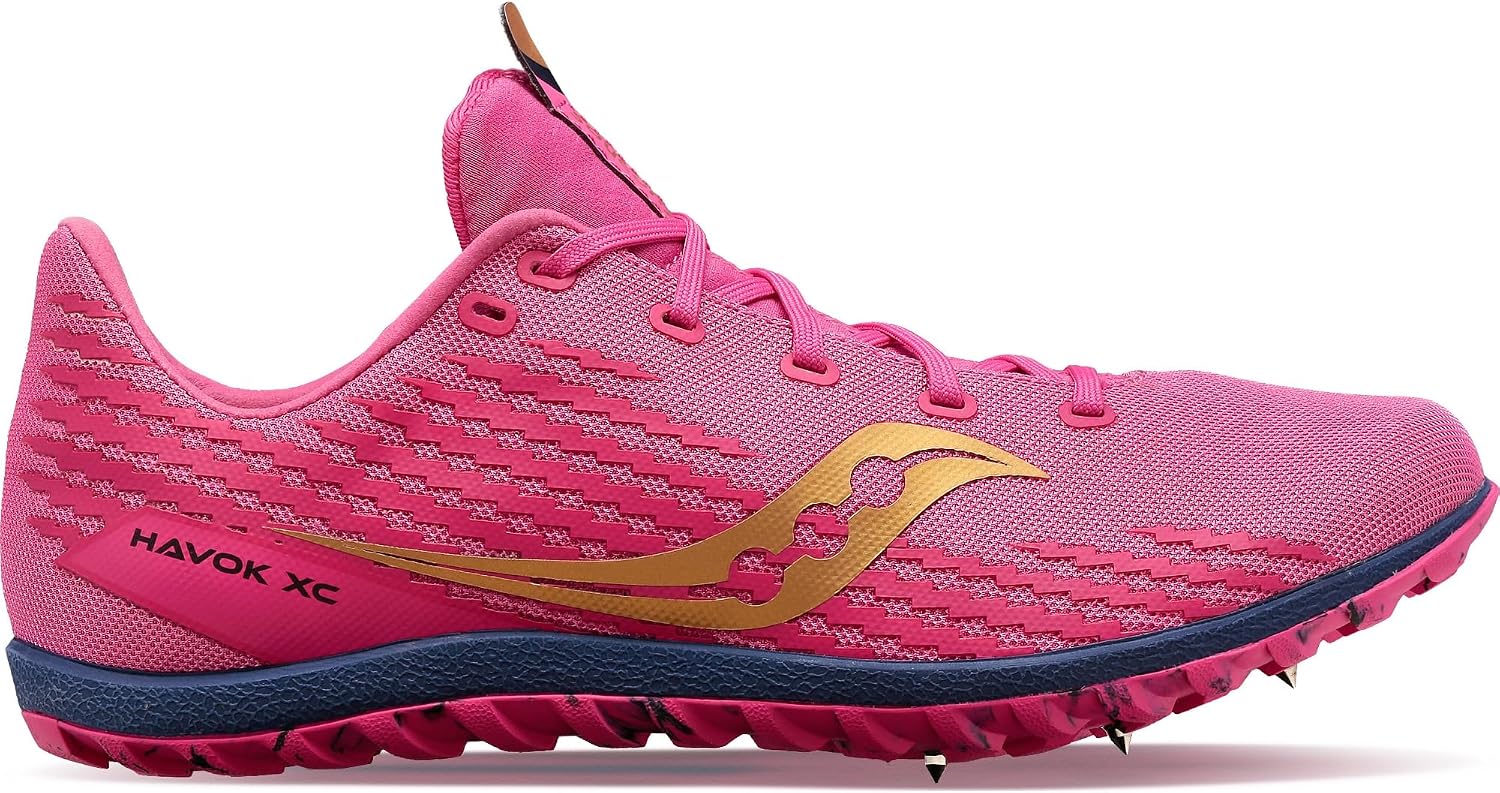
Havok XC3 is the cushioned option in the XC lineup. It gives up a few grams compared to the Kilkenny but returns more underfoot protection — meaningful over a 5K course with hard-packed or mixed terrain, and especially relevant for athletes doubling on track in the same week.
Fit Reality Check: How Each Model Actually Wears
This is where the spec sheet falls short and real-world owner feedback takes over. The following patterns emerge from the Running Warehouse customer review database for the Saucony XC and sprint category.
Kilkenny XC9
The most consistent note across the review pool is that the Kilkenny’s last (the foot-shaped form the shoe is built around) skews narrow through the midfoot and toe box. The women’s version draws the most pointed feedback: reviewers in the Running Warehouse customer review database for Saucony XC footwear specifically recommend sizing up a full size for anyone with a standard or wider foot. If you have a narrow foot naturally, the Kilkenny’s fit is considered snug and secure — exactly what you want in an XC spike. If you don’t, size up or try before you commit.
Durability is a strength. Owners describe the Kilkenny holding up across multiple seasons of XC use without meaningful breakdown in the spike plate or upper structure. For a budget-conscious program buying multiple pairs, that longevity matters.
Saucony
$29.99
In stock on Amazon
Check price on AmazonHavok XC3
Owners consistently describe the Havok as the more comfortable of the two XC options, with a fit that reads as true to size and noticeably roomier through the forefoot. One pattern that surfaces more than once in the review record: athletes who received the Havok XC3 in the days before a championship meet and raced well in it with essentially no break-in period. A fit that doesn’t require adaptation is a meaningful competitive advantage when the calendar doesn’t give you time to adjust.
Owners also specifically call out spike retention. Reports of zero broken or loosened spikes after a full regular season come up consistently — relevant when your courses include rocky fire roads and root-crossed trails where a dislodged spike midrace costs places, not just seconds.
The extra cushioning stack that distinguishes the Havok from the Kilkenny is also its ticket to track-season utility. Athletes who transition the Havok directly into spring track for distance events report no durability issues and a ride that feels acceptable on rubber surfaces. The Kilkenny’s firmer, minimal ride that makes it excellent on XC grass can feel punishing over multiple track sessions on hard surfaces.
Saucony
$54.95
In stock on Amazon
Check price on AmazonSpitfire 5
Sprint spike owners tend to be particular about fit because any heel slip or toe box compression translates directly into lost traction contact with the track. Owners reviewing the Spitfire 5 describe it as straightforwardly true to size, with no significant quirks in last width for the sprint category. One practical detail that earns consistent praise: the spike plate design makes swapping out worn spikes fast and clean — a real-world advantage at busy multi-event meets where you’re between heats on a tight timeline.
The Spitfire 5 is not a candidate for XC use. Sprint plate geometry, front-loaded spike placement, and a minimal heel make it poorly suited for the varied footing, lateral stability demands, and longer efforts of a cross country course. Its job is the oval, and within that context it performs that job well at a price point that makes it accessible for athletes who need a purpose-built sprint tool without paying for technology they won’t use.
Saucony
$19.99
In stock on Amazon
Check price on AmazonSide-by-Side Summary
| Model | Primary Surface | Spike Config | Fit Pattern | Best For |
|---|---|---|---|---|
| Spitfire 5 | Track (oval) | Sprint plate, front-loaded | True to size | 100m–400m |
| Kilkenny XC9 | Grass / mud / dirt | XC 6-spike | Runs narrow — size up | XC racing, narrow feet |
| Havok XC3 | Mixed XC terrain | XC 6-spike | True to size, roomier | XC racing, wider feet, mixed conditions |
The Year-Round Use Question: Can XC Spikes Double on Track?
One of the more useful patterns in owner feedback is how often athletes carry their XC spikes directly into track season. Multiple Kilkenny XC9 and Havok XC3 owners report transitioning into spring track workouts or lower-stakes track meets without buying a second pair. Track and Field News has addressed this question in spike selection guidance aimed at high school athletes: the event range matters more than the surface label when deciding whether one pair can serve both seasons. For athletes running 800m through 5,000m on track, an XC spike is a reasonable dual-use tool, particularly at the sub-varsity or early-career level where the performance gap between a purpose-built track spike and a capable XC spike is smaller than the cost of a second pair.
The Havok XC3 is the better candidate for this dual role. Its cushioning and roomier fit make it tolerable across rubber track surfaces in a way the Kilkenny — built lean and firm for soft ground — is not. If you know going in that you’ll race both seasons and can only justify one pair, the Havok is the answer.
The Spitfire 5 does not belong in this conversation. It is a single-surface tool, and that is not a flaw — it’s a design choice that makes it better at its specific job.
The 400m Question
A recurring search query is whether the Spitfire 5 works for the 400m or only for shorter sprints. Owner reports and published spec context both point to yes — it is usable through the 400m. Dedicated 400m athletes describe solid performance. The caveat is for athletes racing 400m hurdles in close succession, or running 400m-to-800m doubles in the same meet: the minimal cushioning stack will feel limiting over higher-volume use at distance. For a dedicated 400m specialist, the Spitfire 5 holds up. For an athlete logging serious volume at 600m and above, the minimal stack starts working against recovery between efforts.
World Athletics maintains an approved competition shoe list — updated annually and publicly available on the World Athletics website — that governs which spike configurations are legal at sanctioned meets. All three models discussed here fall within standard parameters, but if you compete at a level where equipment rules are enforced, it is worth confirming the current edition of that list before race day.
Decision Framework: If X, Then Y
If your primary event is XC and you have a narrow foot: Kilkenny XC9, sized up at least a half size (full size if you’re in the women’s version). The lightweight build and multi-season durability make it strong value if the fit works for you.
If your primary event is XC and you have a standard or wide foot: Havok XC3, true to size. The roomier fit, spike retention, and extra cushioning make it the more forgiving choice, and its track-doubling capability makes it practical across a full school year.
If your primary event is sprints on track (100m–400m): Spitfire 5. It’s the only one of these three designed for that job. Don’t pay for XC features you won’t use.
If you’re a parent buying one pair that covers both XC and track: Havok XC3. Not perfect for either job the way a purpose-built tool would be, but genuinely competent across both — and the consistent true-to-size fit reduces the risk of a return.
If budget is the binding constraint: The Spitfire 5 and Kilkenny XC9 both slot below the Havok XC3 in price. Neither is a compromise pick — they’re purpose-built tools at a reasonable price point. The Havok costs more because it does more. If you don’t need the cushioning or the wider fit, you don’t need to pay for it.
Frequently Asked Questions
Does the Kilkenny XC9 run true to size? No — size up. Reviewers and owners in the Running Warehouse customer review database for Saucony XC footwear consistently report the Kilkenny runs narrow, particularly in the women’s version where a full-size up is the common recommendation for standard-width feet. If you have a genuinely narrow foot, your normal size may work, but when in doubt, go up.
Can the Havok XC3 double as a track spike after cross country season? Yes, with realistic expectations. Multiple owners use it through track season for distance events (800m and up). It’s not a sprint spike and won’t replace a purpose-built track tool for short events, but for mid-distance and distance track racing it holds up, and owners report no durability problems across the combined workload.
Are the spikes on the Kilkenny XC9 prone to loosening during races? Reviewers don’t flag this as a systemic problem. The Havok XC3 earns the most explicit praise for spike retention — owners report zero broken spikes after a full season — but the Kilkenny’s plate is a conventional design without unusual failure patterns in the review record.
Is the Spitfire 5 appropriate for the 400m or just shorter sprints? It works for the 400m. Dedicated 400m athletes report solid performance. The caveat is for athletes racing at 600m and above, or running high-volume doubles: the minimal cushioning becomes a limiting factor over longer efforts.
Which Saucony spike works best for a wide or narrow foot? Narrow foot: Kilkenny XC9 in your correct size. Wide or standard foot: Havok XC3, sized true. The Kilkenny is not the right starting point if you need any extra room across the forefoot — the last simply isn’t built for it.