August 6, 2026 • Cassidy Vane • 12 min reading time • Prices verified June 6, 2026
Spike Pins That Actually Stay Sharp All Season: Stainless vs. Carbon Steel Bulk Packs Compared
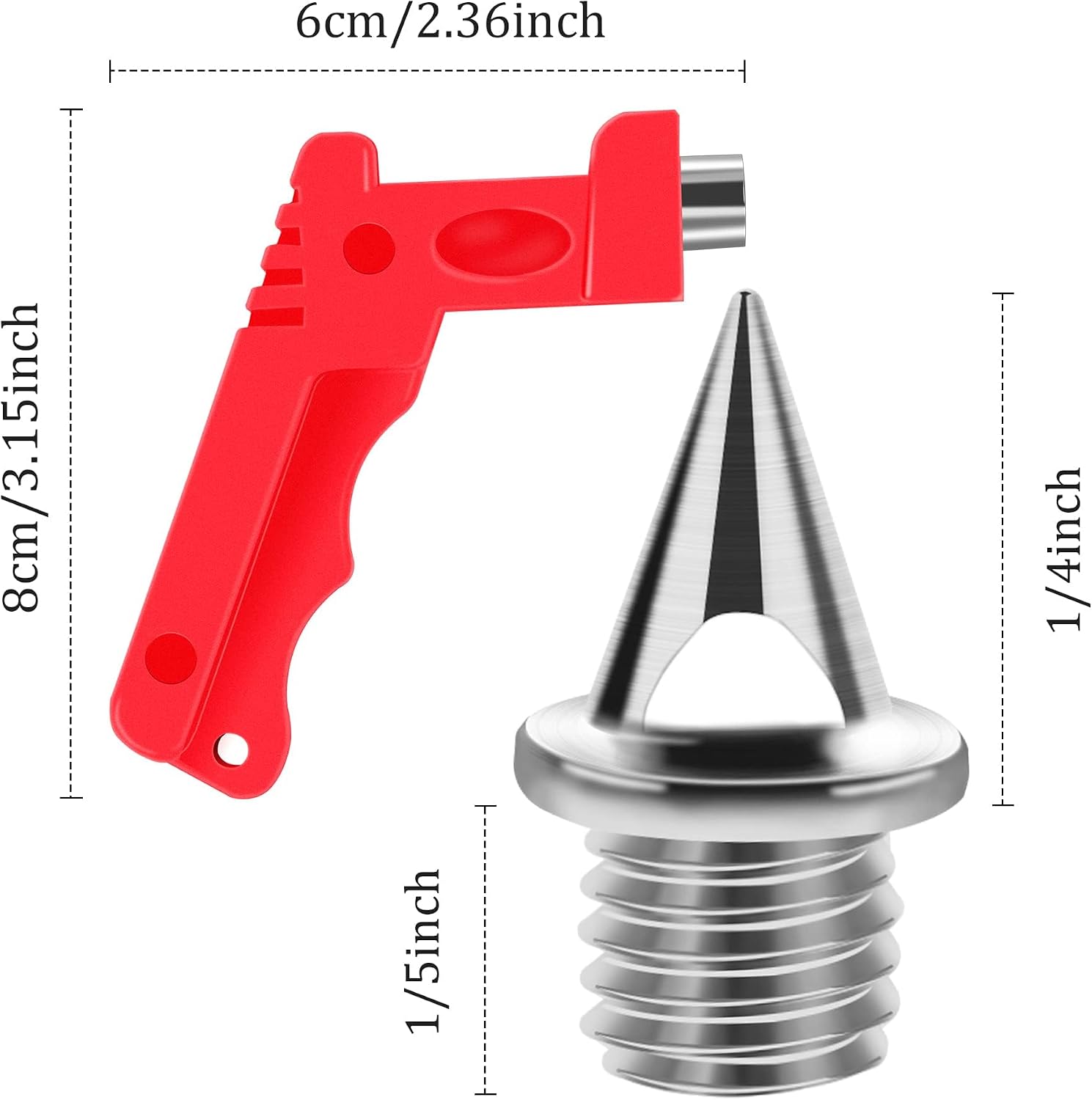
If you’ve ever knelt trackside mid-warmup, spike wrench in hand, watching a pin spin freely in a stripped hole — you already understand why replacement spike pins matter. For anyone newer to the sport: spike pins are the small, removable metal screws threaded into the forefoot of a track spike shoe. They’re what actually grip the track surface, and they wear down, snap, or get lost across a season of hard training and competition. Most spike shoes ship with a set of pins installed, but manufacturers universally recommend replacing them when they dull or get damaged — and that means every serious athlete eventually needs a bulk supply on hand. This article breaks down the two main materials you’ll find in bulk replacement packs — stainless steel and carbon steel — compares their real-world performance based on aggregated buyer reviews, and answers the questions coaches, parents, and athletes keep asking before they commit to a 32-piece or 120-piece purchase.
| EDITOR'S PICK1/4 Inch Track Spikes | Mid-tierAUGSUN 120pcs Stainless Steel T… | Budget pickAUGSUN 120pcs Stainless Steel T… | |
|---|---|---|---|
| Pin count | 100 | 120 | 120 |
| Pin length | 1/4 in | 3/8 in | 1/4 in |
| Material | Steel | Stainless steel | Stainless steel |
| Color | Black/Silver | — | — |
| Price | $12.99 | $11.99 | $8.99 |
| See on Amazon → | See on Amazon → | See on Amazon → |
The Core Tradeoff: What Stainless and Carbon Steel Actually Mean for Your Pins
Let’s define the terms, then get into the decision.
Carbon steel is a high-strength iron-carbon alloy. It’s extremely hard, which gives it excellent initial sharpness. The tradeoff is that it’s more susceptible to oxidation — rust — when exposed to moisture: wet tracks, muddy cross-use surfaces, or a damp gear bag over a long weekend. Many manufacturers add colored anodized coatings to carbon steel pins, which is why you’ll often see blue, red, or gold pins marketed as “colored” packs. That coating is partly cosmetic and partly protective, but only to a point.
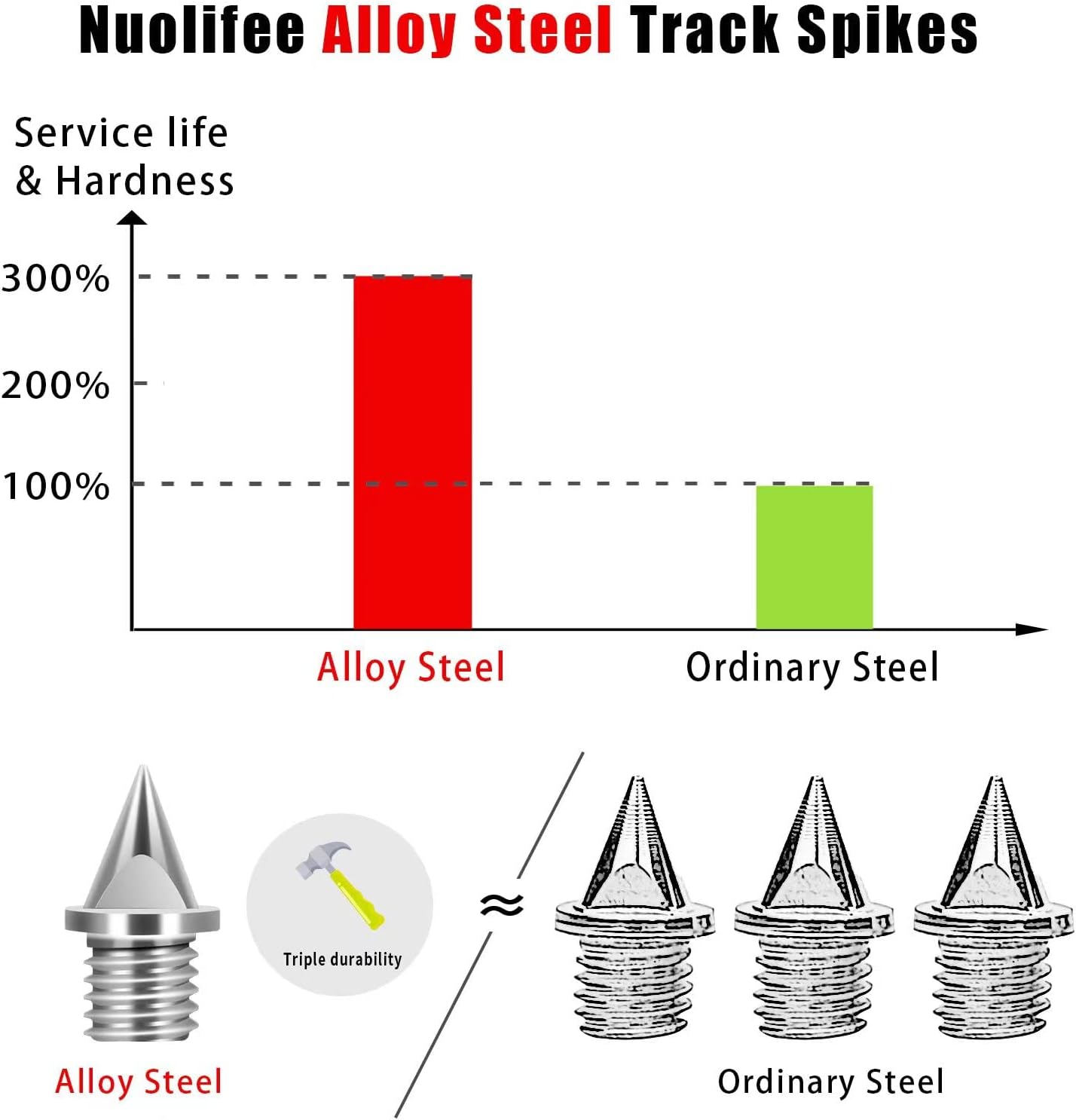
Stainless steel is an iron alloy with added chromium, which creates corrosion resistance by forming a passive oxide layer on the surface. It’s generally slightly softer than hardened carbon steel at equivalent price points — which has historically led to the assumption that it dulls faster. However, stainless resists surface degradation from moisture, meaning the sharpness you start with is better preserved across a full season of varied conditions.
Here’s the most actionable data point from aggregated buyer reviews: one AUGSUN stainless pack reviewer ran a direct comparison, using stainless pins in one shoe and colored carbon steel pins in the other across identical training conditions. Their consistent finding — documented across multiple review updates — was that the stainless pins retained a sharper tip profile longer than the colored carbon alternatives. This is a single reviewer’s observation, not a lab study, but it aligns with what materials science would predict: corrosion on carbon steel tips creates micro-pitting that accelerates wear even if the underlying steel is harder.
Podium Runner’s Spike Maintenance and Replacement Guide notes that sharpness retention is less about raw hardness and more about surface integrity over time — a finding that stainless steel’s corrosion resistance directly supports.
By the numbers:
| Format | Typical count | Approx. pin weight | Best-fit use case |
|---|---|---|---|
| Stainless bulk packs | 120 pins | ~0.6–0.8g per pin | Teams, multi-season supply, mixed events |
| Carbon steel colored | 32 pins | 0.47g per pin (per manufacturer spec sheet) | Sprinters optimizing gram-level weight |
| Carbon steel standard | 50–120 pins | ~0.55–0.65g per pin | General training, budget-conscious individuals |
The 0.47g figure on carbon steel colored packs is real and matters to sprinters — but we’ll return to whether it should matter to you specifically.
Head-to-Head: Stainless, Mid-Range Carbon, and Premium Carbon Compared
Budget-Tier Stainless: 120-Piece Bulk Packs
For coaches, parents of multiple athletes, and anyone who has ever been caught without a replacement pin at a meet, the 120-piece stainless pack is the default recommendation. Per-pin cost is low enough that you can stock every gear bag, every coach’s kit, and still have carry-over supply for next season. Sharpness retention across a full indoor-outdoor season favors stainless, as noted above, and the larger volume means you won’t ration pins during heavy training blocks.
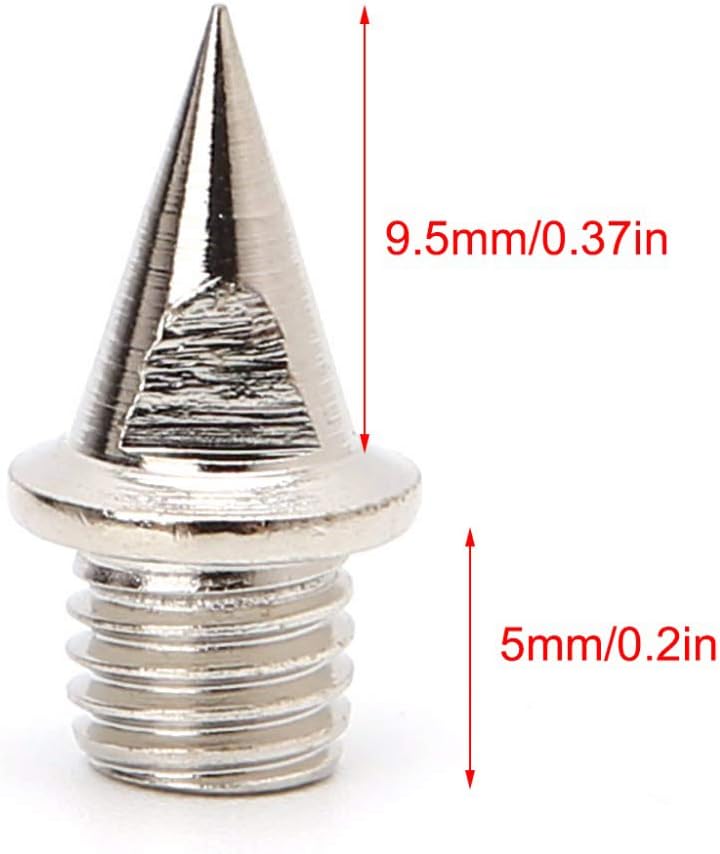
The main limitation: most 120-piece packs ship in a single length. Verify the length before ordering if your athletes run different events. Sprint spike receptacles are typically designed for 1/4-inch (6mm) pins; using longer hardware risks damaging the thread insert.
AUGSUN
$8.99
In stock on Amazon
Check price on AmazonMid-Tier Carbon Steel: 50-Piece Standard Packs
Standard carbon steel packs — without the anodized color coating — occupy the middle ground. Initial sharpness is excellent, and mid-size quantities work well for individual athletes who want a season’s worth of supply without committing to a 120-piece surplus. Moisture exposure is the primary risk over time, so athletes storing pins in a damp bag or training regularly on wet surfaces may see faster tip degradation than with stainless.
Runner’s World’s coverage of spike setup and maintenance notes that athletes who rotate between training and race configurations benefit from having at least 30–40 pins on hand — enough to change full sets without anxiously counting inventory. A 50-piece carbon pack covers that range with moderate buffer.
AUGSUN
$11.99
In stock on Amazon
Check price on AmazonPremium-Tier Carbon Steel Colored: 32-Piece Optimized Packs
The 32-piece colored carbon steel packs — anodized in blue, red, or gold — target a specific athlete: the sprinter who has already optimized everything else and is now operating at the gram level. At 0.47g per pin versus the ~0.65g of a standard stainless pin, and with 7 pins per shoe as a common sprint configuration, the difference across both feet is roughly 2.5 grams. That’s not transformative for a high school sophomore running 11.8 in the 100m. It’s meaningful for an athlete pushing toward elite performance times who is already in the right shoe and has maximized training variables.
The anodized coating adds a thin layer of corrosion resistance compared to bare carbon steel, but stainless still outperforms it in sustained wet conditions. Buy this pack if the weight margin is your conscious, deliberate priority — not because the color looks fast.
1/4
$12.99
In stock on Amazon
Check price on AmazonThread Fit: The Risk Nobody Talks About Before Buying in Bulk
Across multiple pack categories, one theme surfaces consistently in buyer reviews: thread fit variability. Spike pins use a nominally standardized thread size — most commonly 1/4-20 UNC in the US market — but “standardized” doesn’t mean universal. Reviewers across multiple bulk packs report that some pins thread in smoothly on one brand’s spike shoes but feel slightly loose on another brand’s shoes, or vice versa. A few reviewers noted the opposite problem — pins that required extra torque on specific shoe models, raising concern about cross-threading or socket wear over repeated installation.
Runner’s World’s spike buying coverage notes that thread tolerance varies by shoe manufacturer and that premium spike shoes sometimes use tighter receptacle tolerances to reduce play and improve force transfer. That’s beneficial for performance but means aftermarket pins can land anywhere from a perfect fit to a workable one to loose enough to walk out mid-race.
What this means practically:
- If you’re buying for a team with mixed brands — Nike, Adidas, New Balance, Brooks — buy a smaller test quantity first and install across several shoe models before committing to a 120-piece supply.
- Loose fit isn’t just a performance issue; it’s a safety issue. A pin that spins freely on first installation may back out during a race.
- No reviewer in the aggregated data reports properly torqued pins falling out — but “properly torqued” is doing real work in that sentence. A pin that threads in 80% of the way and stops is not properly seated.
- Carbon steel packs and stainless packs show similar rates of thread variability in reviews — this is a geometry and tolerance issue, not a material one.
If you’re buying for a single athlete in a consistent shoe model across seasons, thread fit is less of a concern. If you’re a coach or parent stocking up for a roster, test before you commit.
The Mid-Meet Emergency Scenario (and Why Pack Size Actually Matters)
Parent reviewers and coaches consistently cite one scenario as their primary purchase motivation: the mid-meet spike replacement. A pin snaps during warm-up. A tip bends on a starting block. An athlete arrives at the venue and discovers a pin is missing — and the nearest sporting goods store is 45 minutes away.
The 120-piece bulk packs are almost universally praised in this context. Multiple reviewers describe keeping a small zip-lock bag with 6–8 pins and a wrench in their track bag as a direct result of having a large supply. The math makes this easy: at 120 pins per pack, you can stock every bag, every athlete’s kit, the coach’s first-aid bin, and still have supply for next season.
The 32-piece carbon packs serve a different athlete: the sprinter who specifically cares about the 0.47g per-pin weight spec. This is legitimate at the performance margins, but for most high school and recreational athletes, pack size is the more practical variable.
The honest decision frame:
- Buying for team emergency supply and multi-season use → 120-piece stainless
- Buying as a serious sprinter optimizing every gram → 32-piece carbon steel colored
- Buying for one athlete, one season, general training → either works; go with what’s cheaper per pin at your quantity
Included Wrenches: Keep It or Upgrade?
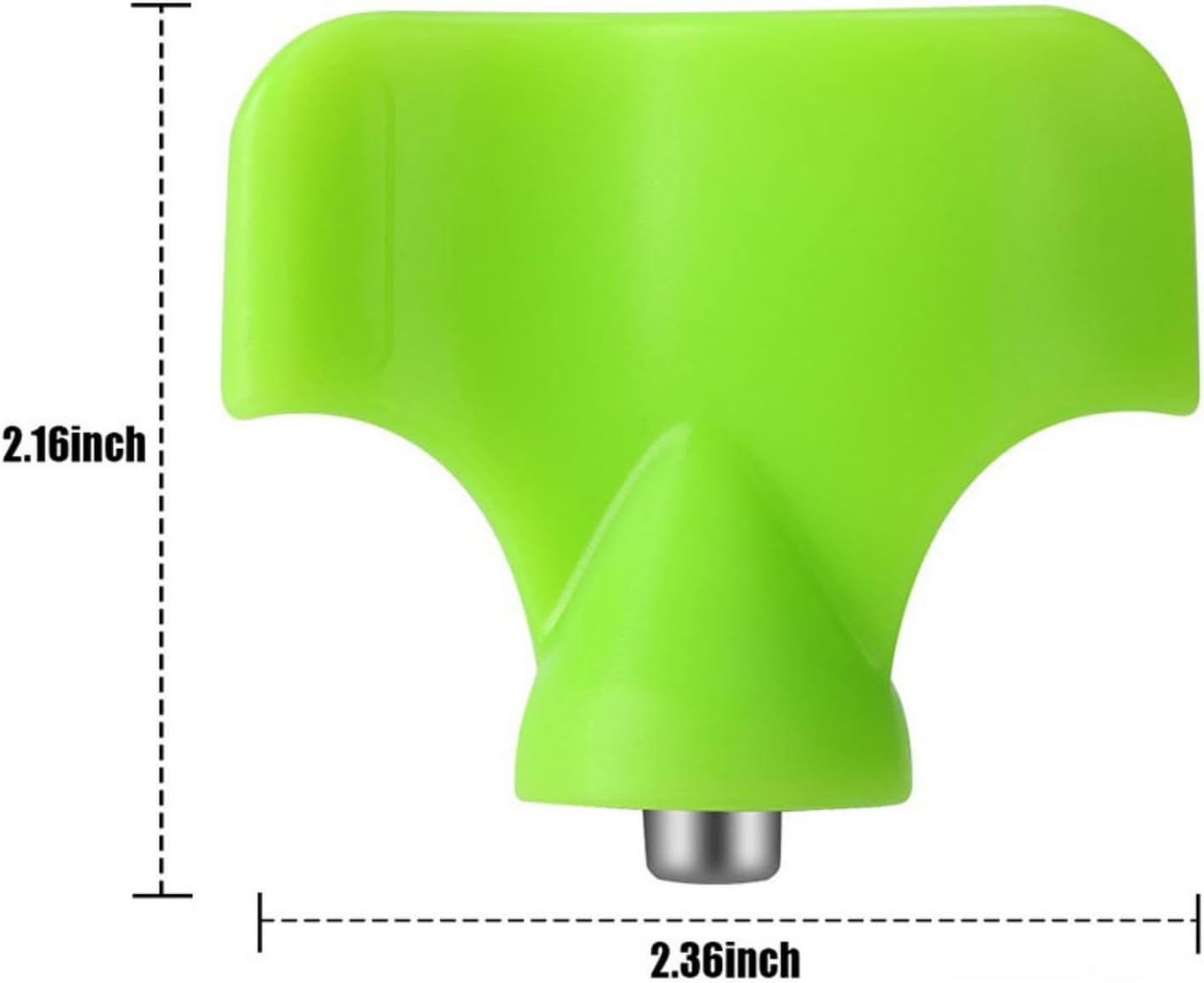
Most bulk packs include a basic spike wrench — a small T-handle or L-handle tool designed to torque pins in and out of the spike receptacle. Reviewers are split on this.
The included wrenches in bulk packs are functional for occasional emergency use. Several reviewers describe them as adequate for trackside situations — meaning they can seat and remove pins without cross-threading when used carefully.
Where reviewers consistently recommend upgrading: when you’re installing and removing pins frequently. A dedicated spike wrench with a longer handle provides better mechanical advantage and reduces the chance of rounding a pin head. For coaches handling a full roster’s spike maintenance at the start of each season, a proper wrench earns its cost in avoided frustration within the first session.
If you’re a parent keeping a wrench in the track bag for emergencies only, the included wrench is fine. If you’re an athlete who rotates between training and race pins — a legitimate strategy documented in Runner’s World’s spike setup guides — invest in a dedicated wrench.
Are Colored Spike Pins Legal for High School Meets?
This comes up repeatedly in parent reviews and deserves a direct answer.
The colored finish on carbon steel pins — blue, red, gold — is cosmetic and has no bearing on legality. Per the NFHS Track and Field Rules Book, 2025–2026 edition, spike pin legality is determined by length and tip geometry, not color or material. Pyramid, Christmas tree, and compression tips are all approved for standard track surfaces; needle tips are typically restricted to grass and cross-country applications.
World Athletics Technical Rules for Competition Footwear, 2024 edition, confirm the same framework at the elite level: geometry and length govern compliance, not material or finish.
No state athletic association in current review prohibits colored pins. If you’re unsure about a specific invitational’s surface requirements, check the meet information — some rubber tracks have manufacturer-specific pin length restrictions, commonly a 6mm maximum, that supersede general association rules.
Mixing Pin Lengths: What’s Safe, What’s Not
Can you run 1/4-inch pins in some positions and 3/8-inch in others on the same shoe? Yes, with caveats.
Pin length affects how aggressively the spike grips the surface and how much force gets transferred into the track. Sprint spikes often use shorter pins on lateral positions to balance grip with stability; some sprinters prefer longer pins under the first metatarsal for drive phase traction. This is a standard coaching recommendation, not an exotic modification.
The practical risk with bulk buying is accidentally mixing lengths during an emergency install. Stainless bulk packs often come in a single length — verify before purchase. Some mixed-length packs exist and are clearly labeled; treat the label as the authority, not your visual estimate in a hurry.
One firm rule: never use a pin longer than the receptacle depth in your shoe. Most sprint spike receptacles are designed for 1/4-inch (6mm) pins. Forcing a 3/8-inch (9mm) pin into a shallower receptacle risks damaging the thread insert — and replacing a stripped insert requires professional repair or a new shoe.
Frequently Asked Questions
Do stainless steel spike pins actually stay sharper than carbon steel colored pins over a full season? Based on aggregated buyer reviews — including one AUGSUN reviewer who ran a direct side-by-side comparison — stainless pins showed better sharpness retention after equivalent use. Podium Runner’s Spike Maintenance and Replacement Guide aligns with this: surface integrity over time matters more than initial hardness, and corrosion resistance is what preserves that integrity.
Will bulk replacement pins fit any brand of track spike shoe? Thread sizing is nominally standardized at 1/4-20 UNC, but tolerance varies by manufacturer. Reviewers consistently flag that fit can feel noticeably different across Nike, Adidas, and New Balance spike shoes. Buy a small pack and test across your shoe brands before committing to 120 pieces, especially for team purchasing.
How many replacement pins does one athlete realistically need for a full track season? A standard track spike has 6–8 pin positions. Plan on replacing all pins two to three times across an indoor-outdoor season if you’re training in spikes regularly — that’s 12–24 pins minimum. A 32-piece pack covers one athlete for a full season with buffer; a 120-piece pack handles a small team or multiple athletes across several seasons.
Is the included spike wrench in bulk packs worth keeping? It’s adequate for trackside emergencies. For regular maintenance — beginning-of-season installs, mid-season rotations — a dedicated wrench with better leverage is worth the upgrade. Keep the included wrench in your track bag as a backup.
Are colored spike pins legal for high school track meets? Yes. Per the NFHS Track and Field Rules Book, 2025–2026 edition, legality is determined by pin length and tip geometry, not color or material. Colored carbon steel pins are fully compliant at every level of high school competition.
The Decision Rule
If you’re a parent, coach, or athlete buying for emergency supply and multi-season use: stainless 120-piece packs are the clear call. Sharpness retention is better across variable conditions, supply is ample, and the per-pin cost makes it rational to stock every bag on the roster.
If you’re a sprinter with sub-11 second ambitions who has already dialed in your shoe model and cares about the 0.47g weight difference: the 32-piece carbon steel colored packs are a legitimate choice. Verify thread fit in your specific shoe before committing to a full supply.
If you’re still in your first or second season: buy the stainless bulk pack, learn your shoe’s thread behavior, and don’t spend mental energy on gram-level pin optimization until the rest of your training is locked in. The pins are almost never the limiting variable.