August 23, 2026 • Cassidy Vane • 10 min reading time • Prices verified June 6, 2026
Track Spike Bags, Wrench Kits, and Meet-Day Gear: The Stuff That Saves Your Season
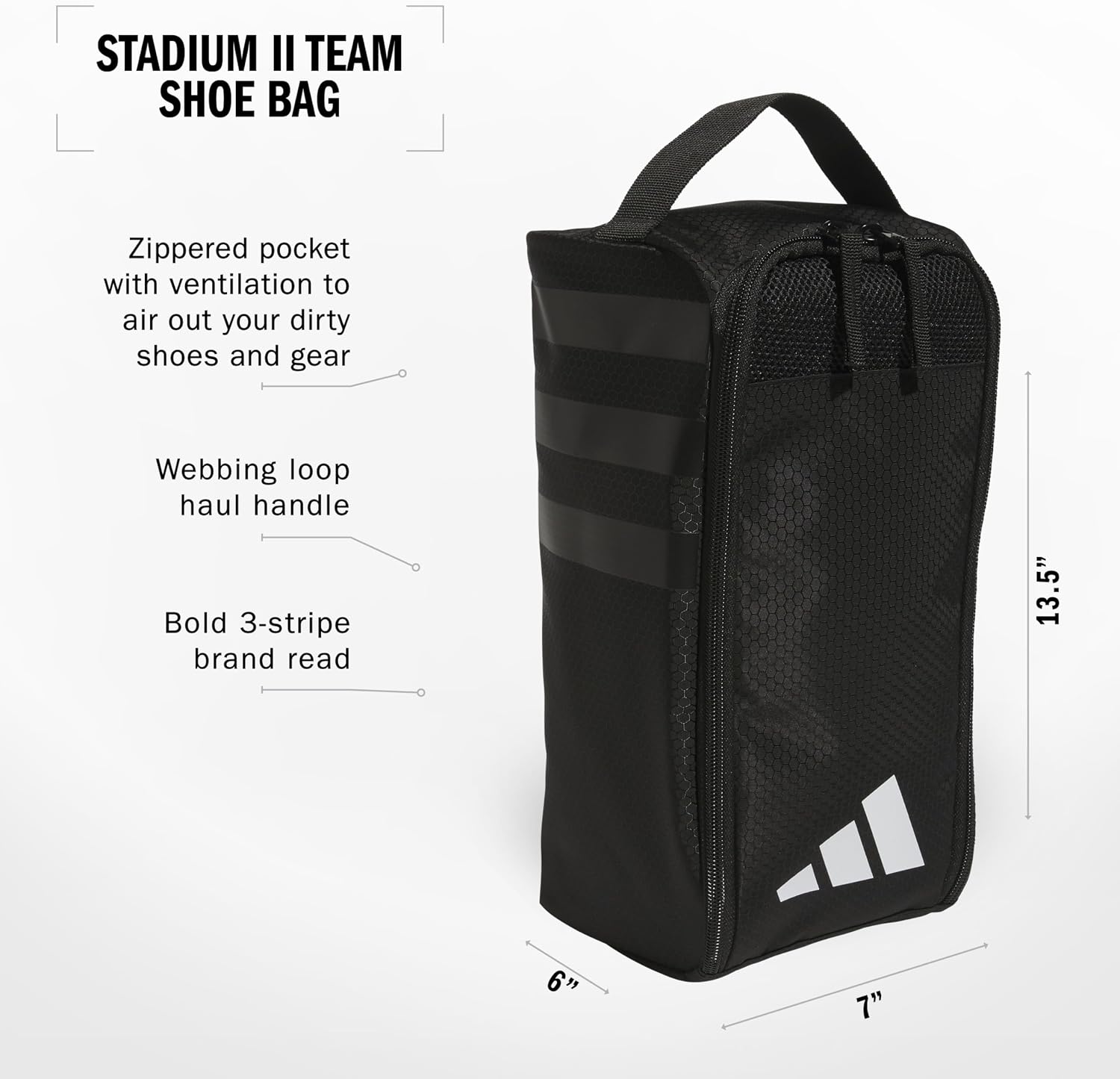
You’ve spent real money on spikes — maybe a pair of Nike Air Zoom Maxflys for the 100 meters, or a set of Adidas Adizero Avanti TYOs for the 1500. What most athletes and parents don’t fully plan for until something goes sideways at a meet: those shoes are only as good as the tiny threaded metal pins — called spike pins — screwed into the sole, and only as wearable as the bag you use to transport them. Spike pins are the actual traction element of a track spike; they thread into small metal inserts in the forefoot of the shoe. Lose one before a race, or accidentally pack the wrong length pin, and your season-defining performance is suddenly in jeopardy. This guide covers everything in that category — bags with real odor containment, wrench kits, pin packs, and the compliance rules that every athlete and parent needs to know before the first gun goes off.
| EDITOR'S PICKCarbon Steel Track Spikes | Mid-tier1/4 Inch Carbon Steel Track Spi… | Budget pickHicarer 110 Piece 3/8 Inch Stee… | |
|---|---|---|---|
| Pack Count | 50 | 32 | 110 |
| Length | 1/4" | 1/4" | 3/8" |
| Wrench included | ✓ | — | — |
| Unit weight | 0.47 g | 0.47 g | — |
| Material | Carbon steel | Carbon steel | Steel |
| Price | $12.99 | $9.97 | $8.99 |
| See on Amazon → | See on Amazon → | See on Amazon → |
The Compliance Issue Nobody Talks About Until It’s Too Late
Let’s lead with the most actionable fact in this entire article, because it catches people every single year.
The maximum legal spike pin length for high school track in the United States is 1/4 inch (6mm). Per the National Federation of State High School Associations (NFHS) Track and Field and Cross Country Rules Book, 2025-26 edition, athletes competing on standard polyurethane or latex track surfaces are limited to 1/4-inch pins. The 3/8-inch (9mm) pins that are commonly sold, commonly included in starter packs, and commonly installed on shoes right out of the box are illegal for high school competition on standard all-weather tracks.
This is not a gray area. Reviewers who’ve purchased pin packs note explicitly that they bought 3/8-inch pins only to discover at a meet that their athlete was disqualified or asked to remove their spikes. One verified buyer in aggregated reviews for a popular pin pack puts it plainly: “3/8-inch pins are illegal for high school track — 1/4-inch is the maximum.” That warning belongs at the top of every pin purchase, not buried in a one-star review.
By the Numbers: Spike Pin Length at a Glance
| Competition Level | Max Pin Length (All-Weather Track) | Notes |
|---|---|---|
| NFHS High School | 1/4 in (6mm) | Enforced by meet officials; check state addenda |
| NCAA Collegiate | 1/4 in (6mm) standard; up to 3/8 in on approved surfaces | Verify with meet host |
| World Athletics / Open | Up to 9mm (3/8 in) depending on surface | World Athletics Technical Rule 5 governs |
| Cross Country / Grass | Up to 12mm on natural surfaces | Varies significantly by meet and surface |
Per World Athletics Technical Rules and Track and Field News coverage of the 2024-25 season, the rules at open and collegiate levels allow slightly more flexibility — but if your athlete is competing at a high school meet, you want 1/4-inch pins in the shoe, full stop. Buy them deliberately. Don’t assume the ones already installed are legal.
Spike Bags: Why the Smelly Duffel Isn’t Cutting It Anymore
Here’s the scenario that plays out in nearly every track family’s spring: spikes go into the regular athletic bag with clothes, a water bottle, and a snack. By week three of the season, everything in that bag smells like rubber, sweat, and the inside of a high school gym. Parents who’ve made the switch to a dedicated spike bag consistently describe it as one of those “why did I wait so long” purchases.
The functional case for a dedicated spike bag is straightforward. Track spikes — especially sprint spikes with aggressive pyramid-shaped metal pins — can puncture fabric and scratch other gear. The rubber compounds used in spike soles off-gas a distinct odor that transfers aggressively to clothing. And because spikes often go on and come off at the track (not at home), they tend to travel dirty, picking up rubber crumble and synthetic track particulate that you don’t want migrating to a uniform.
The Athletico Stadium 2 Spike Bag addresses all of these friction points in one package. Owners consistently report that the ventilated main compartment does genuine work containing odor — not masking it, but isolating the source — and that the exterior is durable enough to handle being thrown into a team van or bleacher bag pile without the structural collapse you get from a cheap drawstring. Parents in aggregated reviews specifically call out the smell-containment feature as the primary reason they’d buy it again, describing it as a real, specific improvement over a general-purpose bag rather than a marginal one.
If you’re building out a kit for an athlete who competes in multiple events — say, sprint spikes for relays and a separate pair of distance spikes for the 3200 — you want a bag with compartmentalization. The ability to separate two pairs, and to separate clean gear from post-race shoes, reduces the odds of arriving at the track with your pre-meet kit contaminated.
Practical checklist for spike bag selection:
- Separate ventilated compartment for shoes (keeps odor from migrating to uniform)
- Exterior dimensions compatible with standard team equipment checks
- Durable zipper pulls (athletes use these under pressure and in cold weather)
- Enough interior volume for two pairs of spikes plus a pin wrench, extra pins, and a warm-up layer
Pin Packs and Wrench Kits: Building Your Emergency Stash
If you’ve coached or competed in track for any length of time, you’ve seen it: an athlete loses a pin during warm-ups. It happens more than most people expect. The threaded inserts in sprint spikes get clogged with rubber from the track surface, pins back out under the torque of an aggressive start, and before the athlete realizes what’s happened, they’re running an uneven pattern. The pin is somewhere on the infield or, more likely, embedded in the track surface.
The correct response is to swap in a replacement pin immediately. This requires two things you need to have with you: a spare pin and a spike wrench (the small tool — usually an L-shaped or T-handled key — that threads pins in and out). Reviewers describing pin pack purchases consistently describe exactly this scenario: the emergency mid-meet pin swap, done by the athlete themselves in the infield between warm-ups and check-in.
To the question of whether an athlete can change their own pins without a coach present: yes, absolutely. It’s a routine part of spike maintenance that any athlete who competes in spikes should know how to do before their first meet. The motion is simple — wrench into the pin, counterclockwise to remove, clockwise to seat the new pin, snug but not over-torqued. Over-torquing strips the threaded insert, which is a much more expensive problem than a lost pin.
Two pin pack options worth knowing:
The Yaktrax 1/4-Inch Pyramid Spike Replacement Pins (available in bulk packs) are the workhorse option. Pyramid spikes — the standard shape for most sprint and mid-distance shoes — thread into the same insert pattern across virtually all major brands including Nike, Adidas, New Balance, and Saucony. Per published product specifications and consistent buyer confirmation across reviews, the 1/4-inch pyramid configuration fits the standard 5mm threading used by the major manufacturers. The honest caveat: always verify your shoe’s threading spec before buying, because a small number of older or specialty models use a different thread pitch. When in doubt, pull a pin from the shoe and bring it to your specialty retailer to match.
For athletes who want to express a little personality — and this is a real, if minor, purchase motivator — colored spike pins are available. Reviewers for colored pin packs note choosing red to match school colors, and while this doesn’t affect performance in any way, it’s a harmless customization that athletes genuinely appreciate. The functional specs (length, thread pitch, material) are identical to standard pins.
On next-day delivery: Multiple reviewers note purchasing pin packs and spike bags via next-day delivery in the 24 to 48 hours before a major meet. This is a real, valid use case — not something to plan for, but something the logistics support if you realize Tuesday night that you’re heading into a Wednesday invitational without spare pins. It’s worth having a baseline stash at the start of the season precisely so you’re not depending on this, but knowing it’s available is genuinely useful.
The Complete Meet-Day Kit: Putting It Together
If you’re building a kit from scratch, or upgrading from a cobbled-together bag of random gear, here’s the decision frame:
If your athlete is a high schooler competing on standard all-weather tracks: Your pin stash should be 1/4-inch only. Don’t keep 3/8-inch pins in the bag as “backup” — they create confusion and compliance risk. Buy a dedicated supply of 1/4-inch pyramids, put a wrench in the bag permanently, and replenish at the start of each season.
If your athlete competes across levels — high school dual meets plus open club meets or collegiate invitationals: Keep two labeled pouches: one with 1/4-inch pins for high school events, one with the appropriate length for open/collegiate surfaces. Label them. Confusion between the two under meet-day pressure is how compliance problems happen.
If you’re a coach or AD outfitting a roster: The per-unit economics of bulk pin packs are straightforward — buying individual packs per athlete is roughly 3-4x the per-pin cost of team bulk quantities. Centralize the wrench supply (athletes lose individual wrenches constantly) and standardize on a single pin length appropriate for your primary competition surface.
If you’re a parent buying as a gift or season startup: The spike bag plus a 1/4-inch pin pack plus a wrench is the complete starter kit. It costs less than most spike shoes and prevents the meet-day scenarios that cost athletes races. It’s also genuinely appreciated by athletes who’ve experienced the alternative.
Frequently Asked Questions
What is the maximum spike pin length allowed at high school track meets? Per the NFHS Track and Field Rules Book, the maximum is 1/4 inch (approximately 6mm) on standard all-weather surfaces. Some states have addenda that mirror or reinforce this limit. If you’re uncertain about your state association’s specific language, check directly with your state’s athletic association rulebook — the NFHS document is the baseline, but states can be more restrictive.
Can my kid change their own spike pins without a coach? Yes. Pin changing is a basic maintenance skill, not a procedure requiring coach supervision. Athletes should learn to do this before their first competition. The only caution: don’t over-tighten. Snug is correct; torquing down hard enough to stress the threaded insert is how you damage the shoe.
How do I stop my track bag from smelling? The root cause is spike soles — rubber compounds and accumulated track rubber off-gas continuously. The most effective solution is a bag with a ventilated, isolated shoe compartment that separates the odor source from clothing and other gear. Parents who’ve switched to a dedicated ventilated spike bag, like the Athletico Stadium 2, consistently report this solves the problem rather than masking it.
What should I do if my athlete loses a spike pin during a meet? If you have a spare pin and wrench in the bag — which you should — the athlete can swap it themselves in the infield before check-in. If you’re at a meet without spares, ask the host team’s equipment manager first; most experienced programs keep a community stash for exactly this situation. This is also the scenario where next-day delivery from a major retailer becomes genuinely useful for the next meet.
Do bulk spike packs fit all brands of track shoes? Pyramid spike pins in 1/4-inch (6mm) with standard 5mm thread pitch fit the vast majority of Nike, Adidas, New Balance, Saucony, and Brooks spike models. The edge cases are some older models and specialty throwing shoes that use a different thread pitch. When buying for a specific shoe for the first time, confirm by removing an existing pin and comparing or checking the manufacturer’s spec sheet. Per Podium Runner’s guidance on spike configuration, thread pitch standardization across major brands has been consistent for the better part of a decade, so this is rarely a problem with current-generation shoes.