September 18, 2026 • Cassidy Vane • 10 min reading time • Prices verified June 6, 2026
Spike Pin Size Confusion, Solved: 1/4 Inch, 3/8 Inch, and What's Actually Legal
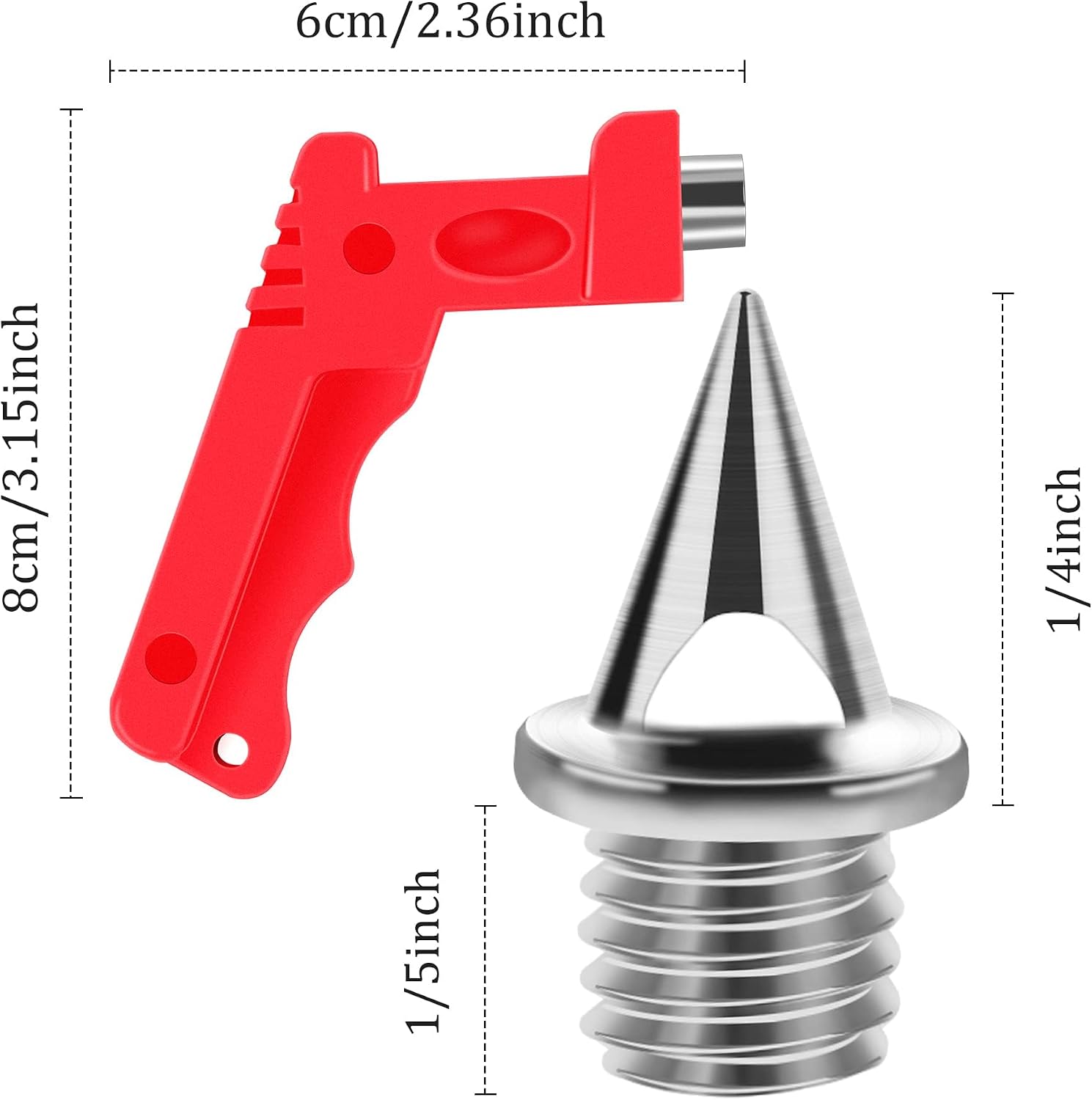
If you’ve ever stood at a meet check-in table while an official eyeballed your shoes and said “those pins are too long,” you know exactly how stressful spike-pin confusion can be. Spike pins — the small, removable metal screws that screw into the bottom of a track shoe and grip the track surface — come in different lengths, and those lengths are not interchangeable from one competition setting to another. The two sizes you’ll encounter most are 1/4 inch (roughly 6 mm) and 3/8 inch (roughly 9.5 mm). Choosing the wrong one doesn’t just affect your performance; it can get you disqualified before the gun ever fires. This guide cuts through the noise, explains the rules in plain language, and gives you a proactive stocking strategy so you’re never scrambling for replacements the morning of a meet.
| EDITOR'S PICKAUGSUN 120pcs Stainless Steel T… | Mid-tierHicarer 110 Piece 3/8 Inch Stee… | Budget pickAUGSUN Hard Steel Track & Cross… | |
|---|---|---|---|
| Pin length | 3/8 in | 3/8 in | 1/4 in |
| Quantity | 120 pcs | 110 pcs | 20 pcs |
| Material | Stainless steel | Steel | Hard steel |
| Wrench included | ✓ | — | ✓ |
| Price | $11.99 | $8.99 | $5.99 |
| See on Amazon → | See on Amazon → | See on Amazon → |
The One Rule You Cannot Afford to Get Wrong
Let’s lead with the most important fact in this entire article, because reviewers and coaches across multiple communities keep surfacing it as the detail parents and first-year athletes consistently miss:
3/8-inch pins are not legal for most high school track meets.
Per the National Federation of State High School Associations (NFHS) Track and Field and Cross Country Rules Book, the maximum spike length permitted on the synthetic track surfaces used at standard high school championship venues is 1/4 inch (6 mm). The rationale is surface protection: modern polyurethane track surfaces are expensive infrastructure, and longer pins dig into the top layer in ways that cause cumulative damage — damage that facility operators and state athletic associations have lobbied hard to prevent.
This rule is not obscure fine print. NFHS rules govern the overwhelming majority of interscholastic track meets in the United States, and meet officials are trained to check. Track and Field News has documented cases at state-level meets where athletes in otherwise legal spikes were required to change pins in the call room or scratch from their event. That’s a nightmare scenario that’s entirely avoidable.
The practical decision rule: If you’re competing at a high school track meet held on a synthetic surface — which includes virtually all indoor tracks and most modern outdoor facilities — your shoes must be equipped with 1/4-inch pins. Full stop.
Where 3/8-Inch Pins Are Actually Legal
So when do you reach for the longer pins? Two primary contexts:
Cross country. Cross country races run over grass, dirt, mud, and mixed terrain where a longer pin gives meaningfully better grip. The NFHS Cross Country Rules permit longer spikes because natural surfaces can absorb the added length without damage. Reviewers who compete in both track and cross country consistently note that they keep two separate sets of pins — 1/4-inch for track season, 3/8-inch for cross country — and swap them between seasons rather than buying new shoes.
Personal training on non-track surfaces. Some sprinters and field athletes train on grass or cinder surfaces where the longer grip is beneficial and there’s no official compliance check. A self-described “hardcore sprinter” in a widely-circulated gear review noted that the 3/8-inch pins they used during practice on grass gave better acceleration feel — but they were meticulous about swapping to 1/4-inch before competition.
The decision rule: If the surface is natural (grass, dirt, mud) or if there’s no competition official checking compliance, 3/8-inch is a reasonable choice. If you’re in a call room at any NFHS-governed meet, 1/4-inch only.
Do Aftermarket Pins Fit Nike, Adidas, and Other Branded Shoes?
Yes — with one important caveat. The threading standard used across virtually all consumer track spikes is a unified metric thread (M5 × 0.8 mm), which means aftermarket replacement pins from generic manufacturers are designed to fit the same holes as branded pins from Nike, Adidas, New Balance, ASICS, Brooks, and others. Owners of models like the Nike Air Zoom Maxfly and Adidas Adizero Prime SP2 consistently report that aftermarket pins screw in and seat properly without modification.
The caveat: a small number of older or non-standard models have used proprietary thread patterns. This is increasingly rare in shoes made after 2015, but if you’re buying a vintage pair or a heavily discounted prior-season model, it’s worth confirming the thread spec before ordering a bulk pack of aftermarket pins.
Practical note: Podium Runner’s spike buying guide flags that the spike wrench (the small tool used to install and remove pins) is also standardized to a 1/4-inch drive square across most brands. If a shoe ships with a wrench, it’ll work on your aftermarket pins. If it doesn’t, a standard 1/4-inch spike wrench is a universal fit.
Carbon Steel vs. Stainless Steel: Which Pin Is Actually Better?
This is a question that sounds technical but resolves quickly once you understand the tradeoff.
Carbon steel pins are lighter — reviewers commonly cite weights around 0.47 grams per pin for standard pyramid-tip carbon steel pins. That weight saving matters in aggregate: a shoe with eight pins is carrying roughly 3.75 grams of carbon steel versus a meaningfully heavier stainless equivalent. For a sprinter who has already invested in a carbon-plated shoe to shave grams, swapping to carbon steel pins is a logical consistency. Owners in aggregated reviews praise carbon steel pins for holding their tip geometry through multiple seasons of normal use.
Stainless steel pins resist corrosion better — relevant if you’re training in wet conditions, storing shoes without drying them, or competing in cross country where mud exposure is high. They tend to be slightly heavier. For cross country use or wet-weather training, stainless is a defensible choice. For dry-track sprint competition, the weight advantage of carbon steel wins.
By the numbers:
| Pin type | Typical weight per pin | Corrosion resistance | Best use case |
|---|---|---|---|
| Carbon steel pyramid | ~0.47 g | Moderate | Dry track, sprint/distance competition |
| Stainless steel pyramid | ~0.65–0.75 g | High | Cross country, wet conditions |
| Carbon steel Christmas tree | ~0.52 g | Moderate | All-weather track, distance |
Weight figures based on manufacturer-published specs and aggregated buyer reports; individual products vary.
The Emergency Replacement Problem (and How to Stop It)
Here’s a pattern that emerges repeatedly across buyer communities: a parent or athlete ordering next-day shipping on replacement pins the night before a meet because a pin was lost during warmup or a pin well was stripped during removal. It’s one of the most common “why didn’t anyone tell me this” moments in youth track.
The structural problem is that most spike shoes ship with exactly the pins in the plate — no extras. Lose one pin, and you’re immediately looking for a replacement. Strip one pin well, and you may need to redistribute the remaining pins to keep the shoe biomechanically balanced.
The proactive stocking strategy:
-
Buy bulk at the start of the season. 120-piece packs of 1/4-inch pyramid pins are widely available and, across aggregated reviews, represent meaningful cost savings over per-pin or small-count replacements. Multiple reviewers report that a single 120-piece pack supplies a full roster of high school sprinters through an entire season, including sharing with teammates who ran out.
-
Carry at least 6 loose pins in your bag on meet day. A standard spike shoe has 6–8 pin wells. If you lose or strip one pin warming up, having replacements on hand is the difference between competing and scratching. One athlete in a gear forum noted that their reputation as the person who “always had backup pins” meant teammates regularly borrowed from them — which is a fine arrangement until you give away your last spare.
-
Check pin tightness the night before, not at the track. Pins can loosen over the course of a training week. A quick check with your spike wrench the evening before a meet catches loose or missing pins when you still have time to address them.
-
Know which meet officials check. Larger invitational meets, regional championships, and state qualifying meets are most likely to have officials checking pin length in the call room. Dual meets between schools vary widely. The habit of using 1/4-inch pins year-round on track surfaces removes the compliance variable entirely.
How Long Do Pins Actually Last?
Longer than most athletes expect. Across multiple seasons of aggregated reviews, the consistent finding is that pyramid-tip carbon steel pins in regular competition use last 2–4 full seasons before showing wear significant enough to affect grip or structural integrity. The tips blunt gradually rather than failing suddenly, and most athletes notice the change as a subtle reduction in traction feel before any visible damage appears.
The accelerating factors for wear: competing on abrasive or older track surfaces, using pins for indoor and outdoor seasons without rotating, and occasional pin-on-concrete contact during warmup (a surprisingly common source of tip damage). Storing shoes in a dry environment and removing pins for cleaning once or twice per season extends service life.
The implication for bulk buying: a 120-piece pack at the start of a high school career is not a weird volume purchase. Spread across 2–3 athletes across multiple seasons, it’s genuinely economical.
Frequently Asked Questions
What is the maximum spike pin length allowed at high school track meets? The NFHS Track and Field and Cross Country Rules Book sets the maximum at 1/4 inch (approximately 6 mm) for track events held on synthetic surfaces. Individual state associations may set stricter rules, but none permit longer than 1/4 inch for standard track competition. When in doubt, check with your state athletic association’s current rulebook.
Are 3/8-inch pins legal for cross country but not track? Correct. Cross country events run on natural surfaces (grass, dirt, mixed terrain) where longer spike pins are permitted and practically useful for grip. The same NFHS framework that restricts track pins to 1/4 inch allows longer pins for cross country. If you compete in both sports, maintaining separate pin sets is the standard practice.
Do aftermarket pins fit branded shoes like Nike and Adidas without modification? Yes, in virtually all cases. The M5 × 0.8 mm thread standard is universal across consumer track spikes from major brands. Owners of Nike Zoom Maxfly, Adidas Adizero Prime SP2, and most other current-production spikes consistently confirm that generic aftermarket pins fit without modification. Verify thread spec only for vintage or heavily discounted non-current models.
How many replacement pins should an athlete carry to a meet? At minimum, six pins — enough to replace a full shoe’s worth if needed. Practically, carrying a small bag of 10–12 pins costs almost nothing from a bulk pack and removes any anxiety about being one pin short. Coaches managing a full roster should keep a meet-day kit with at least 30–40 loose pins and two spike wrenches.
How long do pyramid track spike pins typically last before needing replacement? Aggregated owner reports suggest 2–4 full competitive seasons under normal use before noticeable tip wear. Exposure to abrasive surfaces, concrete contact during warmup, and high training volume (multiple sessions per week in spikes) will shorten that window. Tip wear presents as gradual traction loss rather than sudden failure, so athletes who pay attention to grip feel will notice degradation before a pin becomes truly unusable.
What is the difference between carbon steel and stainless steel pins for track use? Carbon steel pins are lighter (typically ~0.47 g per pin vs. ~0.65–0.75 g for stainless) and are the standard choice for dry-track competition where minimizing shoe weight is a priority. Stainless steel pins resist corrosion better, making them the smarter choice for cross country, wet-weather training, or athletes who store spikes without drying them between sessions. For standard high school and collegiate track competition on synthetic surfaces, carbon steel pyramid pins are the default recommendation.
The bottom line is straightforward: keep 1/4-inch pins in your track shoes, 3/8-inch if you’re running cross country on natural surfaces, buy in bulk before the season starts, and carry spares to every meet. The athletes who get caught scrambling for pins at check-in are almost always the ones who assumed their shoes came competition-ready. Now you know they don’t — and you can plan accordingly.