August 14, 2026 • Cassidy Vane • 8 min reading time • Prices verified June 6, 2026
Stocking Up on Replacement Pins: Which Bulk Spike Packs Are Worth It and Which Are Filler
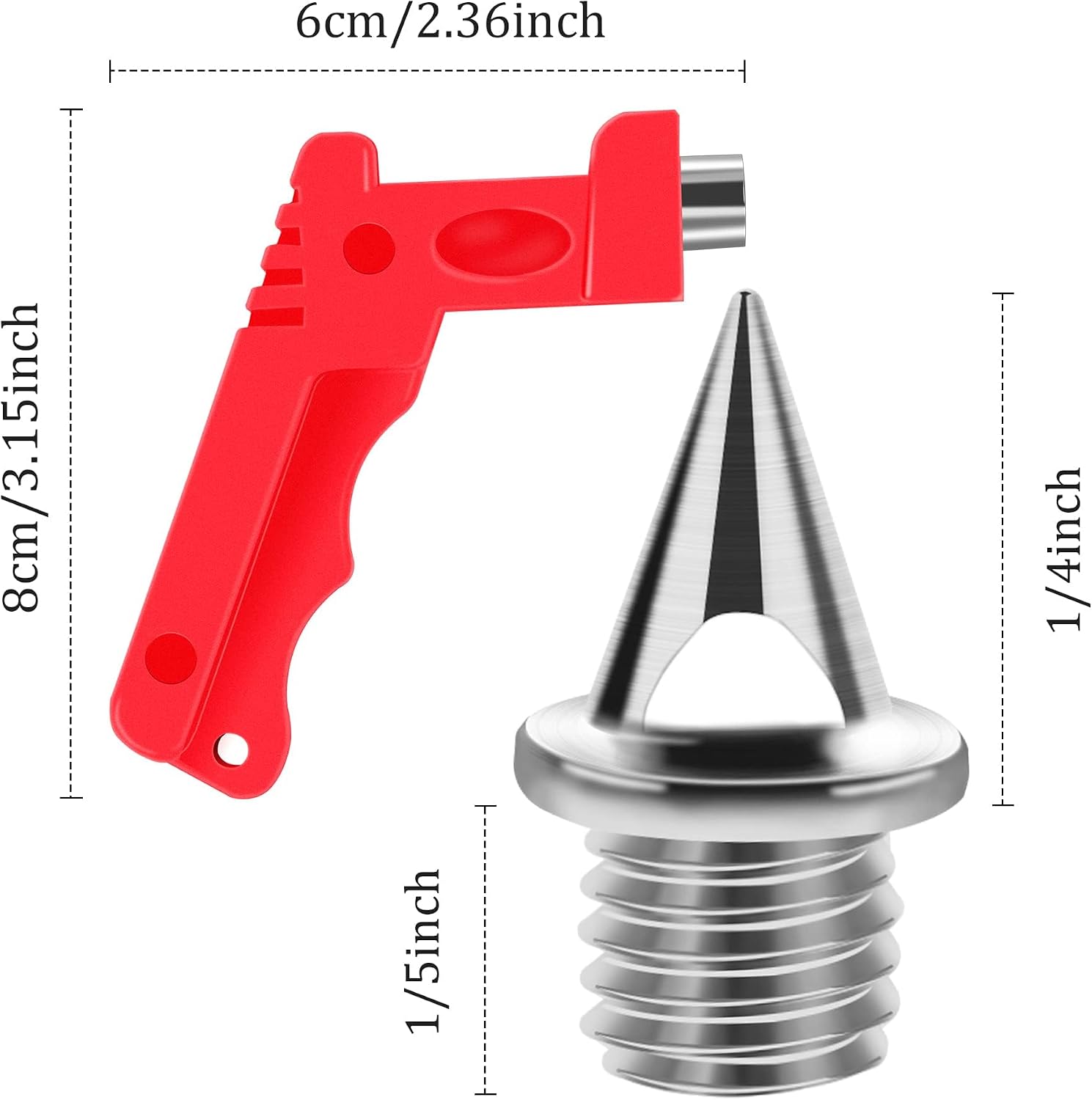
If you’ve ever unboxed a new pair of track spikes and found a small wrench and a handful of tiny metal screws bundled in the bag, those screws are the spikes — the actual replaceable metal pins that screw into the sole of the shoe and grip the track surface. They’re what separates a track spike from a regular flat shoe. Every spike shoe comes with a set installed, but those pins wear down, strip, or get lost, and replacement packs are how you keep your shoes race-ready all season. Buy the wrong replacement pack and you get pins that strip on installation, rust in two weeks, or don’t actually fit your shoe’s thread pattern. Buy the right one in bulk and you spend a few dollars to solve a problem that would otherwise sideline you mid-season. This guide walks through what to look for, which bulk packs hold up according to coaches and athletes who’ve burned through dozens of them, and a clear decision rule for how many to actually stock.
| EDITOR'S PICK1/4 Inch Track Spikes | Mid-tier1/4 Inch Carbon Steel Track Spi… | Budget pickHicarer 110 Piece 3/8 Inch Stee… | |
|---|---|---|---|
| Pin count | 100 | 32 | 110 |
| Length | 1/4" | 1/4" | 3/8" |
| Pin material | Steel | Carbon steel | Steel |
| Per-pin weight | — | 0.47 g | — |
| Wrench included | ✓ | — | — |
| Price | $12.99 | $9.97 | $8.99 |
| See on Amazon → | See on Amazon → | See on Amazon → |
The Basics You Need to Know Before You Order Anything
Before bulk-buying anything, you need to confirm two specs about your shoe. Get these wrong and the pins won’t thread in at all.
Thread size. Most track spikes sold in North America and Europe use a 1/4-20 thread — meaning the pin is one-quarter inch in diameter with 20 threads per inch. This is the near-universal standard across Nike, Adidas, New Balance, and Saucony spike plates. A small number of older or import models use a metric M6 thread instead. Per published sizing notes from Running Warehouse, the 1/4-20 standard covers the vast majority of current-production spike shoes including the Nike Air Zoom Maxfly, the Adidas Adizero Prime SP2, and the Adidas Adizero Avanti TYO. If you’re unsure, unscrew one of your existing pins and take it to a hardware store — they can measure the thread in 30 seconds.
Spike length. Spike pins come in lengths measured in millimeters: 3mm, 5mm, 6mm, 9mm, and 12mm are the most common. Which length you need depends on your event and your track surface. World Athletics Technical Rule 5 states that pins must not exceed 9mm in length for track surfaces, and 12mm is only permitted on cross-country or grass. Runners World’s spike buying guide confirms that most high school and college track meets enforce the 9mm cap, and 6mm is the standard call for all-weather rubberized tracks (the kind at most modern facilities). Short-distance sprinters often use 6mm needles; middle-distance athletes on synthetic tracks default to 6mm or 5mm pyramid spikes. If you’re running cross country or a grass meet, check your meet’s posted rules before installing 12mm pins.
Spike tip shape. The two common shapes are pyramid (a four-sided tapered point, the most widely used) and needle (a thin cylindrical point, favored by some sprinters for all-weather tracks). Most bulk replacement packs are pyramid unless the listing explicitly says needle or Christmas tree. Confirm shape before ordering.
By the Numbers
| Length | Common Use | Surface |
|---|---|---|
| 3–5mm | Sprint warm-up, very firm tracks | Synthetic all-weather |
| 6mm | Sprint and mid-distance race day | Synthetic all-weather |
| 9mm | Mid-distance, most HS/college meets | Synthetic or cinder |
| 12mm | Cross country, grass only | Grass / mud |
World Athletics Technical Rule 5 caps track spike length at 9mm for competition on synthetic surfaces. Going longer without checking meet rules risks disqualification at the clerk of the course.
Which Bulk Packs Are Worth It
The case for brand-name bulk packs. Nike, Adidas, and New Balance all sell replacement spike pins through their retail channels and through specialty retailers like Running Warehouse and JackRabbit. These are machined to the same 1/4-20 spec as the pins that shipped in the box, which means thread fit is confirmed. The downside: brand-name packs typically come in counts of 6 or 12 and run $8–$14 per pack, which works out to roughly $0.70–$1.20 per pin. For one athlete running one event per season, that’s fine. For a coach outfitting a roster of 20, the per-pin cost adds up.
Third-party steel packs — the smart middle ground. A tier of generic but reputable replacement pins exists at most specialty running stores and through vendors that supply track clubs and athletic programs. These come in packs of 50 or 100, typically priced between $12–$18 for a 50-count pack, putting the per-pin cost at $0.24–$0.36. Per aggregate reviews and coaching forum discussion cited in Track and Field News equipment coverage, the key quality marker here is stainless steel construction. Stainless resists the rust that shows up when pins sit in wet grass, humid storage rooms, or mesh bags that never fully dry out. Pins marketed as “zinc-plated steel” are cheaper to manufacture and corrode noticeably faster under field conditions — multiple cross-country coaches note in Podium Runner’s racing shoe maintenance coverage that zinc-plated pins are fine for dry synthetic tracks but become difficult to unscrew after a single wet grass meet because surface rust seizes the thread.
What “filler” actually looks like. The bulk packs that aren’t worth it share a few consistent characteristics: vague or absent material callouts (listing only “steel” without specifying grade or plating), no measurement spec on the packaging, and a thread that’s slightly undersized. Owners across aggregated reviews consistently report that undersized-thread pins install with a wobble and strip the spike well’s thread on removal — meaning you’ve now damaged the shoe itself, not just lost a pin. The giveaway is price: anything under $8 for a 50-count pack of track spike pins is almost certainly compressed-tolerances manufacturing. At that price point the pins aren’t saving you money; they’re trading a $0.30 pin for a $225 spike plate’s thread insert.
The aluminum question. Some sprinter-targeted packs are sold in aluminum, which shaves grams off an already-light shoe. Per published specs, aluminum pins run roughly 30–40% lighter than steel equivalents. The trade-off: aluminum is softer and wears faster, particularly on gritty cinder tracks or during the first lap of a cross-country course. If you’re racing exclusively on modern all-weather synthetic tracks and changing pins every 2–3 races anyway, aluminum is a reasonable choice for competition-day spikes. For training spikes that stay in longer and take more abuse, stainless steel is the smarter bulk buy.
How Many Pins Do You Actually Need to Stock
This is where coaches and multi-event athletes think differently than single-event varsity runners, and the math is worth doing explicitly.
A standard spike shoe has 5 to 8 spike wells depending on model — sprint spikes cluster 6 pins in the forefoot, distance spikes often use 5, and multi-event shoes can go up to 8. A full replacement across one pair means up to 8 pins. Now build your actual season inventory:
- Single event, one pair of spikes: You’ll replace pins roughly every 4–6 race-day uses for steel pyramid, less often if you’re only wearing them on synthetic. A 12-count pack covers a full season with spares to lose.
- Two events or two pairs of spikes: A 50-count pack is the right unit. You’ll use 20–30 across the season, have buffer for stripped pins, and avoid a mid-championship emergency.
- Coach outfitting a roster of 15–25: A 100-count pack per spike type (at minimum 6mm and 9mm in pyramid) is the starting point. Per coaching supply notes covered in Track and Field News equipment roundups, athletic directors often run a standing order of 200-count bulk packs per season split between sprint (6mm) and distance (9mm) configurations.
One practical note: stock a small count of 9mm pins even if your team primarily runs on synthetic. If you travel to a cinder or older rubberized track — still common at older high school facilities — 9mm gives your athletes options that 6mm doesn’t.
Decision Rules: If X, Then Y
Here’s the decision frame, stated plainly:
If you’re one athlete, one event, running a modern all-weather track: Buy a 12-count brand-name pack in stainless steel pyramid at the length your event calls for (almost certainly 6mm). Don’t over-engineer this.
If you’re a multi-event athlete or you have two pairs of spikes across disciplines: Buy a 50-count third-party stainless steel pack. Confirm 1/4-20 thread, confirm your target length, and ignore aluminum unless you have a dedicated race-day pair you’re babying.
If you’re a coach or athletic director sourcing for a team: Buy 100-count packs in two lengths (6mm and 9mm pyramid, stainless). Avoid zinc-plated bulk packs even if the per-pin price looks better — thread seizure after wet meets creates more wrenching time and more stripped shoe wells than the cost savings justify. Running Warehouse and JackRabbit both carry team-volume options with consistent thread specs and material callouts; use those channels rather than unspecified bulk lots where material grade isn’t stated.
If you see a bulk pack under $8 for 50 pins with no material spec listed: Skip it. The math looks good until you strip a spike well in a $250 shoe the week before conference championships.
If you’re racing grass or cross country: Stock 12mm pins separately and check your meet’s posted rules before the clerk of the course does it for you. World Athletics Technical Rule 5 is the governing standard; most state athletic associations align to it.
The bottom line is straightforward: spike pins are a consumable, not an afterthought. Getting the thread spec, length, and material right costs almost nothing extra when you’re buying in the right volume — and it protects the much more expensive investment already screwed to your foot.