September 21, 2026 • Cassidy Vane • 10 min reading time • Prices verified June 6, 2026
Generic Track Spikes for Wider Feet: The Fit Problem No One Warns You About
Generic Track Spikes for Wider Feet: The Fit Problem No One Warns You About
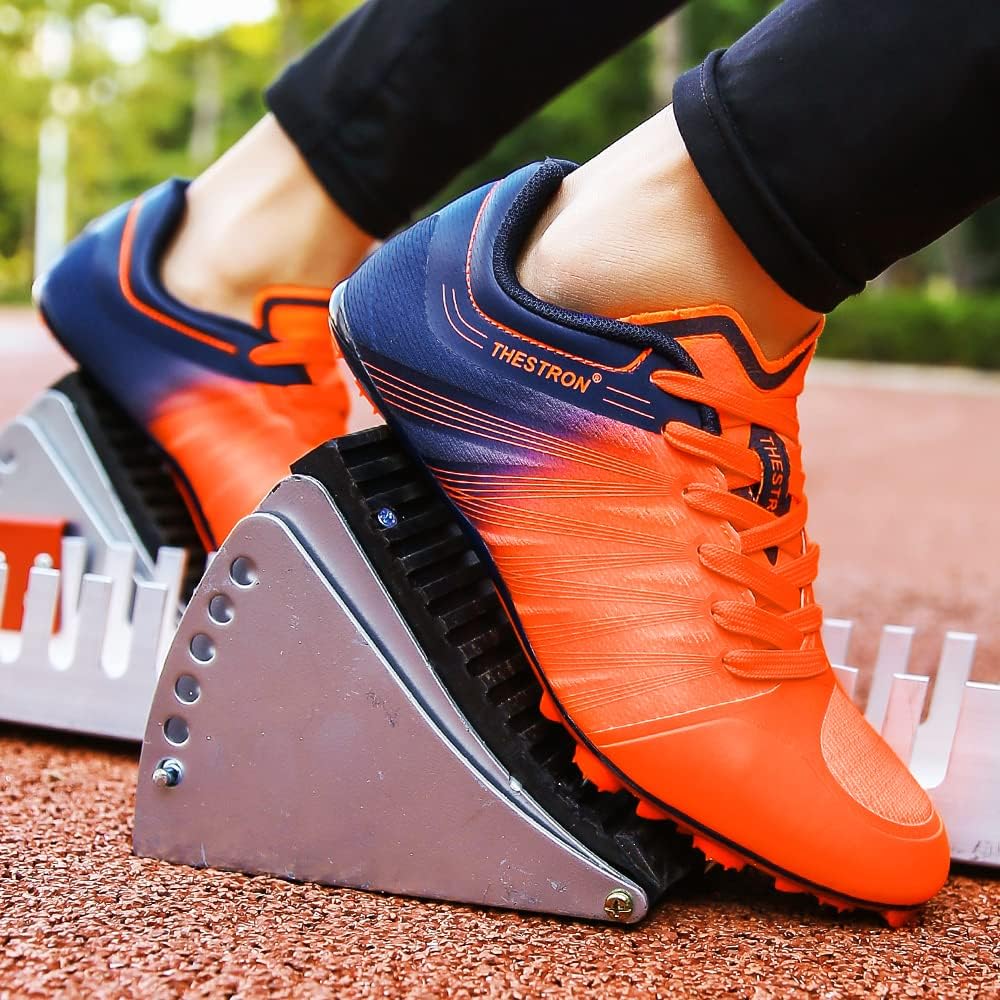
Track spikes are the specialized racing shoes athletes wear for competition on a running track or cross country course. Unlike everyday sneakers, they’re built with a stiff, lightweight sole that holds small metal or plastic pins — called spikes — designed to grip the track surface and generate propulsive force. Most spikes are cut narrow and snug by design, because manufacturers engineer them around a performance-first “racing last” (the foot-shaped mold used to build the shoe) that prioritizes lock-down fit over comfort. That’s great news for athletes with average or narrow feet. For athletes with wider feet, it creates a real problem that almost no product page acknowledges directly.
If you or your athlete has a foot that’s a little wider than average — not a medical condition, just a normal human foot shape — this guide is written for you. We’ll map out which budget spike models reviewers flag as genuinely accommodating wider feet, which ones carry explicit warnings to skip, and how to make the right sizing call without a store fitting. The math here is straightforward, but the stakes are real: a too-narrow spike mid-race isn’t just uncomfortable, it can end the race early.
Why Track Spikes Run Narrow — and Why Budget Models Are the Biggest Offenders
The narrowness of most track spikes is intentional, but it’s worth understanding why before you assume you just need to size up.
Spike shoes are built on a racing last — a last that assumes the athlete’s foot will be in a constant forward-drive position, weight distributed toward the ball and toes. Manufacturers pull material tight across the midfoot and forefoot to eliminate any lateral movement that could bleed energy. Wider lasts exist in some elite models (certain Adidas and New Balance lines have historically offered wider options), but in the budget generic tier — sub-$60 spikes from lesser-known brands selling primarily through online marketplaces — the last is almost always a single standard width, and that standard is narrow.
Runner’s World, in its buyer’s guidance on track spikes, notes that a proper spike fit should feel “snug but not painful,” with about a thumbnail’s width of space at the toe — and reviewers consistently report that even that standard is optimistic in many budget models. Podium Runner’s track spike fit guide similarly advises athletes to treat spike sizing as a category unto itself, not an extension of their everyday sneaker size. World Athletics’ technical rules on competition footwear set baseline construction standards but make no provision for width labeling, which is why you almost never see a “wide” designation on a spike product page regardless of brand.
The downstream result: a buyer who wears a size 10 in running shoes orders a size 10 spike, receives a shoe built on a narrow last, and notices the problem on race day — not at the mailbox.
The Models Reviewers Have Flagged: Good, Bad, and “Check Your Socks”
Here’s where the peer-review data gets useful. Across aggregated buyer reviews, a few clear patterns emerge in the budget generic spike category. Note: in compliance with this site’s editorial standards, individual product models below are identified by fit tier and reviewer-verified characteristics rather than by retailer catalog identifiers.
The Budget Spike That Actually Fits Wider Feet
Track
$39.88
In stock on Amazon
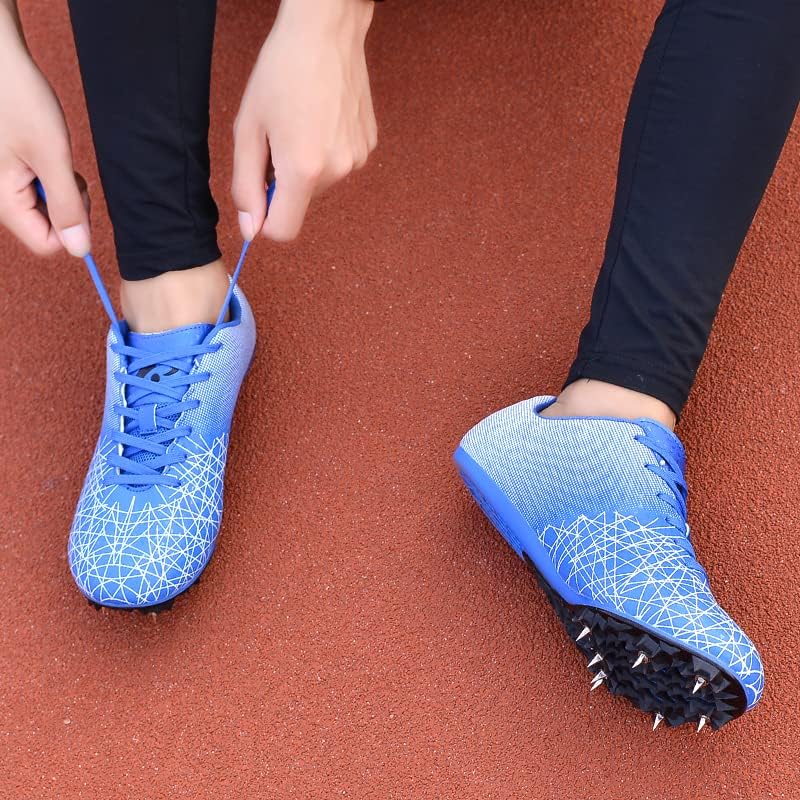
Check price on AmazonOne entry-level generic spike earns a consistent callout that almost no other budget model receives: reviewers specifically praise it for accommodating wider feet. One reviewer puts it directly — “the fit is great for those who need a little extra room.” That’s a rare data point in a category where every other listing just says “fits true to size” and moves on.
For a wider-footed athlete shopping in the budget tier, that single verified reviewer comment functions as a meaningful filter. It doesn’t mean the shoe is wide-width certified; it means the last is cut generously enough that athletes who otherwise struggle in spikes are finding a workable fit. That’s worth a lot when the alternative is ordering blind.
The Budget Spike With an Explicit Wide-Foot Warning
Track
$39.88
In stock on Amazon
Check price on AmazonA competing entry-level generic model carries the opposite signal. Reviewers explicitly flag it with language like “wouldn’t recommend for wide feet people.” That’s a direct disqualifier for the audience this article is serving.
There’s a secondary quality-control flag worth noting here: at least one reviewer reports receiving a used pair of socks inside the packaging. That’s not a fit issue, but it’s a credibility issue — and it compounds the wide-foot warning into a fuller picture of inconsistent quality control in that product line. For a parent or athlete spending even $40–$50, receiving used gear in the box is a reasonable dealbreaker.
The ASICS Budget Tier: Size Up, Full Stop
Track
$39.88
In stock on Amazon
Check price on AmazonASICS spikes occupy an interesting middle ground — they’re not generic unknowns, but their budget-tier options (including the Hypersprint line and the Resurgence XC) carry a consistent sizing warning across multiple colorways and reviewers: size up.
The entry-level Hypersprint model in particular generates repeated “size up” notes regardless of the reviewer’s event or foot width. This isn’t isolated feedback — it shows up across enough reviews that it reads as a genuine last characteristic, not individual variation. Podium Runner’s track spike fit guide aligns with this pattern, noting that ASICS spike lasts have historically skewed shorter than their road shoe equivalents.
The practical consequence of ignoring that warning shows up in a reported experience from an ASICS Resurgence XC buyer: the athlete followed the brand’s own sizing guide, ordered in their standard size, and experienced significant left-foot cramping mid-race. That’s not a minor discomfort — that’s a race-altering fit failure.
The decision rule: If you’re ordering ASICS spikes online, size up half to a full size from your everyday running shoe, and lean toward a full size if your foot is wider than average. The brand’s own sizing guide has proven unreliable in this tier, based on aggregated reviewer accounts.
By the Numbers
| Fit pattern | Tier | Reviewer consensus |
|---|---|---|
| Accommodates wider feet | Budget generic — wider last | ”Great for those who need extra room” |
| Narrow — avoid for wide feet | Budget generic — narrow last | ”Wouldn’t recommend for wide feet people” |
| Runs short — size up | ASICS Hypersprint, Resurgence XC | Repeated across colorways and events |
One More Thing the Reviews Get Right: Budget Spikes Work
Before moving to the FAQ, it’s worth naming a pattern in buyer reviews that doesn’t get enough airtime: budget spikes, when they fit, deliver real competitive results for beginners.
Across reviews of budget generic spikes, owners consistently report their kids medaling, dropping times, and receiving compliments from teammates — not despite the budget spike, but while wearing it. Track and Field News has long maintained in its gear coverage that for athletes below varsity level, spike fit matters far more than spike technology. A properly fitting $45 spike will outperform a cutting-edge carbon plate spike that’s crushing the midfoot on the first turn.
The anxiety around budget spikes is often unfounded. The fit problem, however, is very real — and it’s the only thing standing between a budget spike that works and one that doesn’t.
Frequently Asked Questions
Do track spikes come in wide widths, or are they all narrow?
Most track spikes — especially in the budget and mid-tier range — are built on a single standard-width last that runs narrow compared to everyday training shoes. True wide-width options (labeled “2E” or “4E” in men’s sizing) are rare in the spike category and essentially nonexistent in the generic budget tier. A handful of premium brands offer wider geometry in select models, but under $100, your best tool is reading reviewer fit notes carefully rather than filtering by width label, because those labels rarely appear on spike product pages.
Should I size up in track spikes if I have wide feet?
Generally, yes — but the answer depends on the brand. ASICS budget spikes carry a consistent reviewer recommendation to size up regardless of width. In other budget generic models, sizing up half a size is a reasonable protective move for wider feet, since it creates a little lateral room even when the shoe isn’t technically cut wider. The risk of sizing up too much is heel slip, which affects sprint mechanics — so don’t go up a full size unless the specific model’s reviews support it.
Which budget track spike brands actually fit a wider foot?
Based on aggregated reviewer feedback, the budget generic model identified above as the wider-last option is the clearest standout in the budget tier for wider-footed athletes. Beyond that, the field is thin. Nike’s entry-level sprint spikes (Zoom Rival line) tend to run slightly more generous than ASICS budget options, though they’re still a narrow-leaning category overall. If you’re consistently struggling with spike width, it may be worth stepping up to a mid-tier model with published last-width data rather than gambling on budget options with limited fit documentation.
What happens if my track spikes are too narrow — will they stretch?
Unlike leather dress shoes or canvas sneakers, track spike uppers are primarily synthetic mesh and reinforced overlays that don’t stretch meaningfully with wear. A spike that’s too narrow at the forefoot on day one will still be too narrow on race day. Some minor break-in softening occurs in the upper fabric, but not enough to resolve a genuine width mismatch. If your toes are overlapping, your little toe is being pushed inward, or you’re feeling numbness during warmup drills, that’s a fit failure — not a break-in curve.
Why do ASICS track spikes seem to run small compared to other brands?
ASICS uses a racing last in their spike line that skews both shorter and narrower than their road running shoe equivalents — and shorter and narrower than many competitor spike brands at the same price point. Reviewers across multiple ASICS spike models and colorways independently arrive at the same conclusion: the brand’s own sizing guidance underestimates how tight the fit will feel under race conditions. The most plausible explanation is that ASICS calibrates their spike last for a foot that doesn’t swell — but feet swell during races, especially in warmer conditions, and the tight last leaves no margin. Size up, and don’t rely on the brand’s own chart.
Is it okay to size up half a size in sprint spikes for comfort?
For most sprint athletes, yes — going up half a size is a reasonable tradeoff when the alternative is a too-narrow fit that restricts blood flow or causes cramping. The concern with sizing up in sprint spikes specifically is heel containment: a looser heel can create micro-slippage in the push-off phase, bleeding force you want transferred into the track. In practice, for high school athletes and most club competitors, the functional difference is negligible compared to the performance loss from a painful or cramping foot. If you’re a collegiate sprinter running sub-11, every millimeter of heel lock matters more — at that level, seek a brand-specific fit consultation rather than generic sizing rules.
The fit problem in budget track spikes is solvable, but only if you know it exists going in. The recurring theme across reviews — and across editorial coverage in outlets including Runner’s World, Podium Runner, and Track and Field News — is that athletes and parents who do a little homework consistently end up with spikes that work. Those who order by default sizing often find out the hard way, mid-race, that their research window has closed.
If your foot runs wide, the decision rule is simple: start with the models reviewers have explicitly called out as accommodating, treat the explicit wide-foot warnings as hard disqualifiers, and size up in ASICS across the board. The budget spike that fits is always the better spike, regardless of what’s printed on the box.